

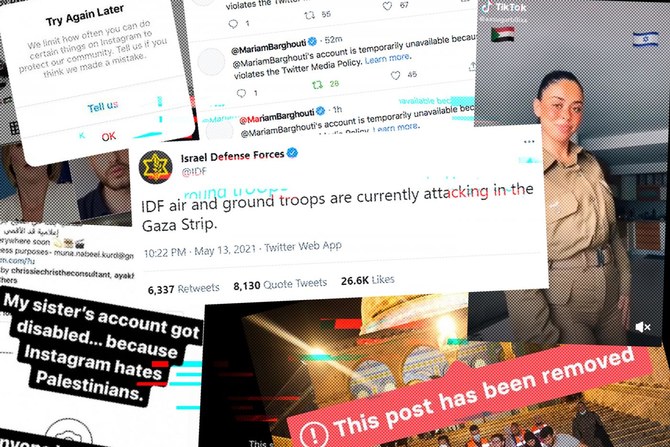

LONDON: In early May, the world witnessed an escalation in violence committed by the Israel Defense Forces (IDF) against Palestinians, prompting a flood of thousands of posts on social media feeds around the globe.
Throughout the month, the Arab Center for the Advancement of Social Media (7amleh) documented more than 700 cases of Palestinian digital rights violations, of which 500 cases took place between May 6 and 19 alone.
The Israeli government-guided IDF carried out attacks on Gaza and Palestinians in various cities and was seen to forcibly displace Palestinians from neighborhoods in Jerusalem, most notably Sheikh Jarrah, and Silwan.
The intensification in hostilities, however, appeared to have been closely mirrored by a digital escalation against Palestinians and supporters on social media. Social media companies such as Facebook, Instagram, and Twitter were accused of removing content that showcased Israeli aggression taking place in the country.
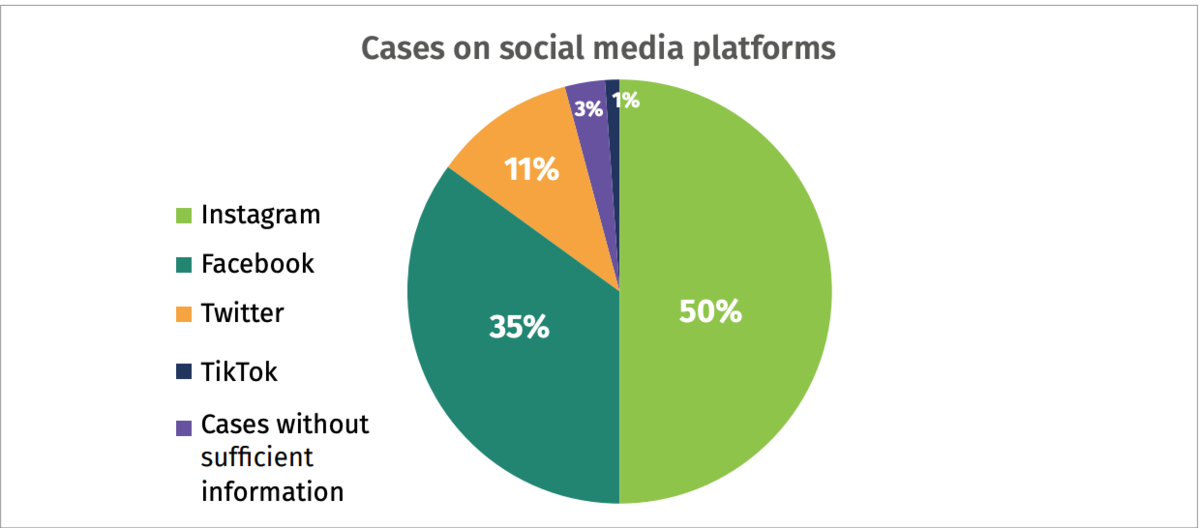
(The Arab Center for the Advancement of Social Media / 7amleh)
The center’s data showed that 50 percent of the violations took place on Instagram, where the platform removed both public posts and stories about Palestine as well as archived content which was either published in the past or was only accessible to the individual user.
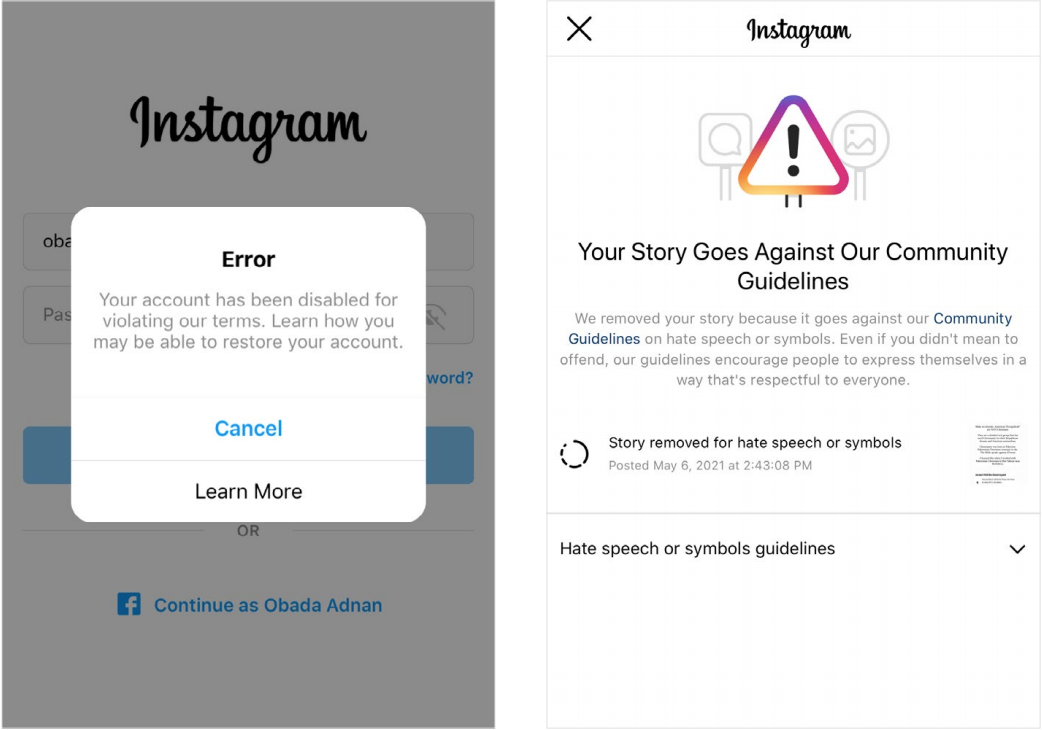
(Instagram)
Nadim Nashif, director of 7amleh, told Arab News: “As the Israeli attacks on the neighborhood of Sheikh Jarrah in East Jerusalem, the Gaza Strip, and the entirety of the Palestinian population in Israel and the occupied territory intensified, people took to social media to document human rights violations.”
He also noted a dramatic increase in censorship of pro-Palestinian content.
7amleh also observed violations on Facebook – Instagram and WhatsApp’s parent company – that deleted and suspended the accounts of many journalists reporting on the violence from within the occupied territories.
The 7amleh digital rights incident report documented 179 cases of digital rights violations, including restricting accounts (37 percent), deleting content (31 percent), and the suspension of accounts (23 percent).
Violations included hiding specific hashtags, such as #Al_Aqsa, which was reportedly heading the trending page around May 7.
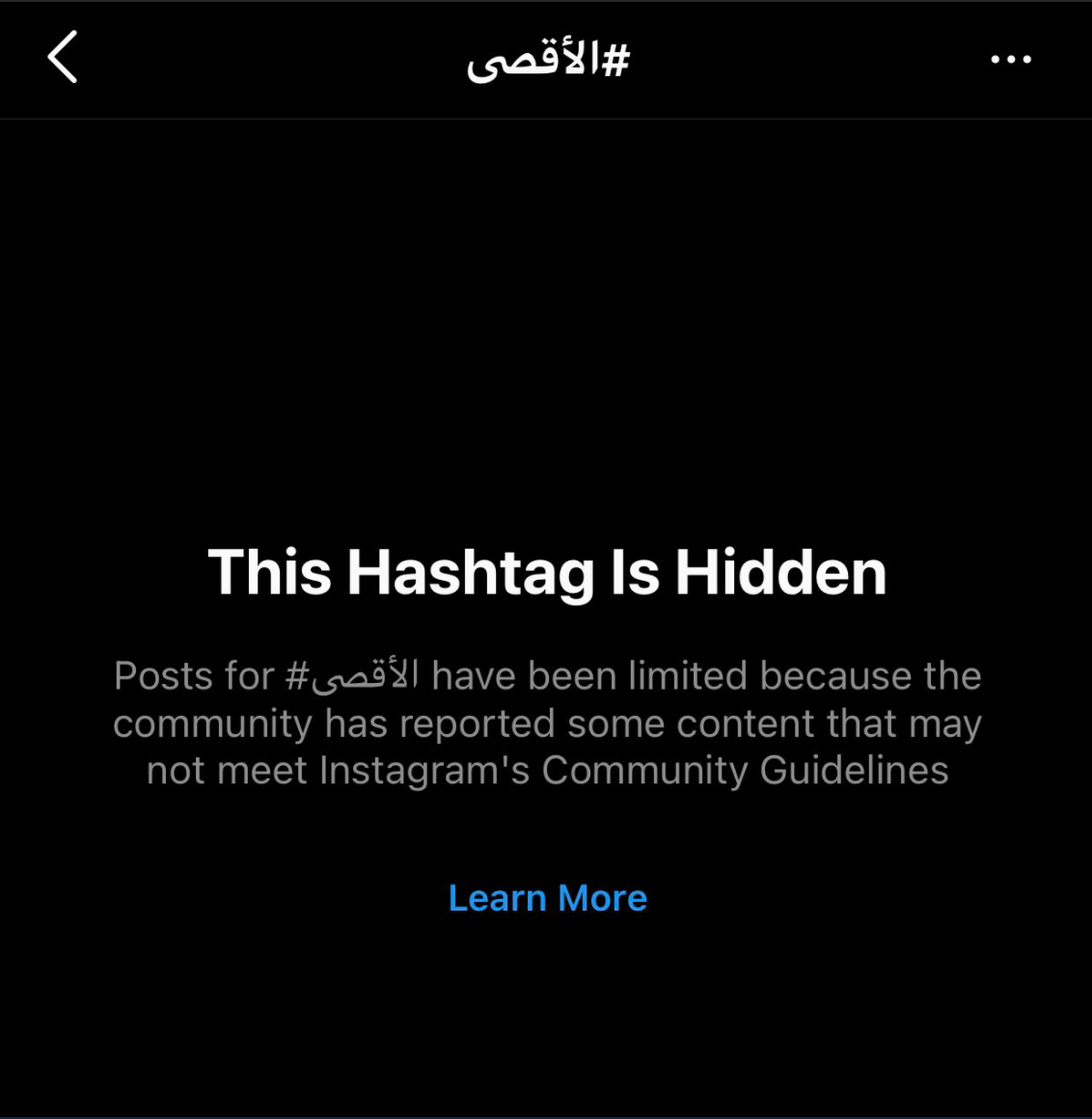
(Instagram)
Facebook, however, told Arab News that the violations were solely technical issues rather than political. A spokesperson said: “Several issues impacted people’s ability to share on our apps, including a technical bug that affected stories around the world, and an error that temporarily restricted content from being viewed on the Al-Aqsa Mosque hashtag page.
“While both issues were fixed quickly, they never should have happened in the first place. We’re so sorry to everyone who felt they couldn’t bring attention to important events, or who felt this was a deliberate suppression of their voice. This was never our intention – nor do we ever want to silence a particular community or point of view.”
In a recent webinar titled “Digital Occupation: The Implications of Media Moderation in Palestine,” 7amleh’s local advocacy manager, Mona Shtaya, claimed that Facebook and other social media platforms were not adapting to the Palestinian context.
Shtaya said that many posts that included the word Hamas, for example, were being deleted despite them criticizing the organization and not agreeing with it.
“There are specific words that have nothing to do with attacking Israel per se like Shahid/Martyr or Muqawamah/Resistance that are also being taken down,” she added.
On Facebook’s context-specific policies, the company spokesperson said the platform did not allow dangerous organizations to be featured on its social media apps and that any content that “praises, supports or represents these groups” was removed.
However, the platform reportedly, “allows people to reference dangerous organizations in news reporting, as part of neutral discussion, or to condemn them, but we need people to make this context clear for our reviewers.”
According to Nashif, censorship of Palestinian content was nothing new and 7amleh had been documenting violations against Palestinian digital rights since it was founded in 2013.
Palestine Legal, an organization dedicated to protecting the civil and constitutional rights of people in the US who speak out for Palestinian freedom, documented more than 1,700 incidents of censorship of Palestinian content in America between 2014 and last year.
Speaking at the same webinar on digital occupation, Ashraf Zeitoun, former head of public policy for the Middle East, Turkey, and Africa at Netflix and Facebook, said: “The reason why people are currently witnessing this significant volume of content censorship and takedown is mainly because of the huge and unprecedented volume of content shared in support of the Palestinian cause on social media.
“The takedown of Palestinian content increased in late 2016 and has been growing since then – associated with the growth of Palestinian activists on social media platforms, especially on Facebook and Instagram.
“This alerted the Israeli government. This is when you see a systematic approach in trying to connect with the tech companies, understand their rules and guidelines, and try to lobby them to advocate for new restrictions and guidelines which will eventually censor Palestinian narratives.”
In 2017, YouTube removed thousands of videos that documented atrocities committed by the Syrian regime against civilians with the Google-owned video platform claiming that the videos were flagged by an automated system that was designed to identify extremist content.
However, some groups claimed the algorithms were prohibiting the videos to stop them being used as evidence in future war crimes prosecutions against the Syrian regime.
The Facebook spokesperson pointed out that during the recent conflict, the platform dedicated a whole team, including both Arabic and Hebrew speakers, to monitor the situation on the ground and remove harmful content.
However, while 7amleh found the efforts by social media to limit future violations of users’ digital rights were significant, it claimed such efforts did not go far enough.
Nashif said: “Social media companies must provide full transparency about the processes that go into the development of their content-moderation policies, as well as make these policies accessible for users in full detail.”
He added that social media companies should also be transparent about any removal requests received from governments and must continue to abide by the UN Guiding Principles on Business and Human Rights, “which guarantee that these companies and other businesses do not violate human rights and international law in their work.”


