

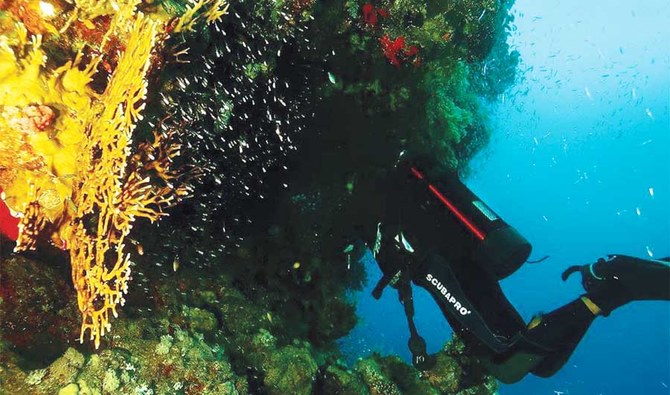

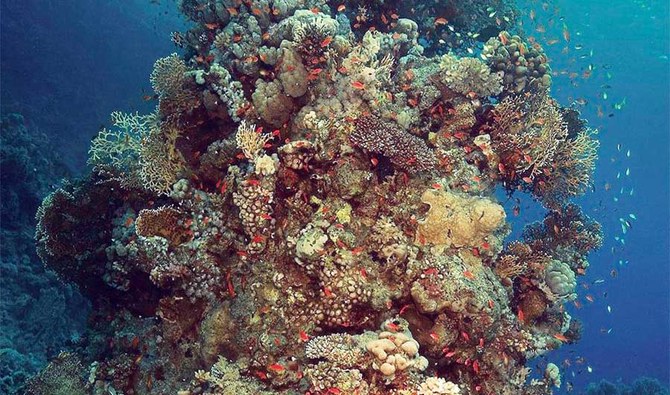

MAKKAH: The vibrant rainbow hues of Saudi Arabia’s Red Sea coral reefs and surrounding habitats attract divers and photographers alike.
And for Ali Bakhtaour, a 49-year-old Saudi laboratory technician, a passion for photography and scuba diving has led to him uncover striking images from beneath the Red Sea.
Photography was already a hobby for Bakhtaour when he took up scuba diving in 2007.
Bakhtaour, a resident of Haql in the northwestern coast of the Kingdom, told Arab News that he had developed a special relationship with the sea over the years, heading to the water every day as a child with his friends or family. 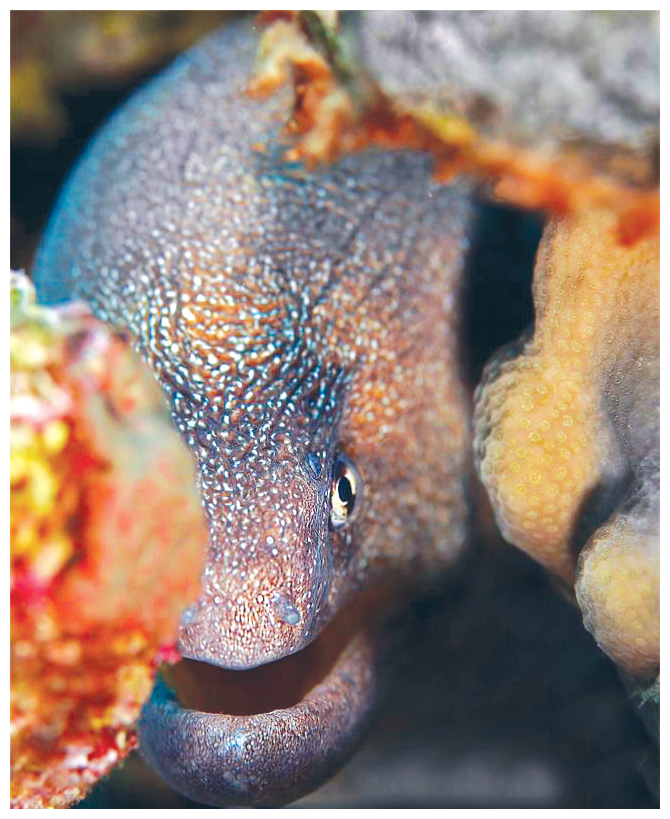
As a scuba diver he was able to discover the secrets of the Red Sea, and sail for days to find new locations and witness the beauty of the coral reefs.
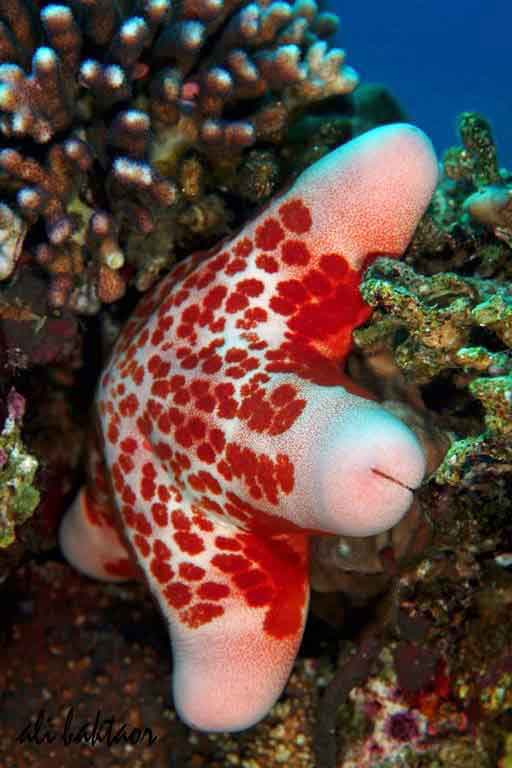
This love prompted him to take up underwater photography. “I love taking photos of the Red Sea environments as they’re among the most beautiful sea environments in the world. I’m talking about its biodiversity and coral reefs, and its importance for being far from the open oceans,” Bakhtaour said.
“We would meet with other scuba divers, go out to sea and head underwater for long photo shoots, which require accuracy, flexibility and tranquility,” he said.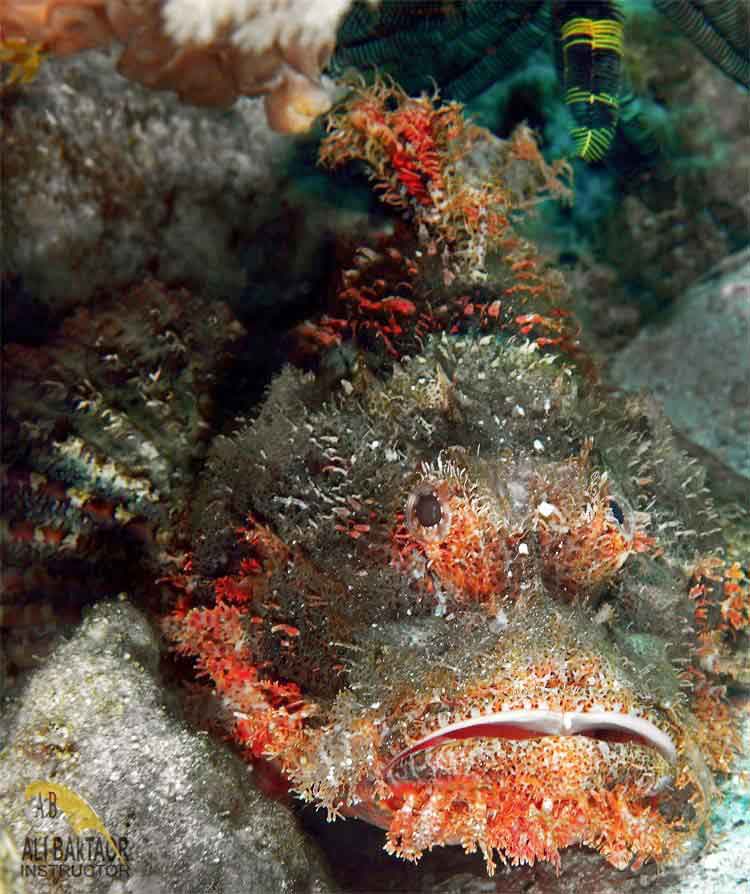
“We photo-shoot with professional cameras worth more than $10,000, and we photograph every detail in the Red Sea, praising God Almighty for the beautiful colors, their homogeneity, the diversity of the species and their livelihood, whether big or small. It’s also a form of meditation.”
Some of Bakhtaour’ dives were as deep as 120 feet, however underwater shoots are not possible beyond 60 feet deep due to lighting requirements and the demands of photographing maritime wildlife, a delicate task that requires patience and care.
HIGHLIGHTS
• Ali Bakhtaour, a resident of Haql in the northwestern coast of the Kingdom, told Arab News that he had developed a special relationship with the sea over the years, heading to the water every day as a child with his friends or family.
• Some of Bakhtaour’ dives were as deep as 120 feet, however underwater shoots are not possible beyond 60 feet deep due to lighting requirements and the demands of photographing maritime wildlife, a delicate task that requires patience and care.
• Bakhtaour dreams of shooting a documentary about marine life in the Red Sea to serve as an academic reference and to help develop understanding of its many marvels.
And underwater photography is not without dangers, as Bakhtaour discovered while diving in a heavy current during a shoot.
“I was following this turtle and was very focused on the shoot and soon found myself so far offshore and farther than anticipated from the boat than I expected,” he said. “I forgot not to cross into a certain area, and was well deep into the sea, barely seeing my colleagues’ lights, so I rushed back to the beach while trying to track my friends. It was an exhilarating and scary experience.”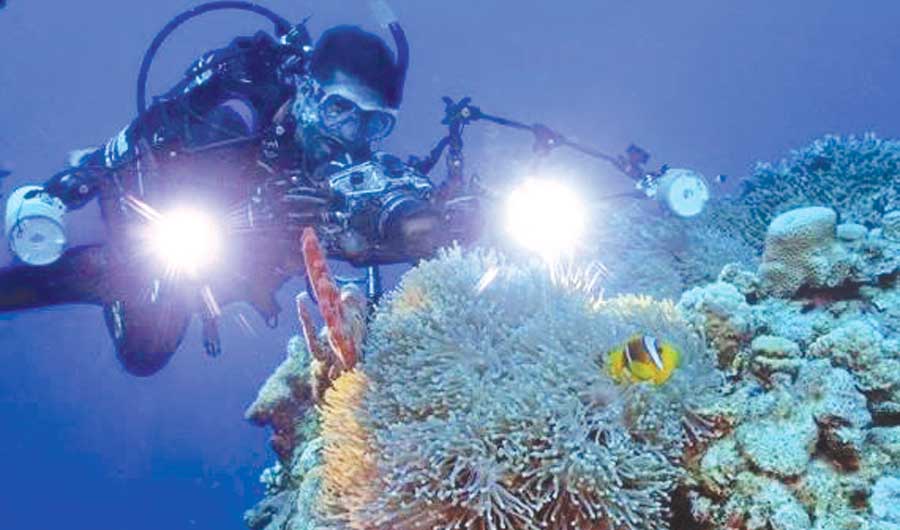
Bakhtaour experienced a different type of exhilaration during his participation in an underwater photo expedition in the Red Sea with a Polish team for seven consecutive days.
He says that there have been challenges, but beauty everywhere, during his underwater adventures. For example, for years he has been fascinated by a British ship, complete with full military hardware, deep in the Ras Mohammed Nature Reserve. This is one of the most important natural reserves, characterized by its pristine state and diversity of maritime environment and flora and fauna.
Bakhtaour dreams of shooting a documentary about marine life in the Red Sea to serve as an academic reference and to help develop understanding of its many marvels.


