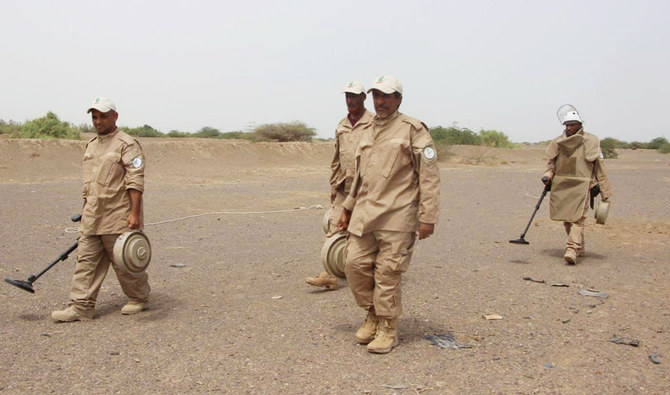
ADEN: The Saudi Project for Landmine Clearance (Masam) dismantled 2,183 mines in Yemen during the second week of June.
The figure comprised two anti-personnel mines, 728 anti-tank mines, 1,446 unexploded ordnances and seven explosive devices.
Masam is one of several initiatives undertaken by Saudi Arabia on the directive of King Salman to help ease Yemeni suffering.
Saudi and international experts are removing mines planted by the Houthi militia in Yemeni regions especially Marib, Aden, Al-Jawf, Shabwa, Taiz, Hodeidah, Lahij, Sanaa, Al-Bayda, Al-Dhale, and Saada.
A total of 254,918 mines have been cleared since the start of the project. More than 1.2 million mines have been planted by the Houthis, claiming the lives of hundreds of civilians.
Masam has 32 demining teams. It aims to dismantle mines in Yemen to protect civilians and ensure that urgent humanitarian supplies are delivered safely.
It trains local demining engineers, gives them modern equipment and it also helps mine victims.
Last year, Masam’s contract was extended for one year at a cost of $30 million.

Saudi project clears 2,183 more mines in Yemen
https://arab.news/p7hq7
Saudi project clears 2,183 more mines in Yemen
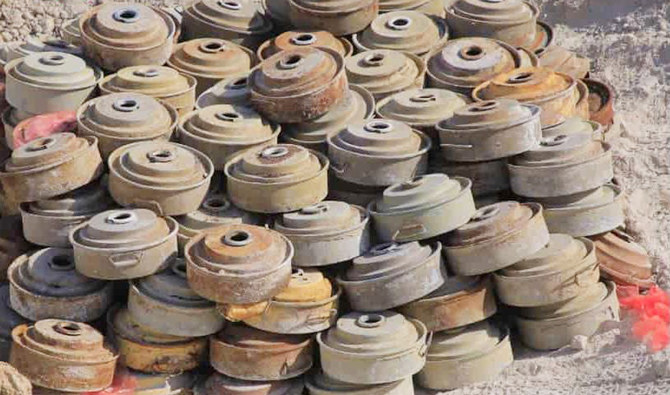
- It aims to dismantle mines in Yemen to protect civilians and ensure that urgent humanitarian supplies are delivered safely
Sha’abanah festival brings Hijazi heritage to life ahead of Ramadan
Jeddah: The Sha’abanah festival celebrating Hijazi heritage drew more than 18,000 visitors to the Abadi Al-Johar Arena in Jeddah as part of the city’s pre-Ramadan festivities.
Organized by Vertex 33, the three-day event from Jan. 22-24 offered an immersive celebration of local culture, crafts, and cuisine.
The festival featured local boutiques offering oud incense and perfumes, artisanal shoes and a variety of handcrafted products from local entrepreneurs.
Visitors also enjoyed a range of artistic workshops, such as pottery and mosaic, while children engaged in scented candle-making, art activities by Global Art, and thread kneading to create keychains and home wall hangings with Ramadan themes.
A dining area served traditional Saudi cuisine, coffee, and festive Ramadan treats.
Guests were entertained with live traditional Yanbu’awi performances, Al-Ajal dance displays, and a contemporary Saudi-style DJ, bringing together the energy of modern entertainment with the rich cultural heritage of Hijaz.
The project was led by four young cultural enthusiasts, Abdulaziz Al-Jehani, Abdulmajeed Abualkheer, Ghoroub Al-Barakati and Shahad Abualkheer.
Al-Jehani, CEO of Vertex 33, said Sha’abanah was inspired by a desire to revive the social traditions that once brought Hijazi communities together ahead of Ramadan.
“At Vertex 33, we believe events should feel meaningful, not just entertaining, and Sha’abanah was our way of creating a space where people could reconnect with heritage in a lively, modern setting,” he told Arab News.
“Bringing the festival together took just three months of planning, from concept development and cultural research to vendor selection, design, and on-ground coordination.
“The positive response from attendees has reinforced Vertex 33’s commitment to supporting local artists and making Hijazi heritage central to future events,” he added.
Entrepreneurs taking part in Sha’abanah praised the festival for providing exposure and opportunities to engage directly with customers.
Afraa Damanhouri, founder of RuaqAfraa, said: “We are participating to make scented cake candles for both adults and children. Workshops like these promote business and help people understand the process behind different types of candles.”
Reem Awad, founder and CEO of Black Mus, said: “Through Sha’abanah, we were able to meet our customers face to face, share the story behind our products, and help them understand the range of services and items we offer.”
Chef Fayzah Al-Sulami, who took part in the event preparing and selling her homemade spices and traditional white sweet Saudi coffee, said: “I started teaching cooking on YouTube, and when people asked about the ingredients I use, I began selling my products.
“It was amazing to see so many people take an interest, and sales were strong throughout all three days of the festival.”
With Ramadan approaching, many local entrepreneurs offered gift packages, prayer baskets, homemade traditional coffee, and spices.
Duaa Shukri, founder of Printful, said: “Ramadan is a time for giving. We created unique gift packages for children, teenagers and adults, with thoughtful items.”