

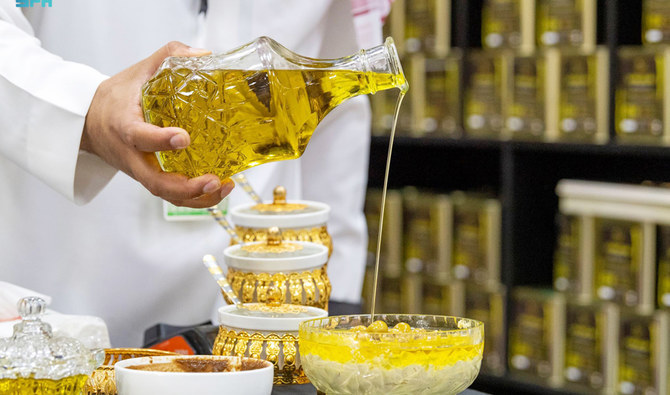
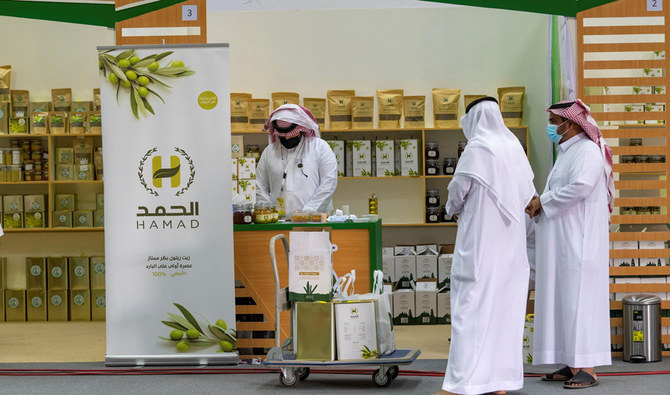

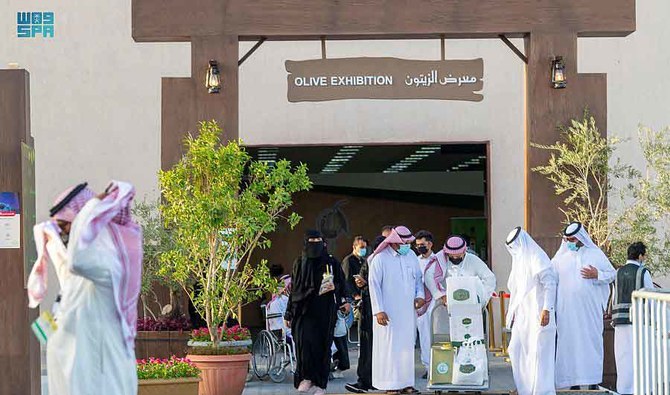
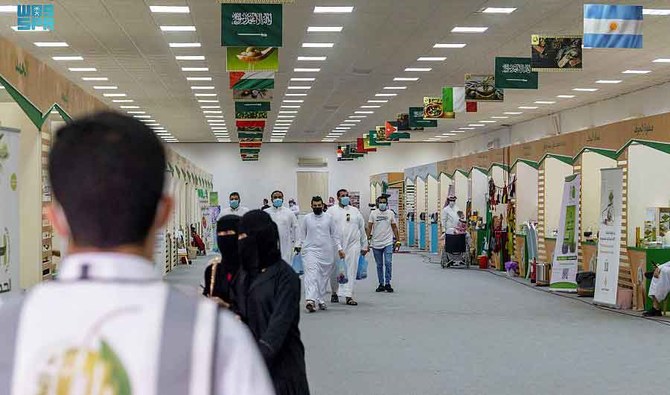
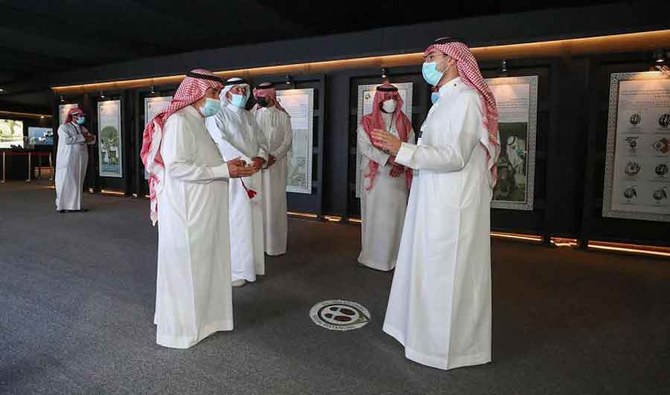


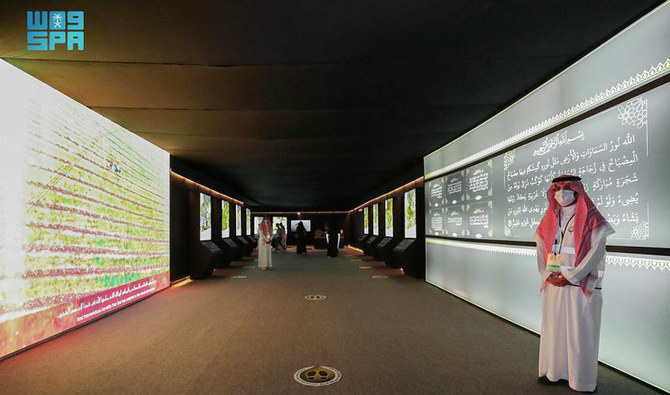

MAKKAH: The Jouf Olive Festival celebrates the crop, and this year, in its 14th year, hosted 45 farmers representing the region all competing for the Prince Faisal bin Nawaf Award, worth SR500,000 ($133,000) and given by the prince, who is also the regional governor.
The festival also hosted, for the first time, farmers from the US, Spain, Argentina, Italy, China, Palestine, Jordan, Morocco and Egypt, to share their experiences of the industry.
Omar Al-Hamwan, director general of public relations and media and the official spokesperson for Jouf Municipality, said Saudi Arabia’s olive production amounts to 120 tons annually, and there is a specialized committee to monitor the volume of sales at the end of the festival and to crown the winners of the award.
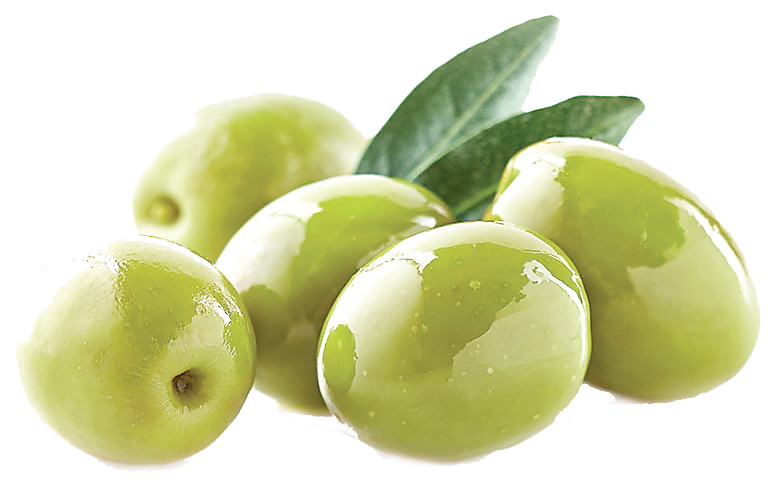
He added that no oil could be entered into the festival unless it was certified and tested by the laboratory of Jouf Municipality, to ensure its quality, acidity and suitability for human consumption.
Other Saudi cities have also become centers of olive oil production, he said, such as Tabuk and Al-Baha, but Jouf still produces the largest volume.
HIGHLIGHT
Saudi Arabia now has over 20 million olive trees, more than 80 percent of which are in the Jouf region.
He added that Basita, an agricultural area in Jouf, has the largest olive farm in the world, owned by Al-Jouf Agricultural Development Co., which produces 10,000 tons of the finest oil annually, citing the abundance of water in the area as one of the reasons behind the success.
The CEO of Al-Jouf Agricultural Development Co., Mazen Badawood, said that this year’s festival was one of the best in terms of organization, direction and participation.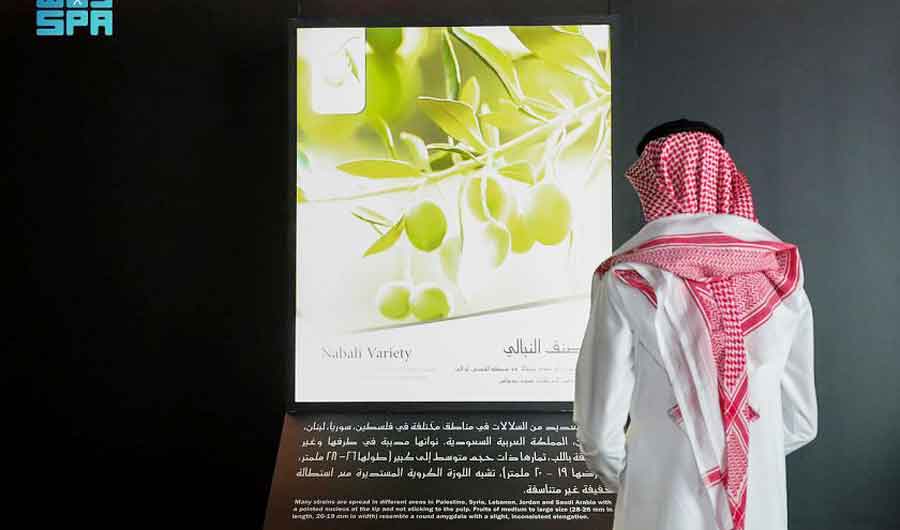
“Each year, we see a new image of the festival, and this time we witnessed an improvement as many wonderful activities were added, so as to place olive cultivation in a good light and highlight its importance in Saudi Arabia and worldwide,” said Badawood.
He added that the olive tree was a blessed tree, mentioned in the Qur’an and in the Prophet’s teachings, that provided great economic returns, whether from its fruit, leaves, or even its wood.
He pointed out that the olive tree consumes less water compared to other crops, noting that Al-Jouf Co. uses modern drip irrigation techniques for sustainability.
Olive cultivation is carried out by planting both trees for both traditional and intensive farming. Al-Jouf Co. is considered one of the pioneers in cultivating and developing olive trees in the region, especially for intensive production.
Badawood said his company is proud to be the owner of the largest modern organic olive farm in the world, with more than 5 million trees and a planting area of over 7,300 hectares.
“Saudi Arabia now has over 20 million olive trees, more than 80 percent of which are in the Jouf region, which is famous for olive cultivation thanks to its suitable environment,” he explained.
Badawood noted that the Kingdom produces over 120,000 tons of olive fruits annually.
He pointed out that Saudi Arabia consumes about 45,000 tons of olive oil per year, 15,000 to 18,000 tons of which are locally produced while the rest is imported.
However, he noted, with the expansion of olive cultivation, there is an opportunity for self-sufficiency in the near future, which goes in line with the Kingdom’s vision of increasing sustainability and decreasing imports.


