Historic G7 deal could mean bigger tax take for Gulf economies

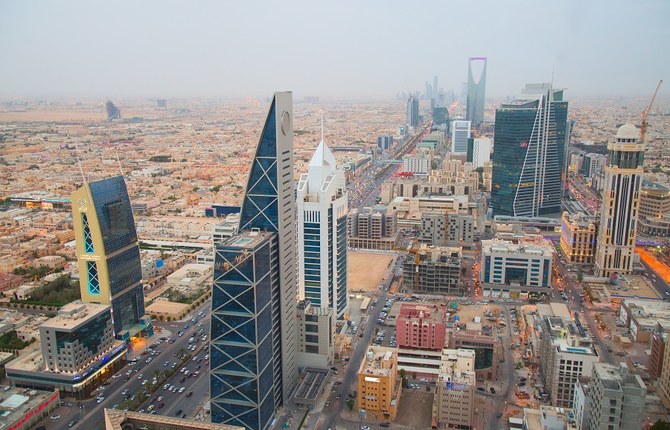
Gulf economies have long attracted both individuals and companies through either no or low taxation. (Shutterstock)
Short Url
Updated 08 June 2021
Follow

Historic G7 deal could mean bigger tax take for Gulf economies

  • Analysts expect the adoption of the new rules to gradually change the regional tax base with the move likely to affect some Gulf economies more than others

DUBAI: An agreement among the Group of Seven (G7) advanced countries to set a minimum global corporate tax rate of 15 percent is expected to have far reaching implications for Gulf economies as they seek to attract multinationals.
Japanese Finance Minister Taro Aso on Tuesday told reporters that countries realized they could no longer rely on the race to the bottom on corporation tax cuts to generate growth in their economies.
“Now that the course of direction has been shown, the possibility (of a tax deal) will rise at G20. It had a big impact on raising the momentum,” Aso said.
The G7 comprises the US, Japan, Germany, Britain, France, Italy and Canada. The larger G20 also includes Saudi Arabia, the only Gulf country in the group.
Analysts expect the adoption of the new rules to gradually change the regional tax base with the move likely to affect some Gulf economies more than others depending on the number of multinational corporations operating in them.

It also represents a potentially delicate balancing act for Arab governments trying to attract increased foreign direct investment.

“From a GCC context, greater clarity is needed to gauge any potential economic impact,” ADCB chief economist Monica Malik said in a note to clients. “We still see the region remaining a low tax environment — both on a corporate and individual basis. However, for companies that will fall under the new framework (likely centered on digital businesses) the impact could be significant. In the medium term, the global tax developments could result in a broadening of corporate taxes in the region, especially if an international base is established, alongside greater tax income from large multinationals.”
Gulf economies have long attracted both individuals and companies through either no or low taxation. However ongoing reforms aimed at providing more stable government revenue streams and a reduced reliance on hydrocarbon revenues have already placed a greater emphasis on taxation — most notably with the recent introduction of value added tax in countries such as the UAE and Saudi Arabia.
Corporate taxation was also one of the big themes of last year’s Saudi presidency of the G20. Saudi Finance Minister Mohammed Al-Jadaan welcomed the agreement among G7 countries this week.
Emirates NBD chief economist Khatija Haque told Bloomberg TV on Tuesday said that the wider adoption of the new G7 tax rules by the G20 and OECD would trigger regional changes also. However she said the number of companies initially affected may be comparatively small.
“When you look at those very large multinational corporations and tech companies, this region is not necessarily a huge share of their global income,” she said. “From a broader perspective, what will be more interesting is whether the region as a whole looks to extend that corporate tax to other perhaps smaller foreign-owned companies or companies that have some foreign ownership. That is something they will have to manage quite carefully because there is very much a push to attract more FDI into the region and so they won’t want to jeopardize that by becoming too aggressive on corporate taxes.”


Egypt, Turkiye aim to increase trade volume to $15bn by 2028

Updated 5 sec ago
Follow

Egypt, Turkiye aim to increase trade volume to $15bn by 2028

RIYADH: Egypt and Turkiye have agreed to work toward increasing bilateral trade volume from approximately $9 billion to $15 billion by 2028.

This includes cooperation in exploration and development activities in the hydrocarbons and mining sectors, as well as in transportation and the automotive industry.

This agreement was confirmed by Egyptian President Abdel Fattah El-Sisi and Turkish President Recep Tayyip Erdogan in Cairo during the second meeting of the High-Level Strategic Cooperation Council, co-chaired by the two heads of state.

President El-Sisi emphasized that the agreement seeks to strengthen constructive cooperation between the two countries in the coming period. He directed companies and institutions in Egypt and Turkiye to work towards achieving this goal and explore ways to enhance trade cooperation, currently valued at $9 billion. He noted that Egypt is Turkiye’s leading trading partner in Africa, and that Turkiye ranks among the top destinations for Egyptian exports.

In his remarks, El-Sisi highlighted the importance of working toward increasing trade volume to $15 billion, removing obstacles to achieving this objective, and bolstering investments as well as all aspects of economic cooperation.

For his part, Erdogan said: “We are taking decisive steps toward our goal of increasing the value of trade exchange between the two countries to $15 billion. We are pleased that Turkish companies’ investments in Egypt are approaching $4 billion and contributing to creating more job opportunities.”

Erdoğan further stressed Turkiye’s commitment to establishing “an economic model in which the two countries complement each other, making us stronger in the face of global fluctuations.”

Anticipated Egyptian-Turkish cooperation in energy, transportation

The Turkish president revealed that mutual investment opportunities between the two countries will be discussed during the Egypt-Turkiye Business Forum, adding: “We see opportunities in developing joint projects in the energy and transportation sectors, which are of paramount importance in terms of regional energy security.”

Erdogan highlighted the positive impact of strengthening relations between the two countries on tourism, noting that they have attracted more than 500,000 visitors each, and added: “We hope to double this number in the coming period.”

The Egyptian-Turkish statement also noted the continued “significant potential for enhancing cooperation in areas including the automotive industry, infrastructure development, and tourism.”

It further stated that both countries agreed to cooperate on exploration and development activities in the hydrocarbons and mining sectors in Egypt, including through public institutions, and to exchange expertise in geological activities and modern mining technologies.

Egypt and Turkiye also signed memoranda of understanding in key areas, including cooperation in defense, investment, trade, and agriculture, as well as health, youth and sports, and social protection. They also established a national committee to promote and monitor Turkish investments in Egypt, with the aim of facilitating investment procedures.

The two countries agreed to strengthen cooperation in the electricity and renewable energy sectors within the framework of the MoU signed in September 2024. They also agreed to appoint national contact points to coordinate joint working groups in the fields of conventional energy, renewable energy, green hydrogen, and nuclear energy.

The Egyptian and Turkish presidents met in Cairo on Feb. 4 as part of a regional tour by Erdogan that included Saudi Arabia. This visit marks Erdogan's third trip to Egypt in the past two years.

Turkiye has been the largest importer from Egypt for the past three years, with industrial exports constituting the largest portion of Egypt’s exports to Turkiye, while petroleum exports make up no more than 12 percent of Egypt’s total exports to Turkiye.