

Shopping attracts Saudis to Bahrain amid spread of COVID variant

1 / 4
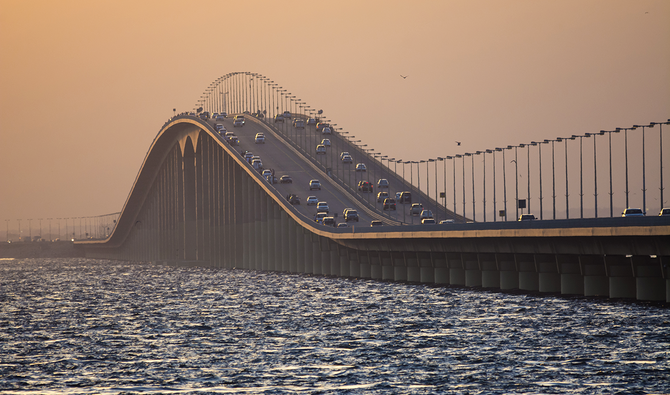
Saudis and Bahrainis enjoy strong and lasting bond of relationship. (Shutterstock)
2 / 4
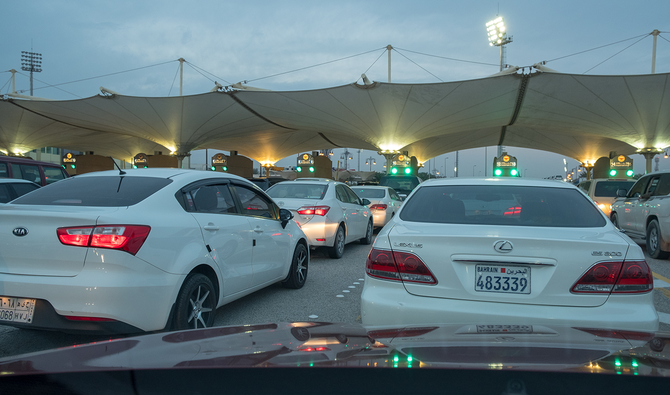
Saudis and Bahrainis enjoy strong and lasting bond of relationship. (Shutterstock)
3 / 4
Saudis and Bahrainis enjoy strong and lasting bond of relationship. (SPA)
4 / 4
Saudis and Bahrainis enjoy strong and lasting bond of relationship. (SPA)
Short Url
Updated 18 May 2021
Follow

Shopping attracts Saudis to Bahrain amid spread of COVID variant

  • A coronavirus insurance certificate is required for travelers under the age of 18

RIYADH: As travel suspension for Saudis and the opening of land, sea and air ports is lifted starting May 17, some travelers are gearing up to visit the King Fahd Causeway linking Saudi Arabia and Bahrain for a vacation, while others remain cautious due to the Indian variant of the coronavirus disease.

Ten additional lanes have been installed in the departure area, bringing the total number of lanes to 27, as well as 36 lanes in the arrival area, said Duwaihi Al-Sahli, director of King Fahd Causeway Passports, in a statement carried by the Saudi Press Agency.

However, only those who have been vaccinated or have recovered from COVID-19 will be allowed to leave the Kingdom, according to the Saudi authorities. Proof shall be presented via the Tawakkalna app.

A coronavirus insurance certificate is required for travelers under the age of 18.

Travelers will be required to carry any of the health applications approved in the GCC countries, which confirm whether they are vaccinated or have recovered from the virus, Bahrain’s News Agency BNA reported.

A negative PCR test taken within 72 hours before travel should  also be presented at the borders, the report added.

Barak Al-Barrak, owner of a Saudi commercial establishment who was a former partner in an advertising company, said that he used to head to Amwaj Island soon after entering Bahrain for shopping in the Chinese market, and the Laguna Resort located on the island of Muharraq (northeast of Bahrain).

He told Arab News that he will not travel to Bahrain during the current period for two main reasons: “To avoid crowding and for fear of the Indian mutated coronavirus.”

SPEEDREAD

• Ten additional lanes have been installed in the departure area, bringing the total number of lanes to 27, as well as 36 lanes in the arrival area, says senior official at King Fahd Causeway Passports.

• Only those who have been vaccinated or have recovered from COVID-19 will be allowed to leave the Kingdom, according to the Saudi authorities. Proof shall be presented via the Tawakkalna app.

• Travel suspension for Saudis and the opening of Kingdom’s land, sea and air ports will be lifted from May 17.

Sharing the same sentiment, Meshaal Hamdan, a private-sector employee, said that he wants to see new entertainment projects in Bahrain soon, but he ruled out traveling in light of the spread of the Indian COVID-19 variant.

Bahraini journalist Najat Showaiter said that the welcoming campaigns from her country’s citizens to Saudis is an indication of the mutual love and friendship between the two peoples.

“We as Bahrainis welcome our brothers and the Saudi people love us, and we invite them to visit Bahrain,” she said.

She expected the Bahraini markets, especially the commercial malls, to revive. Films and entertainment games for children are likely to attract more arrivals to the country for the purpose of tourism, suggesting the revival of Bahraini restaurants that offer a variety of eastern and western foods.

Popular markets, including the markets of Muharraq and Manama, are usual attractions to Saudi tourists, especially for the food and Bahraini sweets they offer.

Gold markets and the real-estate market in Bahrain are also expected to see a higher turnout from tourists, she said, along with an increase in sales and the movement of real estate trading, along with the high rates of rents, especially in chalets and tourist resorts. She expected hotel rooms to be occupied by no less that 80 percent.

Meanwhile, young Bahrainis launched a tourism app titled “b4bhcom” or Gate of Bahrian, coinciding with the country’s preparations to receive Saudis after the lifting of the travel suspension.

The app allows users to learn about events taking place in the country and current and future projects in Bahrain. It also contributes to highlighting tourist sites, shopping destinations and points of interest. It offers the option for users to create and plan their trips by adding places and events included in their personal itinerary.


National program identifies 165 native plants for afforestation efforts in Asir

Updated 29 December 2025
Follow

National program identifies 165 native plants for afforestation efforts in Asir

  • The survey is part of broader plans focused on restoring degraded land, using native vegetation 

JEDDAH: Saudi Arabia’s National Afforestation Program has identified more than 165 species of native plants suitable for afforestation in the Asir region, highlighting the ecological diversity of one of the Kingdom’s most environmentally varied areas, the Saudi Press Agency reported.

The findings form part of broader national efforts to expand vegetation cover, address land degradation, and support sustainability goals linked to the Saudi Green Initiative and Vision 2030.

According to the program, the identified species are distributed across a wide range of natural environments in Asir, including mountainous terrain, highlands, slopes, valleys, plains, rocky landscapes, and coastal areas stretching from the Red Sea to Tihama.

The species belong to numerous plant families, including Fabaceae, Anacardiaceae, Burseraceae, Capparaceae, Ebenaceae, Euphorbiaceae, Malvaceae, Myrtaceae, Oleaceae, and Primulaceae, among others.

Plants suitable for afforestation range from large and small trees to perennial and annual shrubs, herbs, succulents, bulbs, and climbing plants. 

Among the most notable species identified are the grey mangrove, mastic tree, mooring or ben tree, juniper, sycamore fig, wild olive, henna, wild jasmine, hawthorn, and arak.

The Saudi Arabian Botanical Society described the announcement as an important step in protecting plant diversity and strengthening the ecosystem conservation in the Kingdom. 

Munirah bin Hamad Al-Hazani, founder and president of the society, said that prioritizing native species is central to sustainable afforestation.

“Focusing on the cultivation of native plants adapted to diverse environments forms the cornerstone of sustainable afforestation projects, as it plays a pivotal role in enhancing vegetation cover, combating land degradation, and conserving natural and financial resources,” she told Arab News.

Al-Hazani added that long-term success depends on cooperation between government bodies and the nonprofit sector, alongside community involvement and environmental awareness programs.

The National Afforestation Program has increasingly emphasized community participation, working with government agencies, private companies, and nonprofit organizations to support planting initiatives and environmental education. Its approach includes promoting volunteerism and discouraging harmful environmental practices, while focusing on the use of native plants adapted to local conditions.

Parallel efforts are underway in other regions of the Kingdom to support vegetation restoration through research and infrastructure development. In Jouf, often referred to as the Kingdom’s food basket, the King Salman bin Abdulaziz Royal Reserve Development Authority has established a Central Nursery and a Wild Seeds Research and Production Station to address the growing demand for reliable sources of native seeds and seedlings.

The project was launched in 2023 under the directive of Prince Abdulaziz bin Saud bin Naif, the minister of interior and chairman of the authority’s board of directors. 

Since then, the facilities has become a key component of vegetation restoration efforts within the reserve.

The authority has focused on building operational capacity by recruiting and training specialists to manage cultivation and research activities. The research and production station includes 14 mother-seed production fields containing over 400,000 trees and shrubs. 

Planting began in late 2024, with more than 30 native plant species represented, selected for their role in the reserve’s natural ecosystem. 

The facility also includes two seed storage units with a combined capacity of 3,000 kilograms. Seeds are collected annually from multiple sites within the reserve and used for seedling production habitat rehabilitation.

The Central Nursery spans 6,000 square meters and includes 30 greenhouses spanning 1,500 square meters, as well as two shade houses used during summer months. A plant hardening facility, designed to prepare seedlings for natural environmental conditions, covers 10,000 square meters and is divided into seven sections. The nursery’s annual production capacity reaches 1.5 million seedlings, representing more than 15 native plant species. 

Together, these initiatives underscore the growing role of native plant research and propagation in Saudi Arabia’s afforestation strategy, particularly as the Kingdom works to balance environmental restoration with long-term sustainability goals.