



QUETTA: A distinct type of shalwar qameez, traditionally worn by members of one Balochi tribe, is becoming a sartorial Eid Al-Fitr staple in whole southwestern Pakistan.
While the combination dress — a long tunic (qameez) and baggy trousers (shalwar) — is widely worn in Southeast Asia, the shalwar in its Bugti tribe version is sewn from a fabric several times longer than elsewhere in the region.
"Normally Pakistanis prefer to wear simple dresses made from four meters of fabric, but in Balochistan we have been doing a unique work by sewing traditional attire from 15-meters of cloth," said Gul Shair, a master tailor in Quetta, Balochistan's capital.
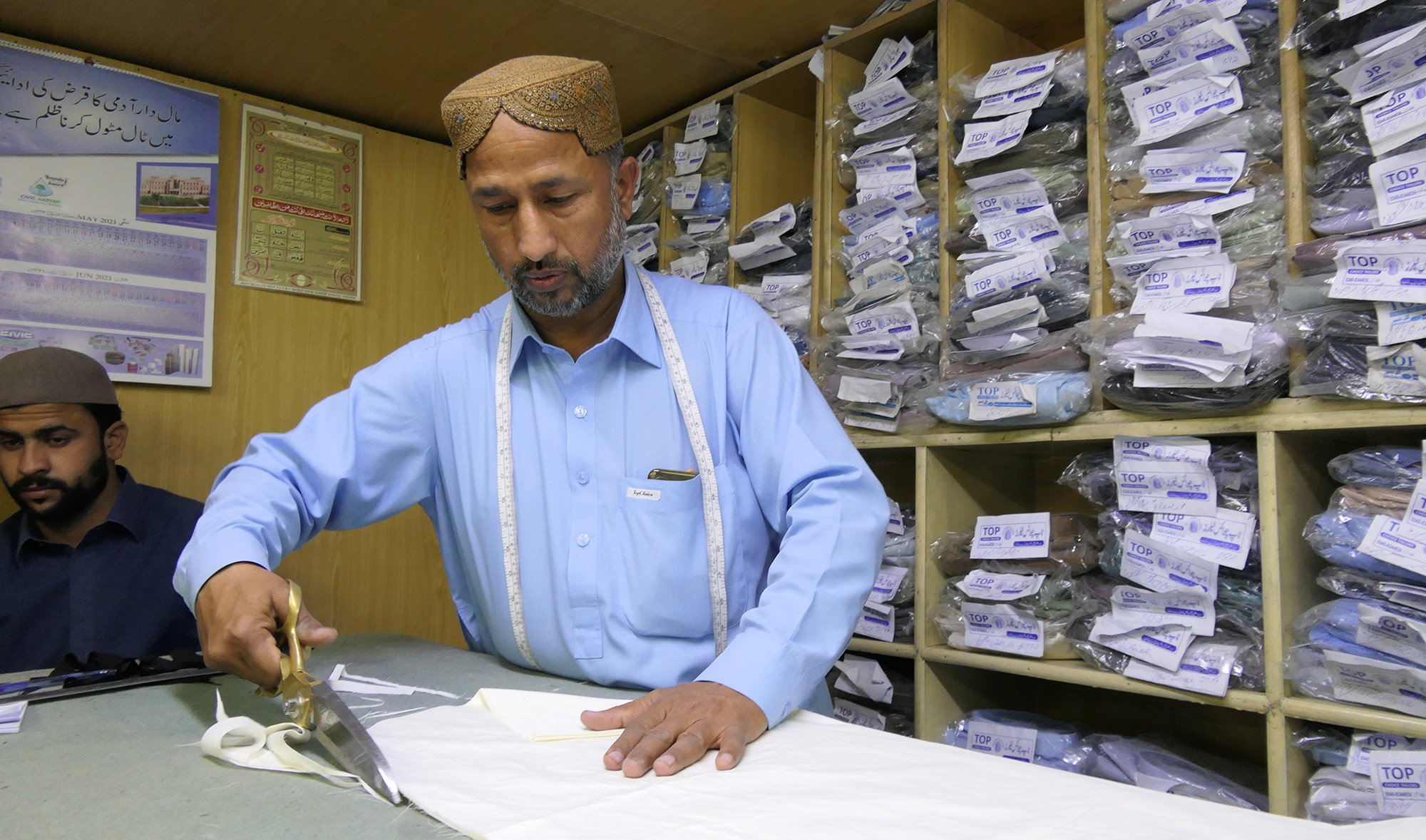
Master tailor Gul Shair cuts a piece of cloth at his shop in Quetta, Pakistan, on May 9, 2021. (AN photo)
Twelve meters of cloth are for the shalwar alone, making the trousers look like elaborate drapery.
"Earlier, it was attired by only the Bugti tribe, but now every tribe of the Baloch nation is wearing this particular dress," Shair told Arab News at his boutique in Killi Bangulzai area.
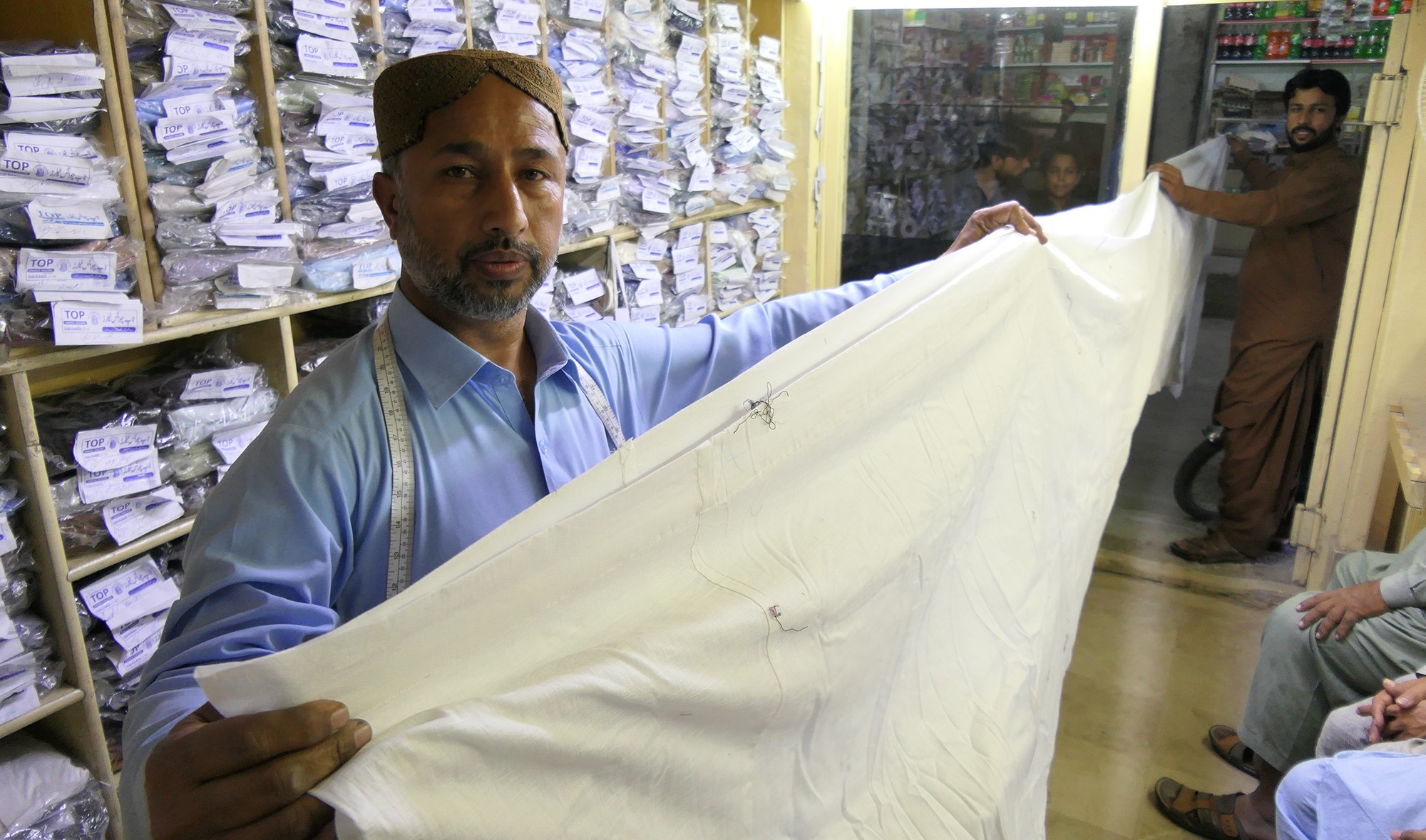
Gul Shair poses with the Bugti shalwar he sewed at his shop in Quetta, Pakistan, on May 9, 2021. (AN photo)
He says demand for the Bugti dress has been on the rise since the mid 1990s, especially during Eid season.
For this year's holiday, which marks the end of the fasting month of Ramadan, the master tailor with over four decades of experience has sewn 300 sets of the Bugti shalwar qameez and, overwhelmed by orders, say he has refused to take new ones long before Eid.
"The cutting and sewing of traditional Balochi dress takes additional hard-work and time, hence we don’t take orders for Bugti shalwar qameez after the 15th day of Ramadan," he said.
idher
The orders Shair received, arrived not only from across Balochistan but also other parts of Pakistan, particularly Karachi and Lahore.
Meanwhile, Bugtis themselves cannot imagine Eid without their traditional gear.
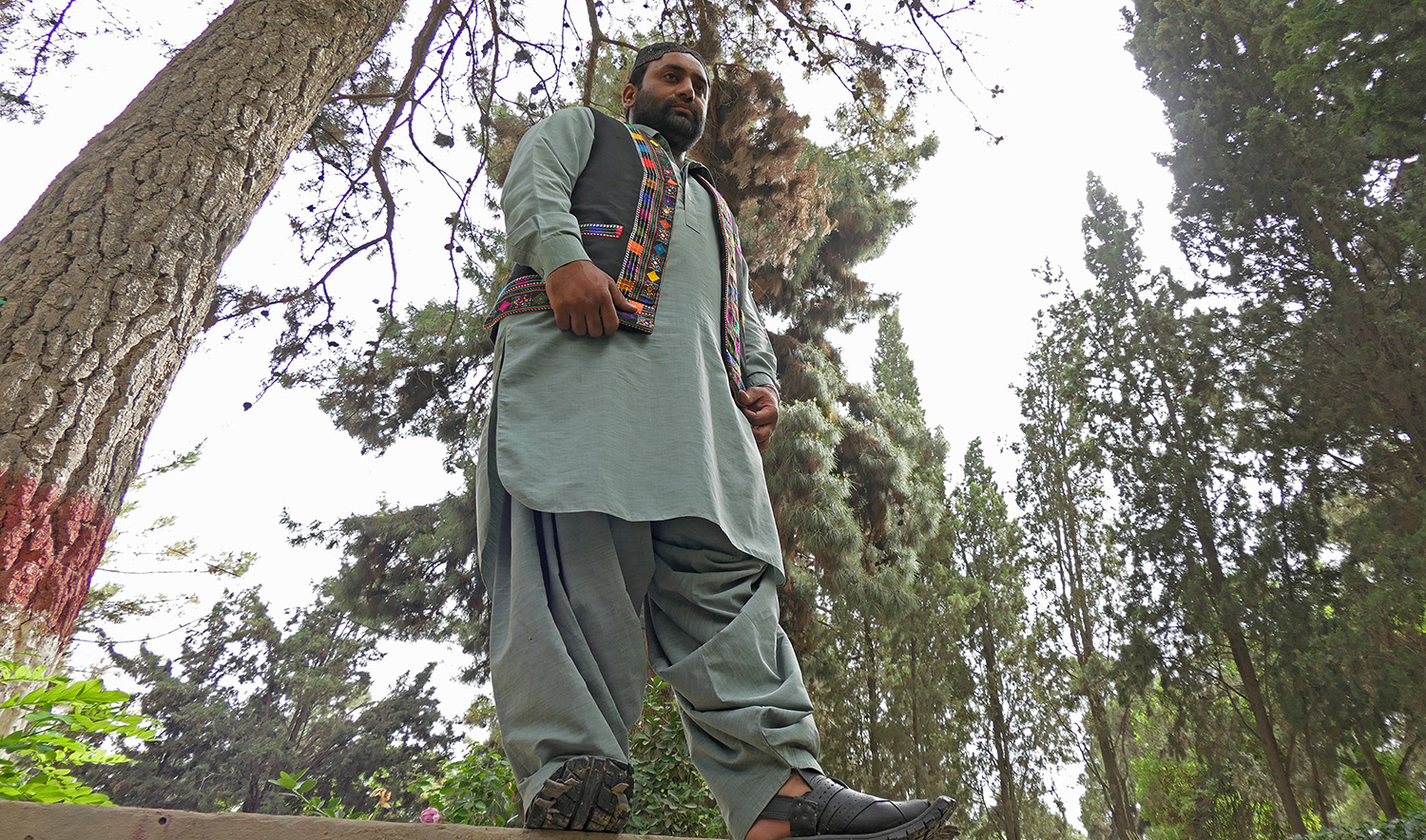
Fateh Bugti is dressed in traditional Bugti shalwar qameez in Quetta, Pakistan, on May 9, 2021. (AN Photo)
Fateh Muhammad Bugti, 33, who belongs to Saur area of Dera Bugti — the native land of the tribe in eastern Balochistan — this Eid ordered the traditional dress for his seven-year-old son.
"I want him to wear our traditional dress so that in the future he would be aware of its significance," he said.
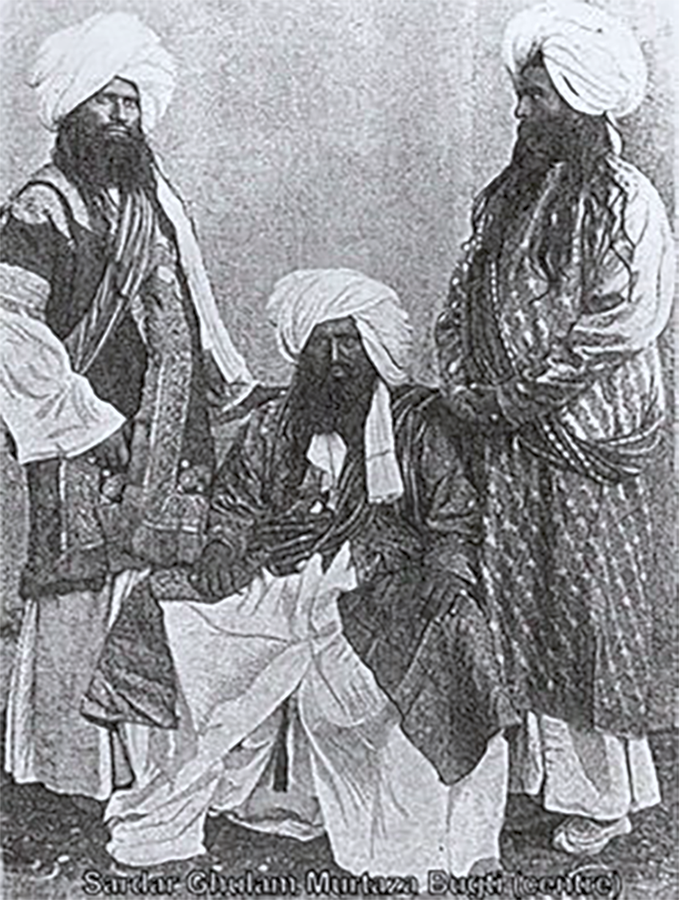
This undated photo shows Baloch tribesmen dressed in their traditional shalwar qameez in the pre-partition era. (Photo courtesy: Online)
Dera Bugti, which is the ancestral home of some 300,000 members of the tribe, has been ruled for centuries by the family of Nawabzada Gohram Bugti, a lawmaker from the provincial assembly and grandson of former minister Nawab Akbar Khan Bugti, who says the distinctiveness of the traditional dress was in the beginning related to status.
"We can recognize a person in our Bugti town through his dress because every single clan of the Bugti tribe has a different style. We can identify to which clan he belongs by the way he wears his turban or embroidered cap," he told Arab News.
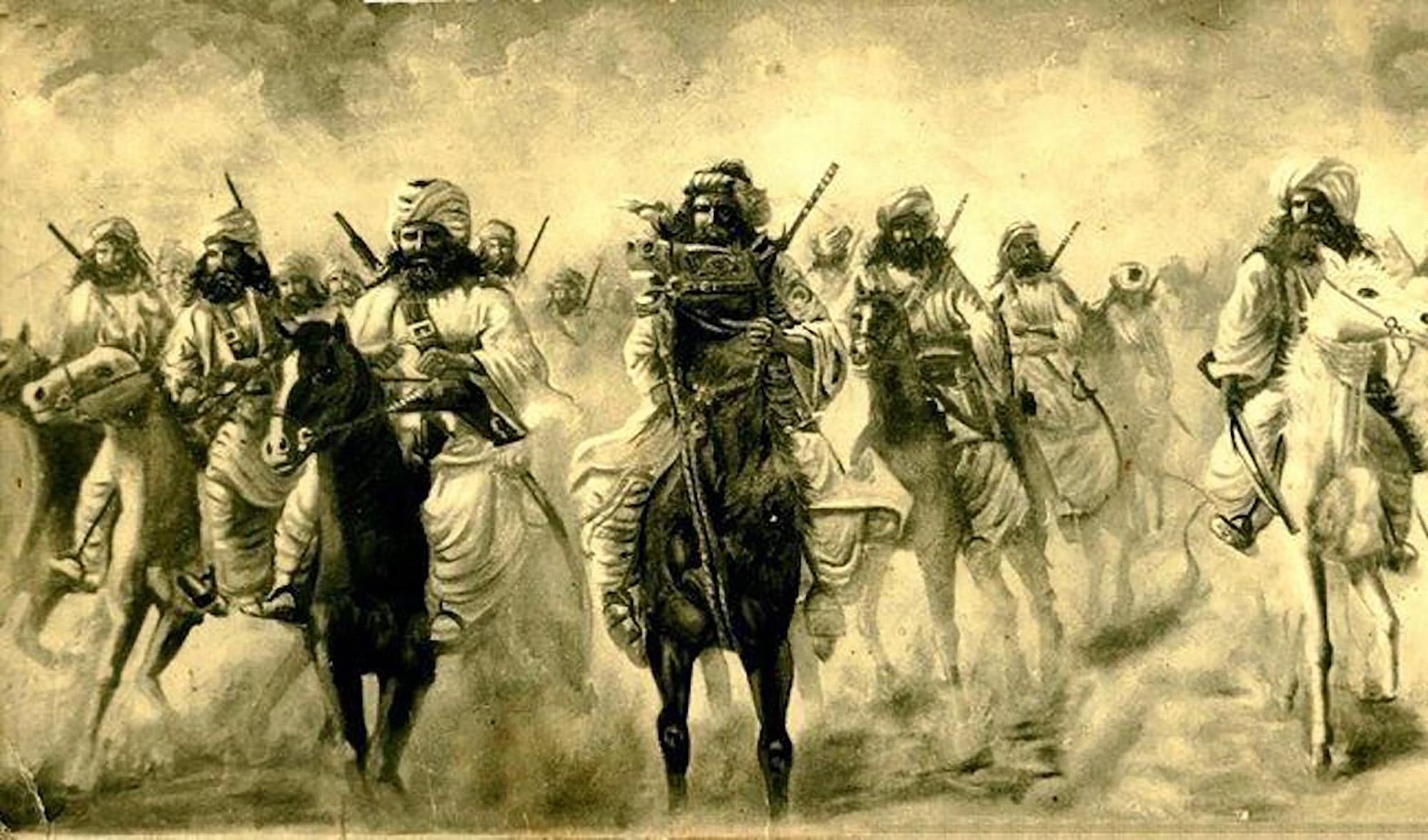
This undated photo shows a painting of Baloch warriors wearing traditional dresses. (Photo courtesy: Online)
What unifies the clans as a source of pride and proof of identity all is the long shalwar.
"The traditional shalwar qameez remains our recognition," Bugti said. "Our people lived in poverty, hence wearing attractive dress was a symbol of societal status among the Baloch."


