

Pakistan’s Hazara women strike back with martial arts

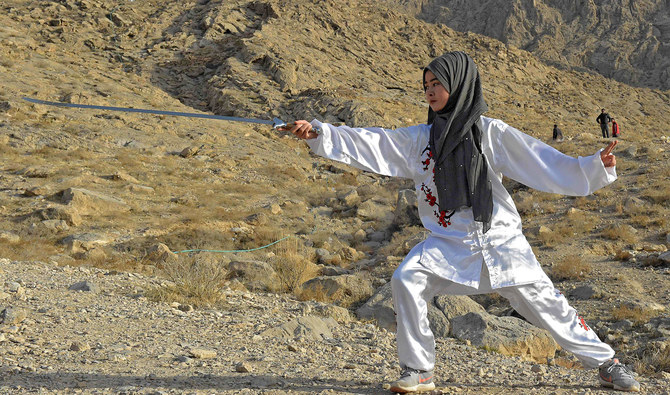
Martial arts student Fatima Batool of the Hazara community practises Shaolin Kung Fu during a self-defence martial arts training class, on the outskirts of Quetta, Pakistan, on January 31, 2021. (AFP/File)
Short Url
Updated 10 April 2021
Follow

Pakistan’s Hazara women strike back with martial arts

  • In Quetta’s two largest martial arts academies, a majority of students are young Hazara women
  • Say karate makes them feel safe and confident amid the violence

Hundreds of Pakistani Hazara women are learning how to deliver side kicks and elbow blows as martial arts booms within the marginalized community.

Hazaras, who are mainly Shia Muslims, have faced decades of sectarian violence in the southwestern city of Quetta, living in two separate enclaves cordoned off by checkpoints and armed guards to protect them.
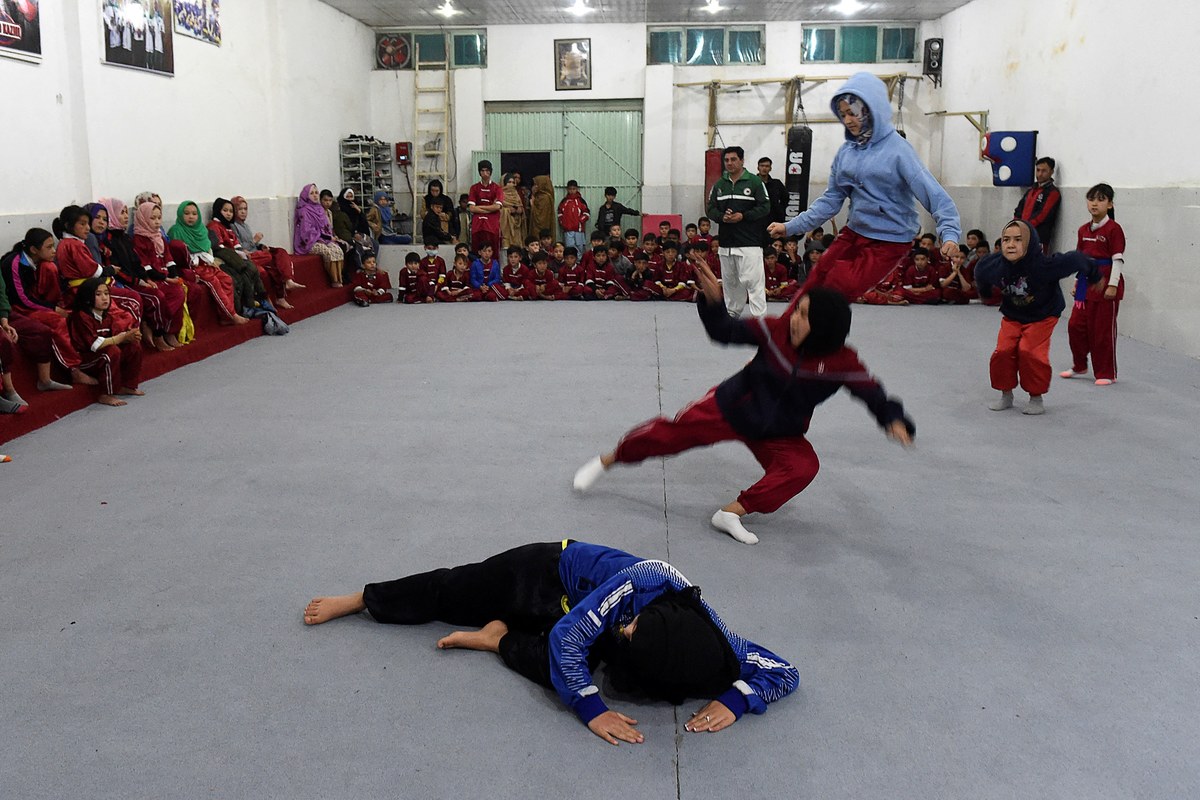


In this picture taken on January 31, 2021, students of the Hazara community take part in a martial arts training class at the Kazmi International Wushu Academy, in Quetta. (AFP)

Women must also contend with routine harassment from men, with groping commonplace in crowded markets or public transport.

“We can’t stop bomb blasts with karate, but with self-defense, I have learnt to feel confident,” 20-year-old Nargis Batool told AFP.

“Everyone here knows that I am going to the club. Nobody dares say anything to me while I am out.”
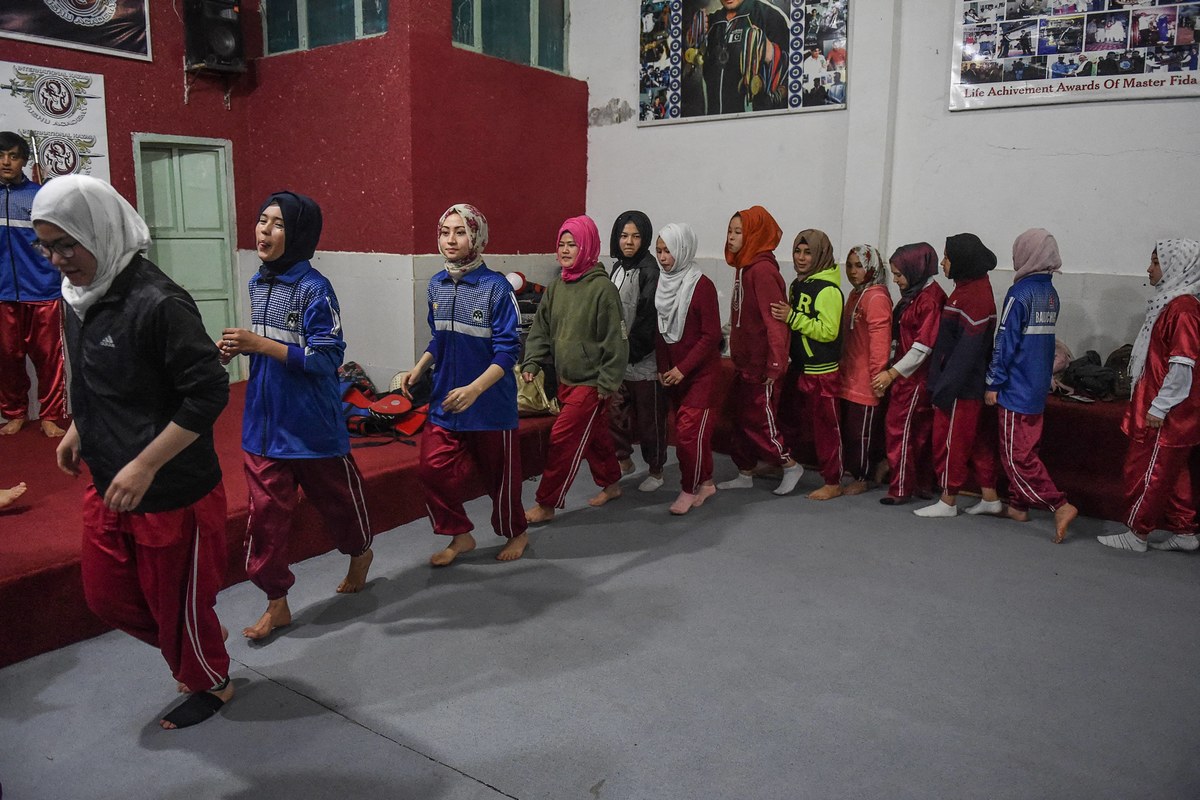


In this picture taken on January 31, 2021, female students of the Hazara community warm-up before a martial arts training class at the Kazmi International Wushu Academy, in Quetta. (AFP)

Up to 4,000 people are attending regular classes in more than 25 clubs in Balochistan province, of which Quetta is the capital, according to Ishaq Ali, head of the Balochistan Wushu Kung Fu Association, which oversees the sport.

The city’s two largest academies, which train around 250 people each, told AFP the majority of their students were young Hazara women.

Many of them go on to earn money from the sport, taking part in frequent competitions.
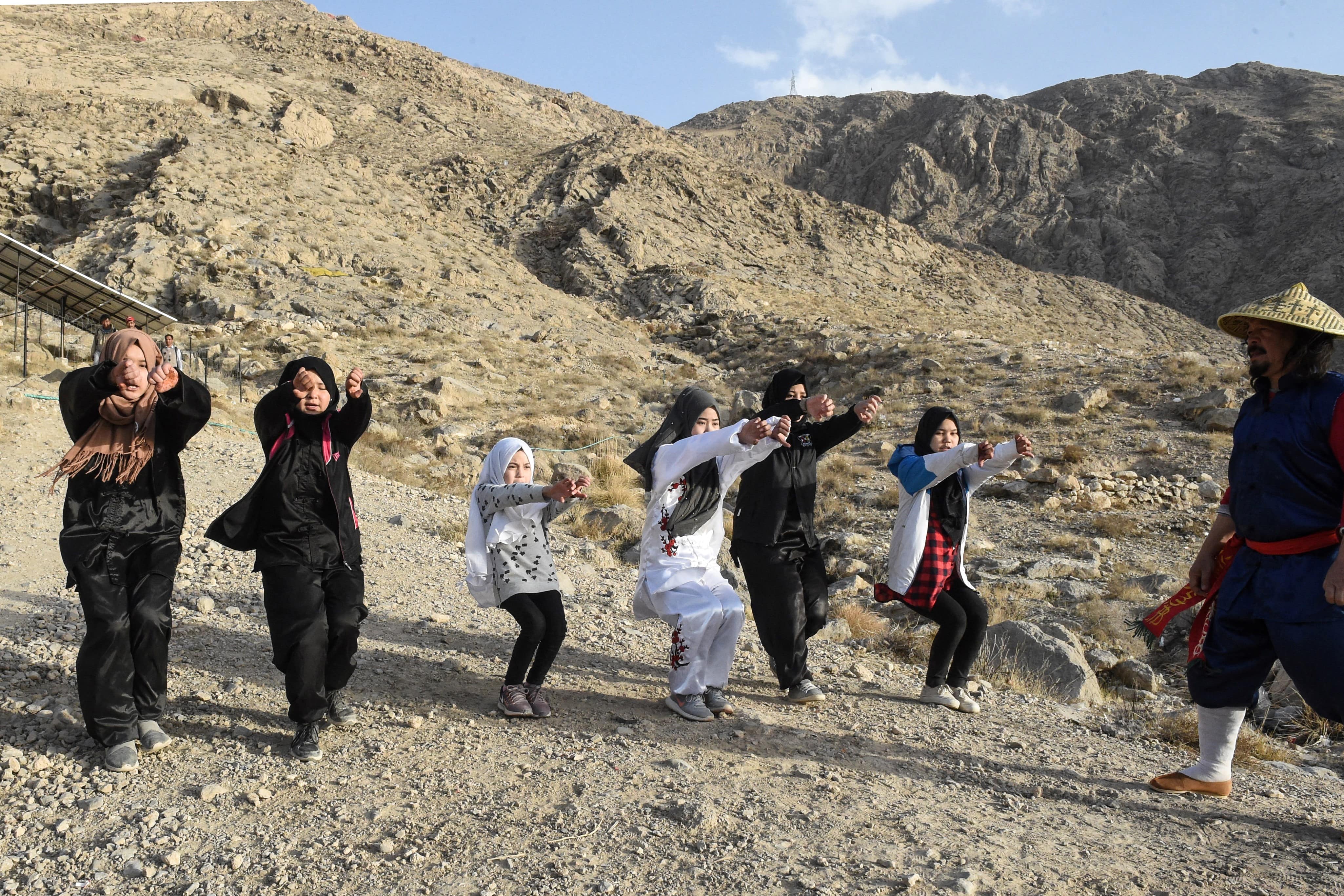


In this picture taken on January 31, 2021, Mubarak Ali Shan (R), a martial arts instructor trains female students of the Hazara community during a self-defence martial arts training class, on the outskirts of Quetta. (AFP)

It is still unusual for women to play sport in deeply conservative Pakistan where families often forbid it, but martial arts teacher Fida Hussain Kazmi says exceptions are being made.

“In general, women cannot exercise in our society... but for the sake of self-defense and her family, they are being allowed.”

The uptake is also credited to national champions Nargis Hazara and Kulsoom Hazara, who have won medals in international competitions.
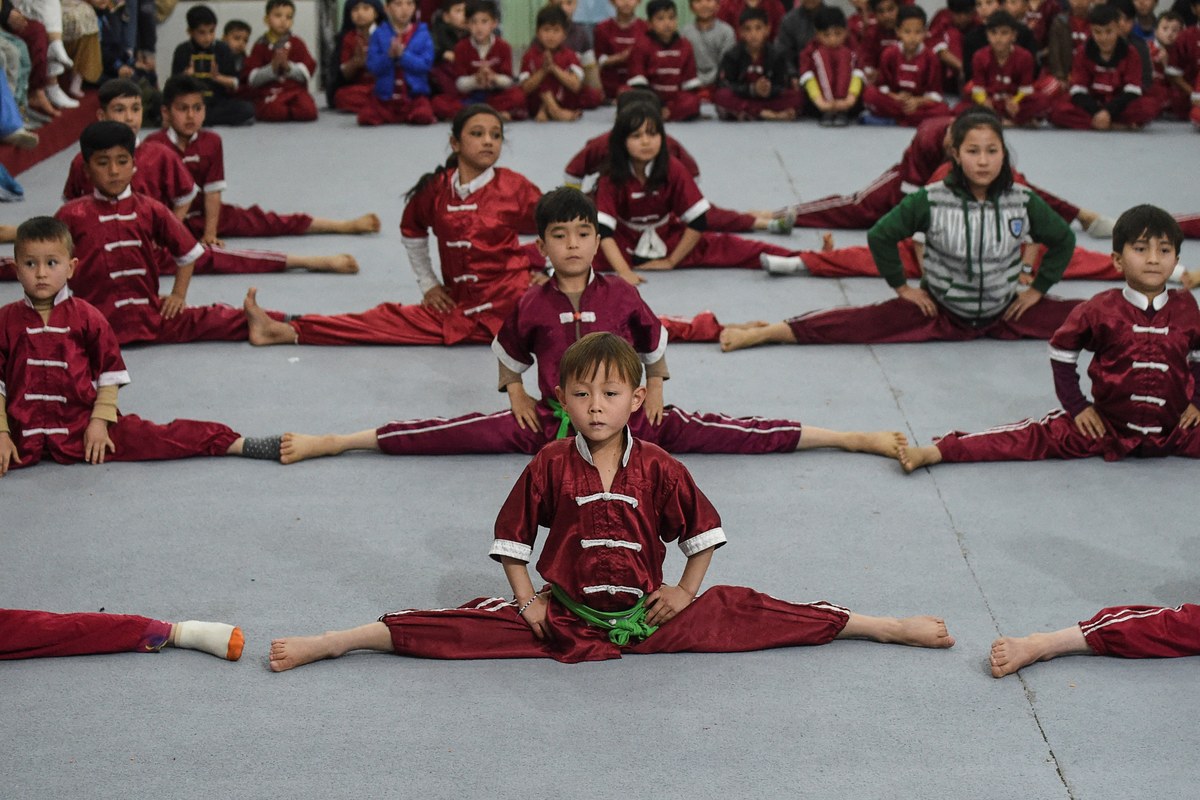


In this picture taken on January 31, 2021, students of the Hazara community take part in a martial arts training class at the Kazmi International Wushu Academy, in Quetta. (AFP)

Kazmi says he has trained hundreds of women over the years, after learning the sport from a Chinese master in the eastern city of Lahore.

The 41-year-old offers two hours of training six days a week for 500 rupees ($3) but gives free classes to women who have lost a relative to militant violence.

“The Hazara community is facing many problems... but with karate we can begin to feel safe,” said 18-year-old student Syeda Qubra, whose brother was killed in a bomb blast in 2013.

At least one killed, nine injured in IED blast in northwestern Pakistan

Updated 10 sec ago
Follow

At least one killed, nine injured in IED blast in northwestern Pakistan

  • Blast takes place near vehicle carrying employees of Lucky Cement factory in Lakki Marwat district, say police
  • No group has claimed responsibility for IED blast as Khyber Pakhtunkhwa police launch probe into the incident

PESHAWAR: At least one person was killed and nine others were injured in Pakistan’s northwestern Lakki Marwat district on Monday after an improvised explosive device (IED) blast occurred near a vehicle transporting employees of a cement factory, a police official said.

Lakki Marwat police official Shahid Marwat told Arab News the blast took place on the district’s Begu Khel Road at around 6:30 a.m. The explosion occurred near a vehicle carrying employees of the Lucky Cement factory located in the district, he said.

“Initial investigations suggest the device had been planted by militants,” Marwat said. “A rapid police response force was immediately deployed to the scene to evacuate the dead and wounded, secure the area and collect evidence.”

The police officer said several victims were in critical condition and were referred for treatment to the nearby Bannu district, adding that all those affected by the blast were residents of Begu Khel village.

He said police had launched an investigation into the incident.

No group has so far claimed responsibility for the attack. However, the Pakistani Taliban, or the Tehreek-e-Taliban Pakistan (TTP), have claimed responsibility for similar attacks in the past against Pakistani law enforcers and civilians in the province.

The TTP has carried out some of the deadliest attacks against Pakistani law enforcers since 2008 in its bid to impose its own brand of strict Islamic law across the country.

The attack comes as Pakistan struggles to contain a sharp surge in militant violence in recent months. According to statistics released last month by the Pakistan Institute for Conflict and Security Studies (PICSS), combat-related deaths in 2025 rose by 73 percent to 3,387, compared with 1,950 deaths in 2024.

These deaths included 2,115 militants, 664 security forces personnel, 580 civilians, and 28 members of pro-government peace committees, the think tank said. Most of the attacks took place in Khyber Pakhtunkhwa’s Pashtun-majority districts and southwestern Balochistan province, the PICSS noted.

On Sunday, three traffic police officials were shot dead by unidentified gunmen in Lakki Marwat district. No group claimed responsibility for the incident.

Islamabad accuses the Afghan government of harboring militants who launch attacks against Pakistan, a charge Kabul repeatedly denies. The surge in militant attacks in Pakistan has strained ties between the two neighbors, with Islamabad urging Kabul to take steps to dismantle militant outfits allegedly operating from its soil.