DUBAI: OPEC+ has lowered its 2021 oil demand growth forecast by 300,000 barrels per day reflecting concerns about the market’s recovery as new coronavirus lockdowns take hold, a report from its experts panel meeting seen by Reuters showed.
The Joint Technical Committee, which advises the group of oil-producing nations that includes Saudi Arabia and Russia, met on Tuesday ahead of a ministerial meeting on Thursday to decide output policy.
“Despite the ongoing destocking of commercial OECD stocks, they remain above the 2015-2019 average, while recognizing that prevailing volatility in the market structure is a signal of fragile market conditions,” the panel said in the report.
Under its base case scenario, it expects oil demand to grow by 5.6 million barrels per day this year, down by 300,000 bpd from its previous forecast.
It also raised its global supply growth forecast by 200,000 bpd to 1.6 million bpd.
As a result, it sees oil stocks in the industrialized world dipping below the 2015-2019 average in August, a month later than it previously forecast.
The Organization of the Petroleum Exporting Countries and allied producers, a group known as OPEC+, are curbing output by just over 7 million bpd to support prices and reduce oversupply. Saudi Arabia has added an additional one million bpd to those cuts.

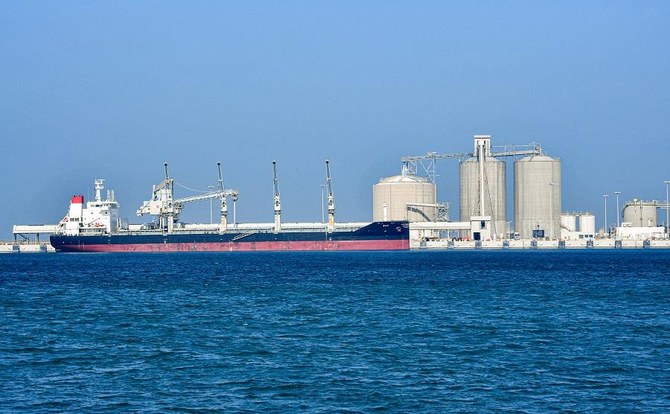
OPEC+ panel lowers oil demand growth forecast
https://arab.news/2pjzd
OPEC+ panel lowers oil demand growth forecast
- Under its base case scenario, it expects oil demand to grow by 5.6 million barrels per day this year
Saudi Arabia’s foreign reserves rise to a 6-year high of $475bn
RIYADH: Saudi Arabia’s foreign reserves climbed 3 percent month on month in January to SR1.78 trillion, up SR58.7 billion ($15.6 billion) from December and marking a six-year high.
On an annual basis, the Saudi Central Bank’s net foreign assets rose by 10 percent, equivalent to SR155.8 billion, according to data from the Saudi Central Bank, Argaam reported.
The reserve assets, a crucial indicator of economic stability and external financial strength, comprise several key components.
According to the central bank, also known as SAMA, the Kingdom’s reserves include foreign securities, foreign currency, and bank deposits, as well as its reserve position at the International Monetary Fund, Special Drawing Rights, and monetary gold.
The rise in reserves underscores the strength and liquidity of the Kingdom’s financial position and aligns with Saudi Arabia’s goal of strengthening its financial safety net as it advances economic diversification under Vision 2030.
The value of foreign currency reserves, which represent approximately 95 percent of the total holdings, increased by about 10 percent during January 2026 compared to the same month in 2025, reaching SR1.68 trillion.
The value of the reserve at the IMF increased by 9 percent to reach SR13.1 billion.
Meanwhile, SDRs rose by 5 percent during the period to reach SR80.5 billion.
The Kingdom’s gold reserves remained stable at SR1.62 billion, the same level it has maintained since January 2008.
Saudi Arabia’s foreign reserve assets saw a monthly rise of 5 percent in November, climbing to SR1.74 trillion, according to the Kingdom’s central bank.
Overall, the continued advancement in reserve assets highlights the strength of Saudi Arabia’s fiscal and monetary buffers. These resources support the national currency, help maintain financial system stability, and enhance the country’s ability to navigate global economic volatility.
The sustained accumulation of foreign reserves is a critical pillar of the Kingdom’s economic stability. It directly reinforces investor confidence in the riyal’s peg to the US dollar, a foundational monetary policy, by providing SAMA with ample resources to defend the currency if needed.
Furthermore, this financial buffer enhances the nation’s sovereign credit profile, lowers national borrowing costs, and provides essential fiscal space to navigate global economic volatility while continuing to fund its ambitious Vision 2030 transformation agenda.


