ISLAMABAD: Pakistan has said a much-talked about meeting of the foreign ministers of Pakistan and India in Dushanbe, Tajikistan, on the sidelines of a regional conference on Afghanistan, had not been scheduled so far.
The Heart of Asia conference, also called the Istanbul Process, is an initiative of the Republic of Afghanistan and the Republic of Turkey, officially launched at a conference hosted in Istanbul on November 2, 2011.
The presence of Pakistani foreign minister Shah Mahmood Qureshi and his Indian counterpart S. Jaishankar at the multilateral event have led to speculation in recent days that they might meet on the sidelines, especially in the backdrop of a recent thaw is relations between the two nuclear-armed arch-rivals.
The last meeting between Qureshi and an Indian external affairs minister took place in May 2019 in Bishkek on the sidelines of a Shanghai Cooperation Organisation meeting.
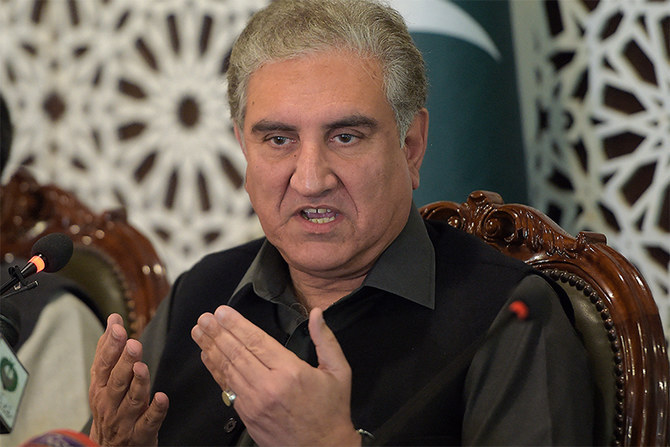
Qureshi, who left for Dushanbe today, Monday, told Pakistan's Dawn newspaper on Sunday that “no meeting [with the Indian foreign minister] has been finalised or requested.”
On Monday the FM said he would be meeting the foreign ministers of several countries at the Heart of Asia conference, including Iran, Turkey and Tajikistan, but did not specify if he would meet the Indian FM.
“Here [at the conference] Afghanistan, peace and stability in Afghanistan and its future will be discussed,” the foreign minister said in a video message before departing for Dushanbe. “The role that Pakistan has played for the peace and stability of Afghanistan; I will bring the attention of the foreign ministers of participating countries to that.”
On Sunday, the foreign office said during this year’s Heart of Asia conference Qureshi “would deliver a statement highlighting Pakistan’s positive contributions to the Afghan peace process and its support for Afghanistan’s development and connectivity within the regional framework. On the sidelines of the Conference, the Foreign Minister will hold consultations with key regional and international partners.”
In 2015, Pakistan co-chaired the Heart of Asia conference, along with Afghanistan, and hosted its fifth Ministerial Conference in Islamabad.


![]()

No meeting planned with Indian counterpart in Dushanbe, Pakistani foreign minister says
Short Url
https://arab.news/vh3kb
No meeting planned with Indian counterpart in Dushanbe, Pakistani foreign minister says
- Presence of Pakistani and Indian foreign ministers at Heart of Asia conference led to speculations they might meet on sidelines
- FM Qureshi to meet foreign ministers of Iran, Turkey, Tajikistan and other countries for bilateral meetings on the sidelines
Latest updates


© 2026 SAUDI RESEARCH & PUBLISHING COMPANY, All Rights Reserved And subject to Terms of Use Agreement.