

Praise for Saudi forces as trio of military exercises conclude

1 / 9
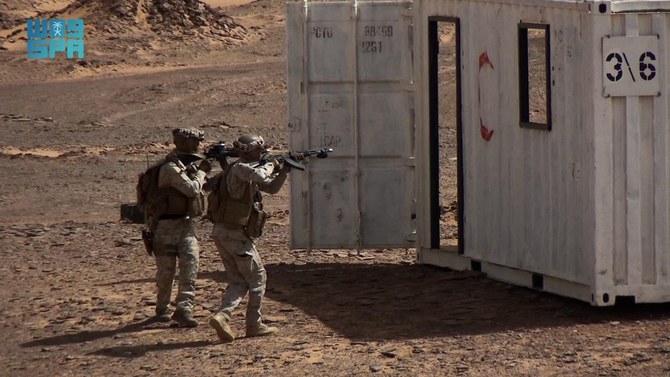
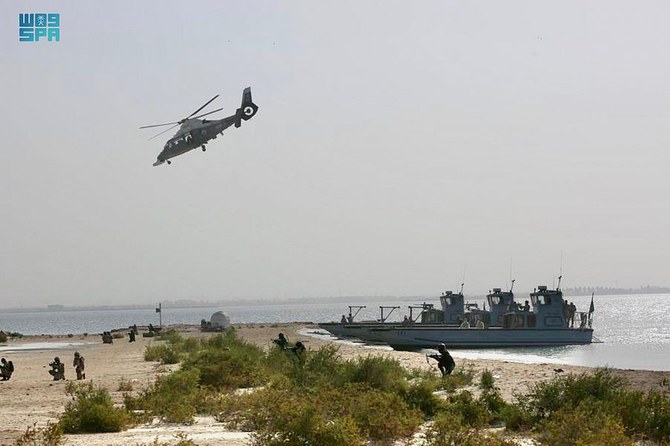
The Royal Saudi Land Forces and the US Marines concluded the “Falcon Claws 3” exercise in the Kingdom’s northwestern region. (SPA)
2 / 9
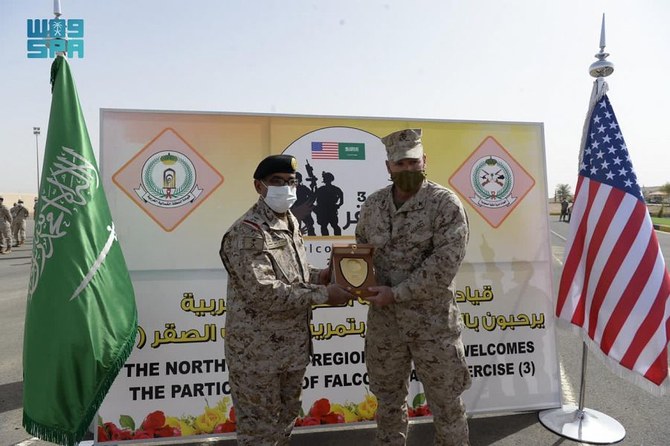
The Royal Saudi Land Forces and the US Marines concluded the “Falcon Claws 3” exercise in the Kingdom’s northwestern region. (SPA)
3 / 9
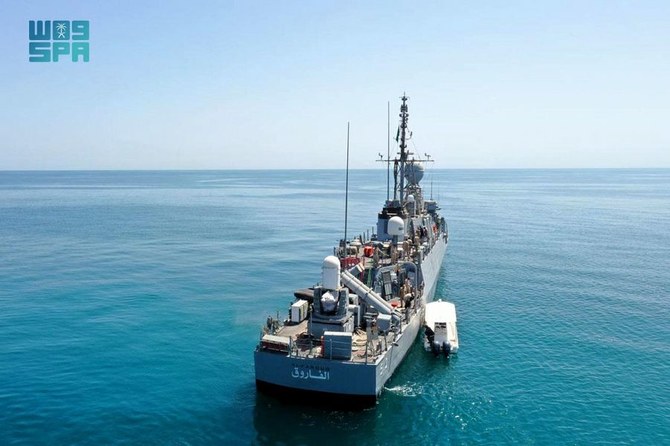
The Royal Saudi Naval Forces concluded the “Astronomy 4” exercise with the Sudanese Navy. (SPA)
4 / 9
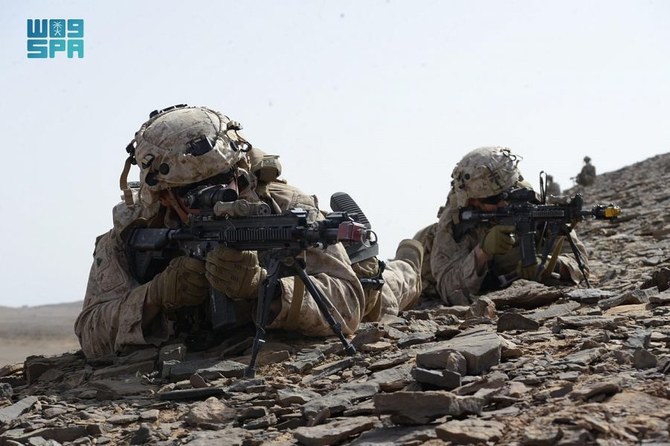
The Royal Saudi Land Forces and the US Marines concluded the “Falcon Claws 3” exercise in the Kingdom’s northwestern region. (SPA)
5 / 9
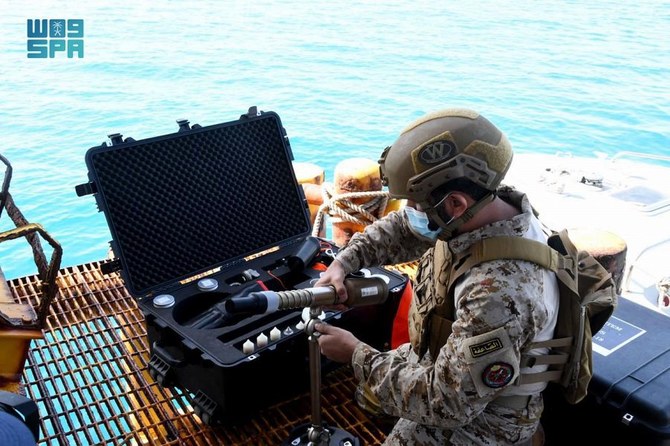
The Royal Saudi Naval Forces concluded the “Confrontation 4” exercise at the King Abdulaziz Naval Base in Jubail. (SPA)
6 / 9
The Royal Saudi Naval Forces concluded the “Confrontation 4” exercise at the King Abdulaziz Naval Base in Jubail. (SPA)
7 / 9
The Royal Saudi Naval Forces concluded the “Astronomy 4” exercise with the Sudanese Navy. (SPA)
8 / 9
The Royal Saudi Naval Forces concluded the “Confrontation 4” exercise at the King Abdulaziz Naval Base in Jubail. (SPA)
9 / 9
The Royal Saudi Naval Forces concluded the “Confrontation 4” exercise at the King Abdulaziz Naval Base in Jubail. (SPA)
Short Url
Updated 26 March 2021
Follow

Praise for Saudi forces as trio of military exercises conclude

  • RSLF worked alongside US Marines, while RSNF trained with their Sudanese counterparts
  • RSNF trained with Saudi authorities to protect shipping routes and confront threats to oil installations

RIYADH: A number of joint military exercises that have been taking place in Saudi Arabia this week concluded on Thursday.
Royal Saudi Land Forces and the US Marines completed their week-long Falcon Claws 3 maneuvers in the Kingdom’s northwestern region that aimed to strengthen Saudi-US relations, particularly in the military field.
The troops displayed “continuous effectiveness … in all aspects of the exercise, through which the excellent training was evident,” said the Ministry of Defense, which also praised officers and non-commissioned officers for the skills and abilities they demonstrated.

Meanwhile, the Royal Saudi Naval Forces (RSNF) concluded a five-day joint maritime exercise at King Abdul Aziz Naval Base in Jubail.
Titled Confrontation 4, it included units from the Eastern Fleet, the Ministry of Interior represented by the Eastern Province Border Guards, the Presidency of State Security, and the Ministry of Energy represented by Saudi Aramco and Aramco Gulf Operations Company.
The aims of the exercise were to test measures for protecting shipping routes, confronting threats to oil installations and maintaining freedom of maritime navigation, and to promote unified joint action among the participating units, the ministry said.
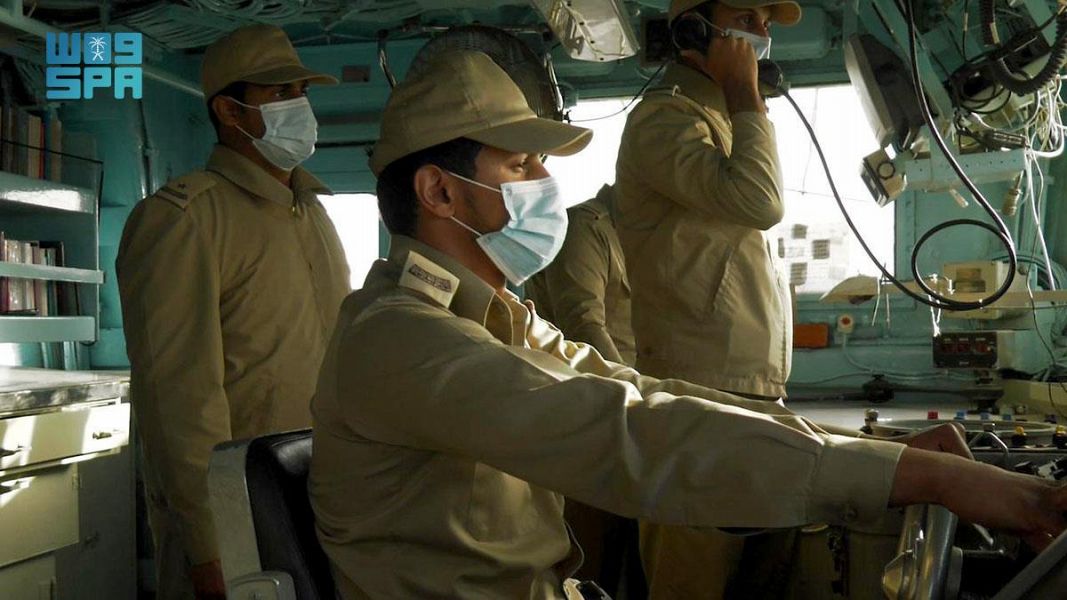

It was also designed to enhance coordination and information exchange, unify leadership and communications between the RSNF and the joint units, and provided training in the proper communication of reports and other information between the participating units and the operations center.
Brig. Gen. Ayed Mohammed Al-Asiri, the director of the exercise, said Confrontation 4 included a number of lectures and hypotheses, along with practical training in ways to deal with naval mines, defend vital installations and oil fields, and deal with drones and unmanned aerial vehicles.
He added that the objectives included improving the readiness of participating units to protect the security and safety of vital installations and oil fields, and to ensure freedom of navigation in regional and commercial maritime routes in the Arabian Gulf.


The RSNF also concluded its separate Astronomy 4 joint naval exercise with the Sudanese Navy at King Faisal Naval Base in the Western Fleet.
Maj. Gen. Yahya Al-Asiri, the commander of the Western Fleet and the exercise, congratulated both naval units for their success in achieving the goals that were set. He said the participants displayed high levels of professionalism and readiness, and achieved positive results in many maneuvers and tasks.
He added the five-day exercise included scenarios that tested ways to combat maritime threats, the ability of special forces to clear mines, the provision of helicopter reconnaissance and surveys, and air support. Troops also participated in exercises that featured fighting in built-up areas, storming buildings, target practice with primary and secondary weapons, and combat patrols.
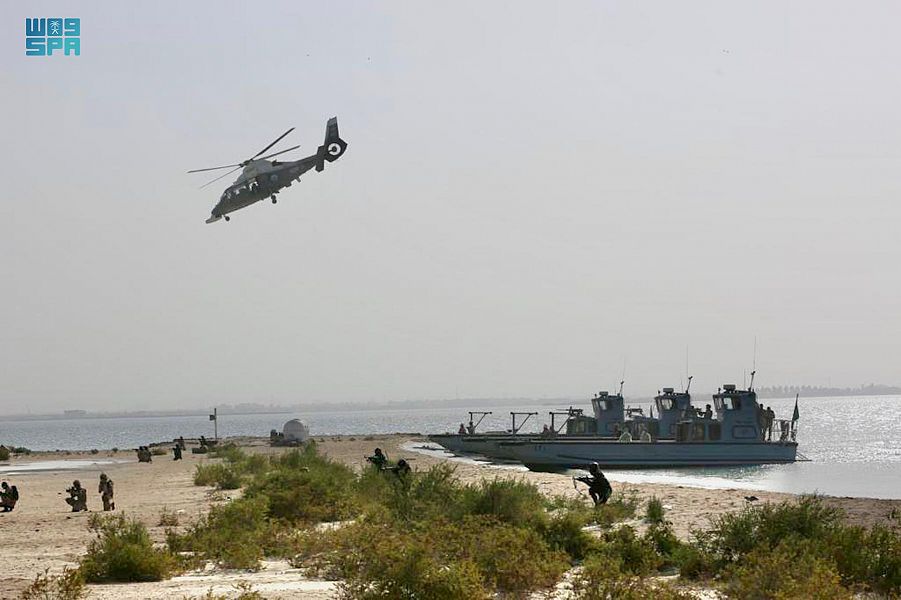
The exercises “were carried out with perfection and skill in dealing with the scenarios that were carefully planned in advance and consistent with the combat capabilities of the participating units and advanced systems that enhance their combat readiness,” said Al-Asiri.
He added that the series of Astronomy joint exercises with the Sudanese Navy are designed to enhance levels of performance and cooperation, to help ensure freedom of movement along international maritime routes in the Red Sea.

Desert Storm: 30 years on
The end of the Gulf War on Feb. 28, 1991 saw the eviction of Iraq from Kuwait but paved the way for decades of conflict

Enter


keywords

Klija Festival in Buraidah empowers small businesses

Updated 24 January 2026
Follow

Klija Festival in Buraidah empowers small businesses

  • Half a million attend 15-day celebration of heritage; event creates 1,500 seasonal jobs

RIYADH: The 17th Klija Festival in Buraidah drew more than half a million visitors during its 15-day run, celebrating the region’s heritage and entrepreneurial spirit.

Organized by the Qassim Chamber of Commerce, the event highlighted small businesses, providing a platform for entrepreneurs to showcase local products.

More than 340 sales outlets, marketing corners and points of sale welcomed attendees, while the festival provided 1,500 seasonal job opportunities, the Saudi Press Agency reported.

The small business pavilions featured families in the cottage industry, artisans and startups presenting traditional foods, and handicrafts and heritage items that reflect the region’s identity.

Participants said that the festival was a key marketing platform, boosting sales, increasing brand awareness, facilitating knowledge exchange and fostering connections with organizations supporting SMEs.

Mohammed Al-Hanaya, Qassim Chamber secretary-general and festival supervisor, said that the event brought together families, artisans, SMEs, companies and institutions, stimulating commercial activity, opening direct marketing channels and enhancing economic returns.

He added that the festival provided seasonal jobs for more than 1,500 young men and women across operations, marketing and services, supporting the labor market, empowering national talent, and connecting youth to the events and creative economy.

Klija, a traditional cookie made from wheat flour, dates or sugar, date syrup and natural ingredients such as cardamom and lemon, is a rich source of energy, carbohydrates, dietary fiber and natural proteins.

A cultural icon rooted in Qassim’s traditions, the cookie has gained international exposure through the festival, expanding the availability of packaged products.

Starting next year, the festival will be renamed the International Klija Festival, a rebranding approved by Qassim Gov. Prince Faisal bin Mishaal, who described it as a “successful model for turning local initiatives into global economic engines.”

This year’s festival, held at the King Khalid Cultural Center, included international participants from Egypt, Turkiye and Morocco, marking its evolution into a cross-cultural platform.