


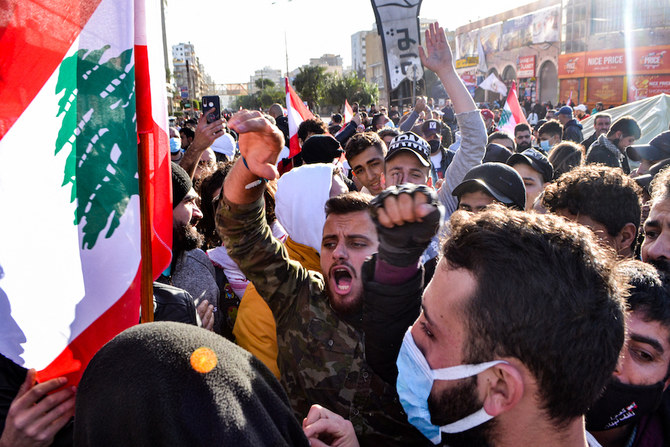
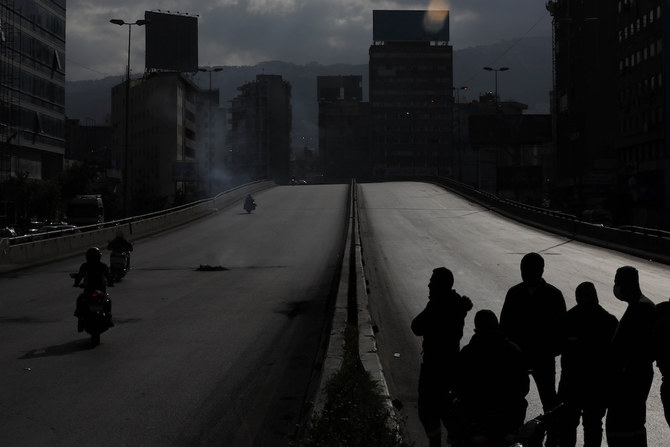


DUBAI: Since early March, Lebanese have taken to the streets in a renewed round of protests as the pound plunged to a record low on the black market. Over the past week masses of protesters have closed the main Martyrs’ Square in central Beirut while others have blocked the highway linking the capital with the north and south.
A new level of violence and distress has gripped the country. Fights over basic necessities have broken out in supermarkets as families struggle to survive. More than half of the population is now living below the poverty line.
On Thursday, the French foreign minister added his voice to the chorus of criticism of Lebanon’s politicians for failing to get their act together.
“They all committed to act to create an inclusive government and committed to implementing indispensable reforms,” Jean-Yves le Drian said in Paris. “That was seven months ago and nothing is moving.”
Lebanon has spent nearly two months under one of the world’s strictest COVID-19 lockdowns, pushing its sickly economy and restive population to the very brink. The period has coincided with mounting civil unrest and a brutal political assassination, prompting fears of further instability.
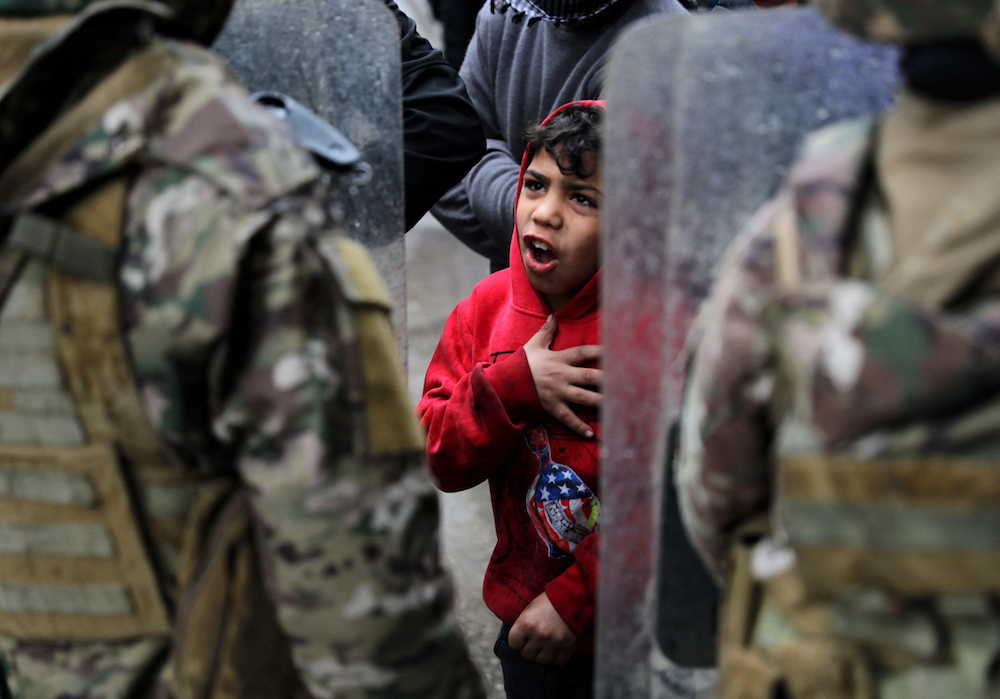
A boy gestures as Lebanese anti-government protesters confront security forces while going around the homes of deputies and government officials in the northern port city of Tripoli in January 2021. (AFP/File Photo)
Since Jan. 14, citizens not deemed “essential workers” have been prevented from leaving their homes by a strict round-the-clock curfew that was imposed after a surge in coronavirus cases overwhelmed the nation’s health system.
The coronavirus measures have piled further misery on a public already reeling from the currency collapse, with many households left hungry and forced to rely on charity or the burgeoning black market.
The combined impact of the renewed protests, political violence and economic pain is understandably jangling Lebanese nerves, still raw from the trauma of last August’s Beirut port blast.
For families facing destitution, with little chance of help from a barely functioning government, the latest lockdown has all the trappings of the final straw.
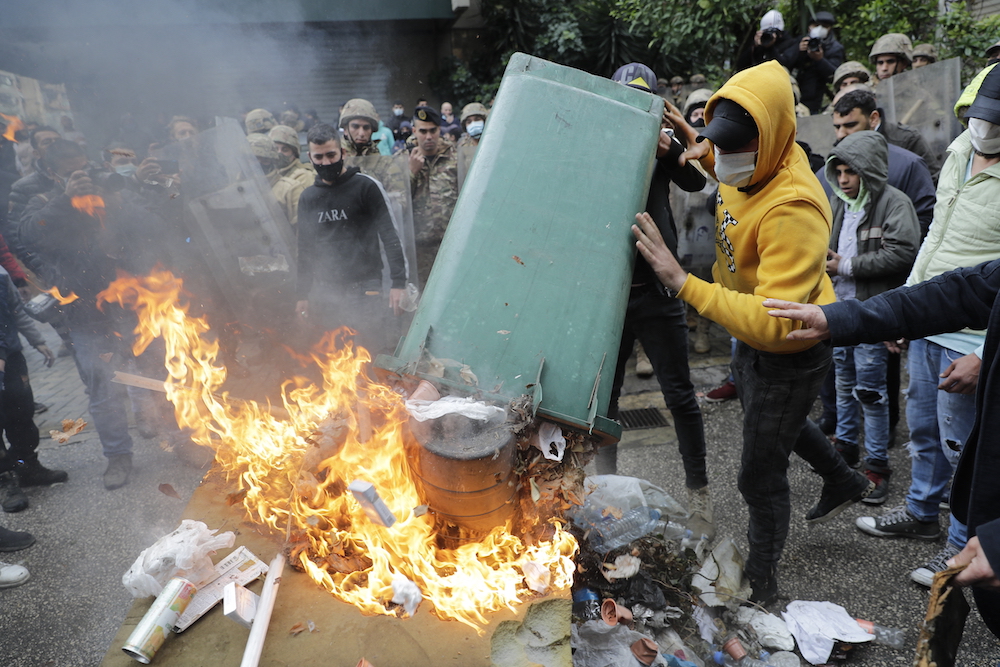
Lebanese anti-government protesters burn garbage as they go around the homes of deputies and government officials in the northern port city of Tripoli to protest the economic situation and their role in leading the country to crisis, on January 28, 2021. (AFP/File Photo)
“None of this is surprising,” Nasser Saidi, Lebanon’s former economy and trade minister, told Arab News.
“Income is down. GDP is down by at least 25 percent. We’re having inflation in excess of 130 percent; general poverty is over 50 percent of the population; food poverty is over 25 percent of the population; unemployment is rapidly increasing; and thousands of businesses are being shut down.
“All of this is coming to the fore and at the same time we have a lockdown. It was a very stupid decision the way it was done, to lock Lebanon down, because it prohibits people from even being able to go and get their groceries, their food and necessities. And then it meant also shutting down factories and manufacturing.
“If you get sick, you can’t even get to a hospital or afford a hospital. Hospitals are full now due to COVID-19. You have had a series of very bad decision-making and policies, and Lebanon is paying the price for it. This is going to continue. It is not going to go away. In my opinion, we are seeing just the tip of the iceberg.”
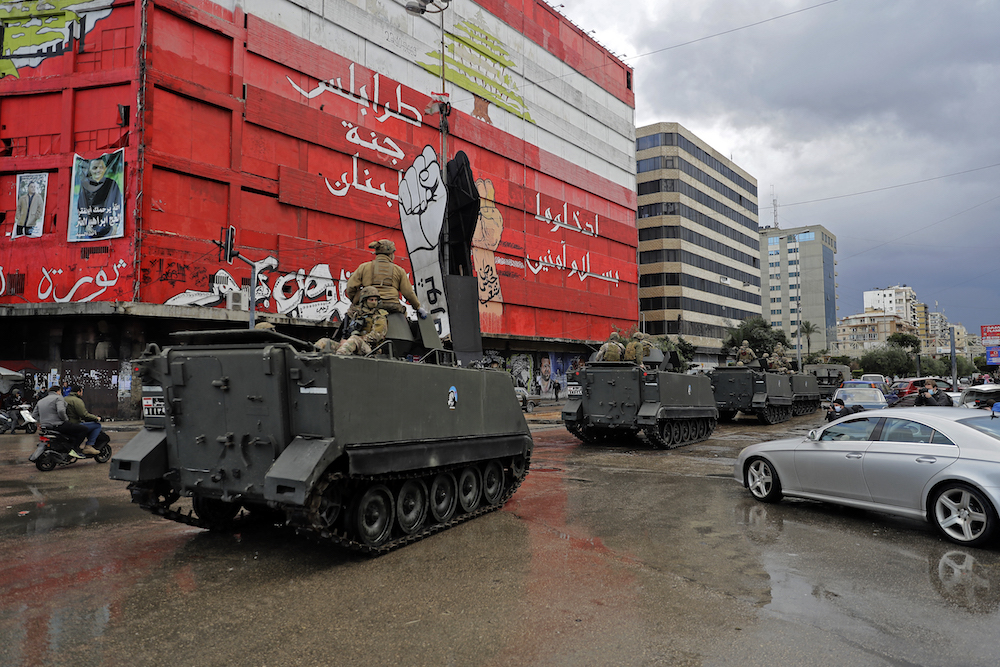
Lebanese army soldiers deploy around Al-Nour square in the northern city of Tripoli, following clashes between security forces and anti-government protesters. (AFP/File Photo)
The deteriorating economic and financial situation has pushed tens of thousands of Lebanese into poverty, yet more pain probably lies in store. While the official rate for the US dollar in Lebanon is 1,520 Lebanese pounds, the black-market price has now hit a record high of 10,000 — up from 7,000 just a few months ago.
On March 8, President Michel Aoun told security forces to prevent roads from being blocked by protesters after demonstrators declared a “day of rage.” Troops were brought in to briefly open main roads the protesters blocked who then closed them off again in a standoff with government forces that seems to see no end in sight.
However, with little progress made on the formation of a new cabinet or implementation of reforms, some protesters have called for a revival of the nationwide street movement of late 2019 that demanded the removal of the entire political class.
Critics of the government and the various armed factions that control political life in Lebanon are vulnerable to reprisals for speaking out. On Feb. 5, the intellectual and Hezbollah critic Luqman Slim was found dead in a car in the southern region of Zahrani with multiple gunshot wounds.
INNUMBERS
Lebanon crisis
*405,000 - Recorded COVID-19 infections.
*19.2% - Fall in GDP in 2020.
*1/5 - Population in extreme poverty.
Although investigations are still underway, the Iran-backed Shiite militia is considered the prime suspect. Many observers believe the killing marks a dark turning point for a country whose fate already hangs by a thread.
“Throughout all the assassinations we had in Lebanon during the early 2000s and even the 2006 invasion by Israel, we never felt danger like we do now,” Mariana Wehbe, who runs a PR firm in Beirut, told Arab News. “When before did we have to hide our jewelry and our valuables? Everyone is afraid about what will happen next.”
Some observers fear Lebanon’s economic trainwreck could leave the public even more dependent upon political factions to provide them with aid and security — a throwback to the 1975-90 civil war period when the militias ruled supreme.
Although pessimistic about the situation, Ramzy El-Hafez, a political analyst who lives in Beirut, believes Lebanon is still a long way from a repeat of the darkness that engulfed the country in 1975.
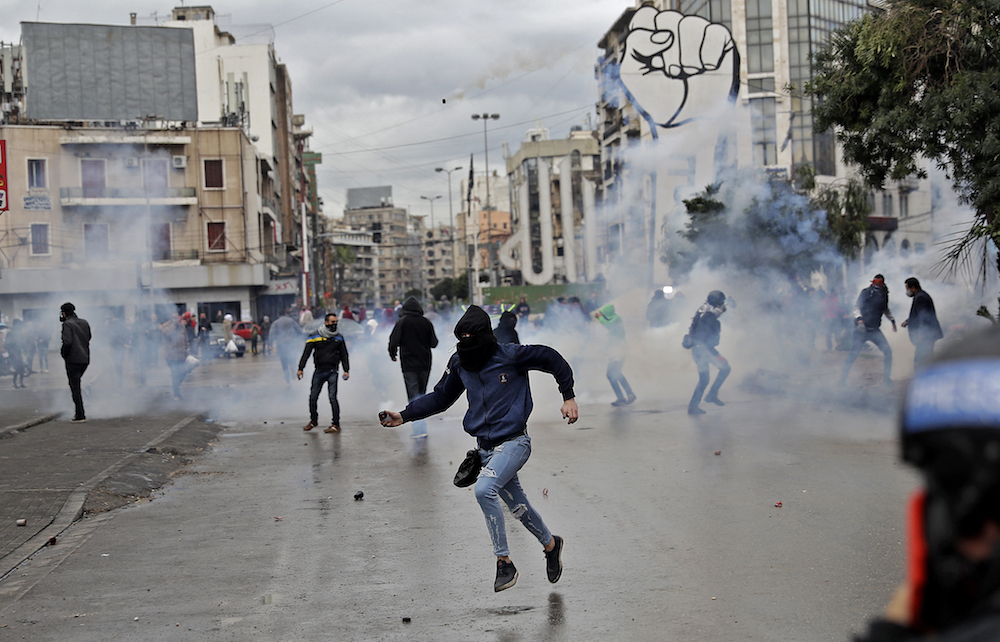
Tripoli was already one of Lebanon’s poorest areas before the coronavirus pandemic piled new misery onto a chronic economic crisis. Many of its residents have been left without an income since Lebanon imposed a full lockdown earlier this month in a bid to stem a surge in COVID-19 cases and prevent its hospitals from being overwhelmed. (AFP/File Photo)
“We had two armed groups fighting each other. Now we just have Hezbollah and there is no armed group trying to fight it,” El-Hafez told Arab News.
“There are no signals that we are going to have a civil war. The new phase is the one we are already in: Hezbollah controls the country with impunity, and no one is opposing it. Additionally, the new phase is that Lebanon in the past was able to benefit from help from friends in the Gulf and in the West. Now no one is helping Lebanon.
“We are trying to fix our own problems, but we are not able to do so and our friends are telling us to get rid of Hezbollah before they can help us. In Lebanon, we are living in a trap. That is the new phase.”
Slim’s murder does not mark a significant turning point, El-Hafez says, because killings of this sort have not stopped since the assassination of Rafik Hariri, the former Lebanese prime minister, in 2005.
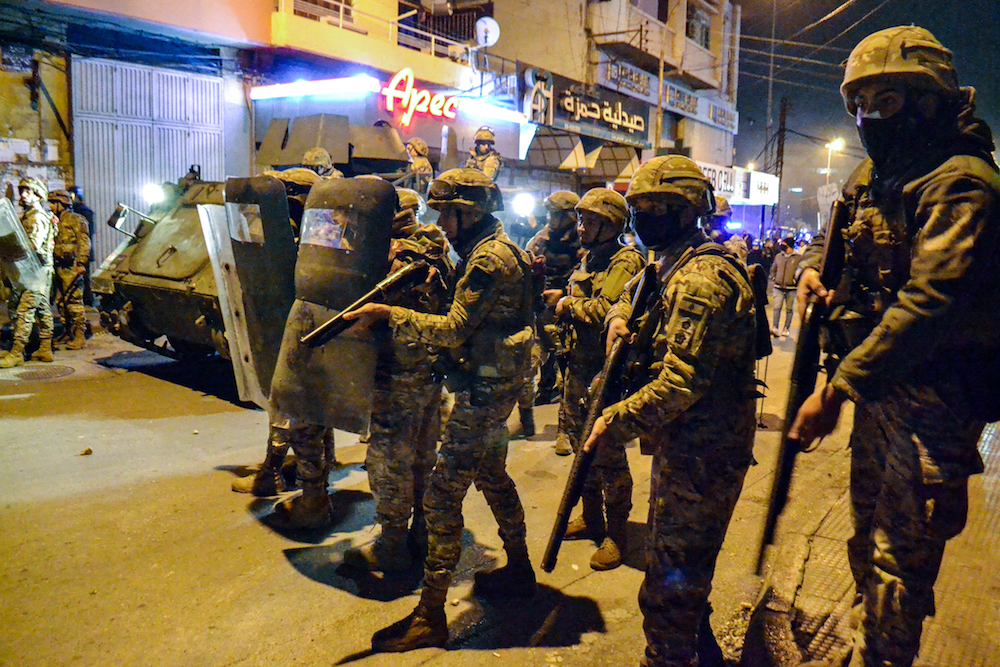
Security forces confront anti-government protesters along a main road close to Al-Nour square amid clashes in the center of the impoverished northern Lebanese port city of Tripoli. (AFP/File Photo)
“Sometimes they are spaced out, but they continue and every time one takes place people think we have entered into a new phase,” he said.
Not everyone is convinced Slim’s murder is simply business as usual. One source in Tripoli, who spoke to Arab News on condition of anonymity, believes Hezbollah has found itself backed into a corner.
“Hezbollah appears threatened to have lashed out like this,” the source said. “Something is taking place in the wings, but we don’t know what it is yet. It is perilous for the country that a new period of assassinations could take place on top of what we are already going through.”
When a political rival is murdered in Lebanon, the case is rarely solved. Factions and militias have long dominated the political landscape, characterized for long by clientelism, social patronage and sectarianism.
“Before any deal, parties tighten their ranks,” the source said. “Lebanese political parties look at politics as a business, not as a service to the people.” As a result, an ineffectual government has failed to launch a financial rescue plan or implement desperately needed economic reforms to pull the country out of the doldrums.
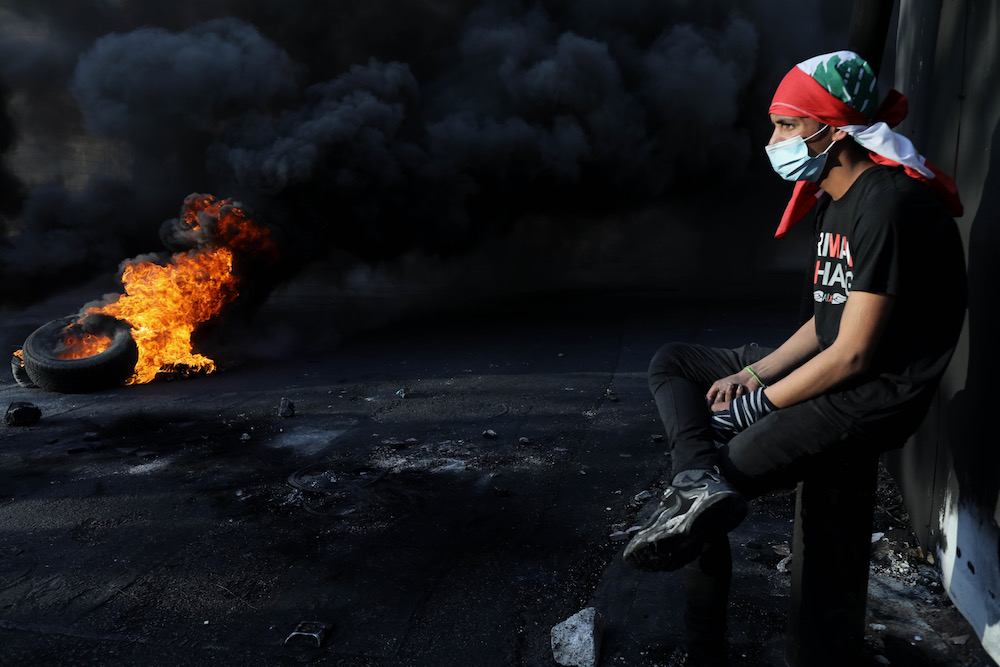
The deteriorating economic and financial situation has pushed tens of thousands of Lebanese into poverty, yet more pain probably lies in store. (Photo: Marwan Tahtah)
Hezbollah’s fortunes depend to a large extent upon those of its patrons in Tehran, analysts say. Under sanctions pressure from the Trump administration, Iran and its various proxies across the region found themselves squeezed and isolated.
The US administration is expected to renegotiate the Joint Comprehensive Plan of Action (JCPOA), also known as the Iran nuclear deal, which President Joe Biden helped broker while serving as Barack Obama’s vice president.
Opinion
This section contains relevant reference points, placed in (Opinion field)
Although the Biden team has signaled it will not give Iran the same free pass it enjoyed in the Obama years to continue its “malign” activities in the region, the shift bodes well for the future of Iranian proxies such as Hezbollah after Trump’s “maximum pressure” campaign.
El-Hafez is skeptical that a more conciliatory US attitude toward Iran will have an immediate effect on Lebanon.
“I don’t think that we can expect anything from the Biden administration in the short term,” he said. “While they are interested in a new deal with Iran, the negotiations will take a long time. Last time the deal took several years to pull off.
“As far as Lebanon is concerned, I don’t think the country can expect any help for some time.”
-----------------
Twitter: @rebeccaaproctor


