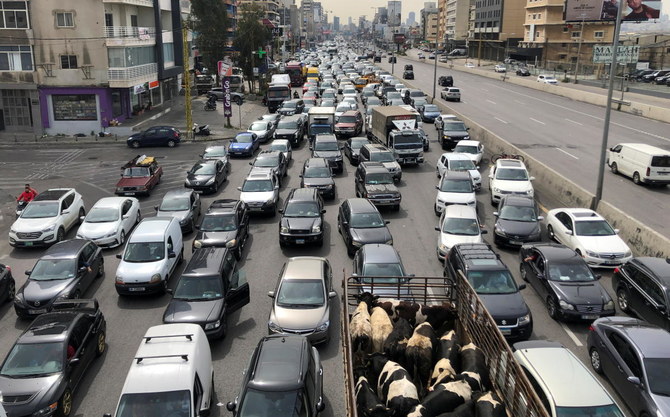
Beirut – Fuming Lebanese protesters set up new roadblocks Tuesday to vent anger over political inaction in the face of deepening poverty, but security forces managed to reopen some to traffic.
The country has been mired in economic crisis, which has brought surging unemployment and spiraling prices while the currency has plunged to a new low to the dollar on the black market.
The caretaker government — which formally resigned after a massive explosion in Beirut port last August that killed more than 200 people — has failed to agree on a new cabinet since.
Roadblocks have become a near daily occurrence in the small Mediterranean country and lasted all day Monday, including in and out of Beirut.
Demonstrators on Tuesday again cut off some roads in the northern city of Tripoli and the eastern Bekaa Valley region, the state-run National News Agency reported.
Highways leading to central Beirut were also closed, though most later re-opened. Others blinked open and closed throughout the morning.
Some protesters have called for a revival of the nationwide street movement of late 2019 that demanded the removal of Lebanon’s entire political class, widely seen as incompetent and corrupt.
More than half of the population is living below the poverty line, and prices have soared as the Lebanese pound has lost more than 80 percent of its value.
With foreign currency reserves dwindling fast, the authorities have warned they will soon have to lift subsidies on fuel and mostly imported food.
President Michel Aoun has accused demonstrators blocking roads of “sabotage,” but also called for authorities to prevent “the manipulation of food prices.”
No serious clashes between security forces and demonstrators in recent days happened despite growing anger on the streets, in contrast to previous rallies.
Analyst Karim Bitar said “revolution fatigue,” a “lack of clear vision or leadership” and anxiety over coronavirus were some of the reasons behind Tuesday’s smaller numbers, and on-and-off road blocks.
“People are far too busy with the daily struggle to survive. Issues of political change have become secondary,” he told AFP.
Lebanon’s economic crisis has been aggravated by several lockdowns to stem the spread of the coronavirus.
On Monday, the government introduced some relaxations in the latest stay-at-home order, imposed after hospitals became overwhelmed following the winter holidays.


![]()

Lebanon protesters block roads over worsening poverty
Short Url
https://arab.news/7cm2e
Lebanon protesters block roads over worsening poverty
- Half the population lives below poverty line and prices have soared as Lebanese pound lost 80 percent of its value
- President Michel Aoun accused demonstrators of "sabotage", called for authorities to prevent "the manipulation of food prices"


Latest updates


© 2026 SAUDI RESEARCH & PUBLISHING COMPANY, All Rights Reserved And subject to Terms of Use Agreement.