- Shehbaz Sharif says calls for end to Israeli ceasefire violations in Gaza and ‘credible pathway to Palestinian self-determination’
- Islamabad hopes involvement in Gaza peace board will allow it to shape post-war arrangements while protecting Palestinian rights
ISLAMABAD: Pakistan Prime Minister Shehbaz Sharif on Thursday hailed President Donald Trump as a “man of peace” as he attended an inaugural meeting of the Gaza Board of Peace in Washington.
The board, formed under a UN Security Council resolution following a fragile October 2025 ceasefire between Israel and Hamas, is intended to oversee international stabilization and rebuilding efforts in Gaza after Israeli war.
Pakistan’s premier called for an end to ceasefire violations by Israel to achieve long-lasting peace and to advance reconstruction efforts in Gaza, praising Trump for his efforts to bring about peace in various parts of the world.
“Your timely and very effective intervention to achieve ceasefire between India and Pakistan potentially averted loss of tens of millions of people,” Sharif said, addressing Trump at the meeting.
“You have truly proved to be a man of peace and let me say Mr. president you are truly savior of South Asia.”
In the past, Sharif has gained favor with Trump for publicly praising him for helping broker a ceasefire between Pakistan and India following their intense, four-day military conflict in May, while Islamabad also formally endorsed the US president for a Nobel Peace Prize.
Speaking at the meeting, the Pakistan premier said the people of Palestine must exercise “full control of their land and future” in line with the UN Security Council’s resolutions.
“The people of Palestine have long endured illegal occupation and immense suffering. And to achieve long lasting peace, it is very important that ceasefire violations must end to preserve lives and advance reconstruction efforts,” he said.
“The people of Palestine must exercise full control of the land and their future, in line with UN Security Council resolutions. Mr. president, we must work together toward a credible pathway to Palestinian self-determination through the establishment of an independent, sovereign and contiguous State of Palestine, in line with the relevant resolutions.”
Earlier, Trump also spoke at the gathering and praised Sharif as well as Pakistan’s Chief of Defense Forces Field Marshal Syed Asim Munir.
Pakistan formally joined the Board of Peace last month after Sharif signed its charter alongside other world leaders in Davos. The forum includes an eight-nation Muslim bloc comprising Türkiye, Egypt, Jordan, Indonesia, Qatar, Saudi Arabia and the United Arab Emirates.
Islamabad hopes involvement in the forum will allow it to shape post-war governance arrangements while protecting Palestinian political rights.
Separately, Sharif met with US Secretary of State Marco Rubio, who appreciated Pakistan’s ongoing support of Trump’s peace plan for Gaza and for joining the Board of Peace.
“In our meeting, we discussed the importance of our strategic relationship on critical minerals development and counterterrorism,” Rubio said on X.
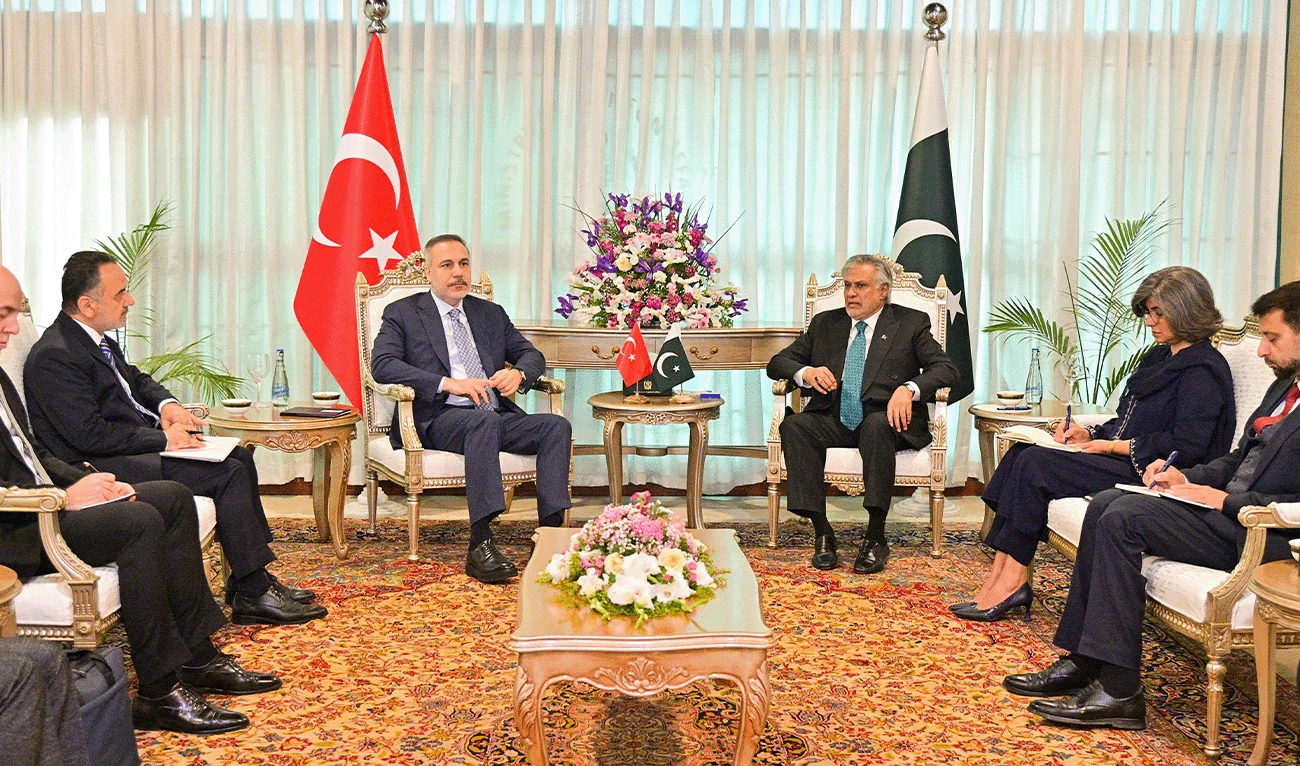
Sharif also held informal meetings in Washington with global leaders who arrived to attend the inaugural meeting of the Board of Peace.
The prime minister met informally with the Bahrain’s King Hamad bin Isa Al-Khalifa, Azerbaijan President Ilham Aliyev, Uzbekistan President Shavkat Mirziyoyev, Kazakhstan President Kassym-Jomart Tokayev and Indonesian President Prabowo Subianto.
“Important global and regional matters were discussed during the meetings,” Sharif’s office said.