Amnesty director slams Turkey over rights abuses

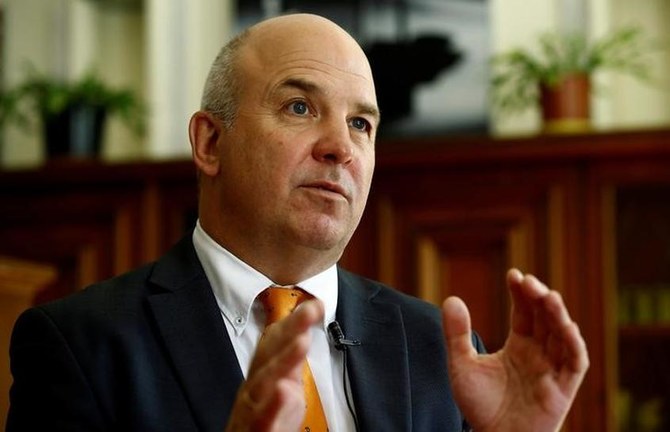
Amnesty International’s Regional Director for Europe Nils Muiznieks. (Reuters)
Short Url
Updated 11 March 2021
Follow

Amnesty director slams Turkey over rights abuses

  • Nils Muiznieks urges European countries to take harder line against Ankara
  • ‘Turkey’s disregard for human rights has recently become particularly brazen’

LONDON: The director of Amnesty International’s Europe office has called for a harder line against Turkey’s human rights violations, saying “the time for delay and dithering is over” in holding the country accountable.

“Turkey’s disregard for human rights has recently become particularly brazen,” said Nils Muiznieks.

“It is not only jailing innocent journalists, human rights defenders, protesting students and social media activists, it is also ramping up political persecution and ignoring European Court of Human Rights (ECtHR) rulings to release people unjustly imprisoned.

“It is time for European governments to ratchet up the pressure and demand Turkey’s compliance with its obligations and not be blinded by the lofty statements in the long-awaited human rights action plan announced by President (Recep Tayyip) Erdogan on 2 March.”

Muiznieks added: “The deep erosion in the justice system can only be reversed through a root and branch reform.”

Turkey is a member of the Council of Europe, and has long “gone through the motions of cooperating with the ECtHR,” he said, adding that Ankara’s refusal to budge on two high-profile cases of human rights abuses that have made their way through the European court system has driven a diplomatic wedge between the country and its European neighbors.

“A stark sign of disengagement from ‘business as usual’ for Turkey has been its refusal to release two leading figures who have been wrongly imprisoned for more than three and four years respectively — Osman Kavala, a philanthropist and pillar of Turkish civil society, and Selahattin Demirtaş, a political opposition leader, both of whom I know personally.”

The ECtHR, Muiznieks said, had found that both of these detentions “were cases of political persecution.”

Pan-European organizations such as the Committee of Ministers — a body consisting of the foreign ministers of all EU member states — have called repeatedly for Kavala’s release.

“Turkey’s response has been to spit in the face of the rest of Europe by slapping new, unfounded charges on both men, demonstrating the clearly political nature of the cases,” said Muiznieks.

“These ‘fantastical’ accusations against Kavala would be laughable were their use to deprive him of his freedom not so utterly unjust.”

Muiznieks said the EU should launch “infringement proceedings” against Turkey and launch an inquiry into Ankara’s failure to implement legally binding ECtHR rulings.

“The Turkish authorities have shown that no amount of dialogue will free these men,” he added. “It is impossible to pretend that Turkey continues to cooperate and fulfil its obligations in good faith.”


UN rights chief Shocked by ‘unbearable’ Darfur atrocities

Updated 55 min 24 sec ago
Follow

UN rights chief Shocked by ‘unbearable’ Darfur atrocities

  • Mediation efforts have failed to produce a ceasefire, even after international outrage intensified last year with reports of mass killings, rape, and abductions during the RSF’s takeover of El-Fasher in Darfur

PORT SUDAN: Nearly three years of war have put the Sudanese people through “hell,” the UN’s rights chief said on Sunday, blasting the vast sums spent on advanced weaponry at the expense of humanitarian aid and the recruitment of child soldiers.
Since April 2023, Sudan has been gripped by a conflict between the army and the paramilitary Rapid Support Forces that has left tens of thousands of people dead and around 11 million displaced.
Speaking in Port Sudan during his first wartime visit, UN Human Rights commissioner Volker Turk said the population had endured “horror and hell,” calling it “despicable” that funds that “should be used to alleviate the suffering of the population” are instead spent on advanced weapons, particularly drones.
More than 21 million people are facing acute food insecurity, and two-thirds of Sudan’s population is in urgent need of humanitarian aid, according to the UN.
In addition to the world’s largest hunger and displacement crisis, Sudan is also facing “the increasing militarization of society by all parties to the conflict, including through the arming of civilians and recruitment and use of children,” Turk added.
He said he had heard testimony of “unbearable” atrocities from survivors of attacks in Darfur, and warned of similar crimes unfolding in the Kordofan region — the current epicenter of the fighting.
Testimony of these atrocities must be heard by “the commanders of this conflict and those who are arming, funding and profiting from this war,” he said.
Mediation efforts have failed to produce a ceasefire, even after international outrage intensified last year with reports of mass killings, rape, and abductions during the RSF’s takeover of El-Fasher in Darfur.
“We must ensure that the perpetrators of these horrific violations face justice regardless of the affiliation,” Turk said on Sunday, adding that repeated attacks on civilian infrastructure could constitute “war crimes.”
He called on both sides to “cease intolerable attacks against civilian objects that are indispensable to the civilian population, including markets, health facilities, schools and shelters.”
Turk again warned on Sunday that crimes similar to those seen in El-Fasher could recur in volatile Kordofan, where the RSF has advanced, besieging and attacking several key cities.
Hundreds of thousands face starvation across the region, where more than 65,000 people have been displaced since October, according to the latest UN figures.