

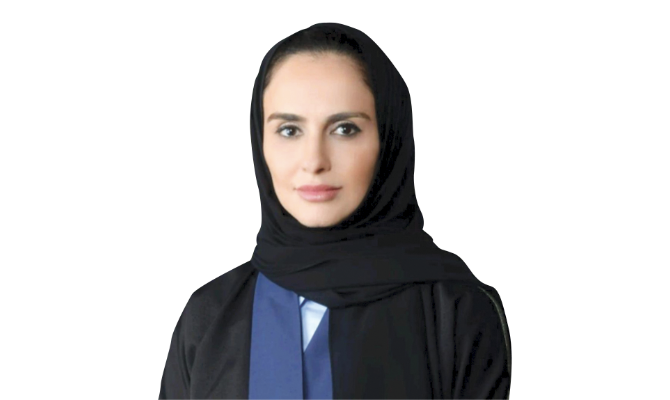
Who’s Who: Dr. Rafah Al-Yousef, vice president at First Health Cluster in Riyadh

Dr. Rafah Al-Yousef
Short Url
Updated 04 March 2021
Follow

Who’s Who: Dr. Rafah Al-Yousef, vice president at First Health Cluster in Riyadh


Dr. Rafah Al-Yousef has been a practicing pediatric consultant since 2005, having attained her board certification in pediatric medicine from the Saudi Commission for Health Specialties in 2002.

Al-Yousef graduated from King Saud University, Riyadh, with a bachelor’s degree in medicine and surgery in July 1995, and completed her master’s degree in management in August 2018 from McGill University, Canada.

She has been the vice president for organization development at First Health Cluster in Riyadh since October 2018. In January, her position as vice president was extended for another year. Al-Yousef has been working at King Saud Medical City as a pediatric consultant since 2008, and was head of the general pediatric department from June 2017 till October 2018, and was leader of the Well Baby Clinic pathway from 2017 to October 2018.

She was a board member at the College of Medicine in Al-Faisal University between 2014 and 2016, and has been a clinical assistant professor since 2014.

Al-Yousef worked at the Special Security Forces Medical Center as a pediatric specialist between 2003 and 2007, and was a resident at the King Fahad National Guard Hospital from 1996 to 2001.      

Al-Yousef made great efforts to combat the pandemic in 2020 at the First Health Cluster. She created a task force team of experts, and applied crisis standards of care to cover the shortage of medical staff in ICU, general wards, isolation units and ER.

She also developed a plan to strengthen the preparedness of medical staff during the pandemic, and supervised the training of 564 physicians and 4,772 nurses, with a deployment rate of 30 to 50 percent.


Foreign ministers chair Saudi-Omani coordination council meeting in Muscat

Updated 23 December 2025
Follow

Foreign ministers chair Saudi-Omani coordination council meeting in Muscat

MUSCAT: Saudi Foreign Minister Prince Faisal bin Farhan met with Oman’s Foreign Minister Sayyid Badr bin Hamad Al-Busaidi on Monday.

They reviewed bilateral relations between their nations and ways to enhance and develop them across various fields. Additionally, they discussed regional and international developments.

The ministers co-chaired the third meeting of the Saudi-Omani Coordination Council in the Omani capital, Muscat, with the participation of the heads of the Council’s subsidiary committees and the two heads of the Council’s General Secretariat teams.

The meeting comes as an affirmation of the keenness of Saudi and Omani leaders to strengthen ties and advance them toward greater prosperity for both nations.

In his remarks during the meeting, Prince Faisal affirmed that gathering builds on the previous council meeting, held last year in AlUla, and on its positive and fruitful outcomes within the framework of the approved recommendations and initiatives. 

He stressed the importance of continuing the work of the council’s subsidiary committees to complete the necessary procedures to implement the remaining initiatives, and of the General Secretariat’s role in follow-up and in addressing any challenges that may hinder implementation.

He also underscored the importance of developing and enhancing trade relations, stimulating investment, and strengthening cooperation between the public and private sectors.

He also praised the ongoing work to establish and launch the Coordination Council’s electronic platform, which aims to connect all committee work and initiatives to facilitate follow-up on the Council’s progress. 

Al-Busaidi affirmed in his remarks the qualitative progress in relations between the two countries and the notable development witnessed across numerous sectors toward achieving economic integration and enhancing intra-trade and joint investments. 

The Omani foreign minister also highlighted deeper cooperation in the security and judicial fields, as well as the cultural and tourism sectors, noting the advanced and continuous political cooperation, consultation, and coordination on regional and international issues.