KHARTOUM: Sudan will begin vaccinating health care workers followed by people aged 45 or older with chronic conditions for free next week after becoming the first country in the Middle East and North Africa to benefit from COVAX facility vaccines.
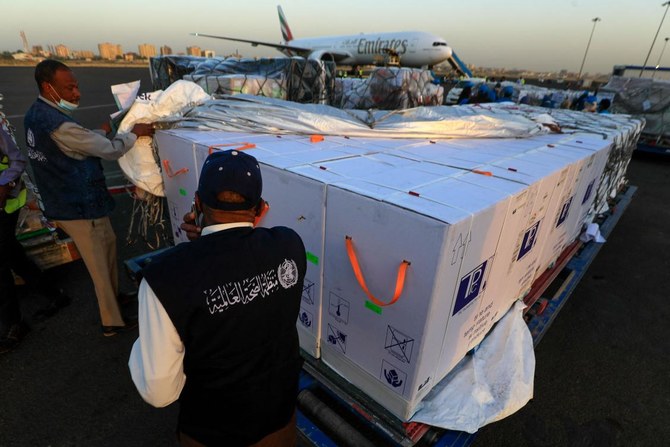
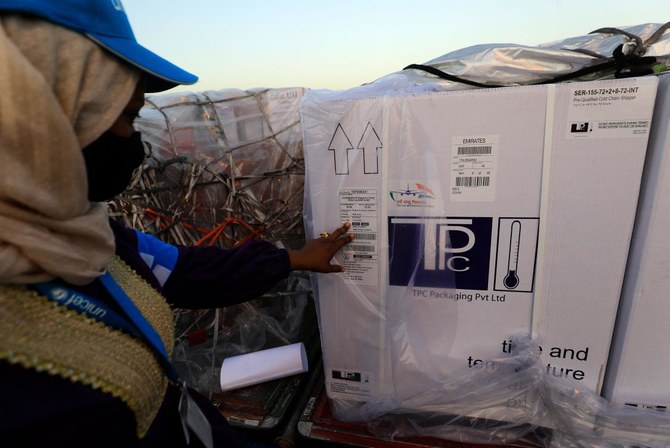
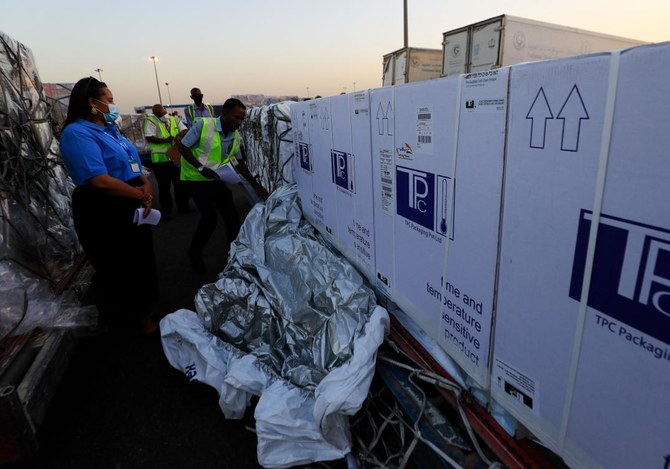
Sudan received 828,000 doses of the AstraZeneca-produced vaccine on Wednesday at Khartoum airport, a health ministry official said. The delivery follows that of 4.5 metric tons of syringes and disposal boxes through COVAX in late February.
Sudan says it expects to receive the remainder of a total 3.4 million doses through COVAX, a vaccine-sharing program co-led by the World Health Organization, in the second quarter of this year.
It aims to cover 20% of its population of 44 million through COVAX by September, health ministry officials said.
“This is an essential part of our battle against coronavirus,” Health Minister Omer Elnageib said.
Sudan was also in initial discussions to produce the vaccine domestically, Elnageib added.
Sudan is a young country, with only about 4% of its population over the age of 65, according to UN statistics.
It has been suffering from a long economic crisis that has left it unable to import some basic medicines and its health care system suffered from decades of neglect and sanctions under former President Omar Al-Bashir before his overthrow in 2019.
As of March 1, Sudan had officially recorded 28,545 cases of coronavirus since the start of the pandemic one year ago, including 1,895 deaths.


![]()
![]()
![]()
![]()

Sudan to start vaccine rollout next week after getting COVAX doses

Short Url
https://arab.news/gs7r3
Sudan to start vaccine rollout next week after getting COVAX doses
- Sudan received 828,000 doses of the AstraZeneca-produced vaccine on Wednesday at Khartoum airport
- The delivery follows that of 4.5 metric tons of syringes and disposal boxes through COVAX in late February


Latest updates





© 2026 SAUDI RESEARCH & PUBLISHING COMPANY, All Rights Reserved And subject to Terms of Use Agreement.