


DUBAI: There’s an ethos that many families around the world follow: The family’s reputation is paramount. Even the worst of events — especially the worst — must be kept secret, because the wound of public shame is greater than any wound that a horror such as abuse can inflict.
But who does that culture of secrecy protect? “Curfew,” a new film by Egyptian director Amir Ramses, is an exploration of one such secret, a taboo too difficult for most to even speak about — child abuse.
Debuting at the Cairo International Film Festival at the end of 2020 and now streaming on OSN, it’s a film about a mother released from prison years after being locked up for killing her husband. Now free, she tries to reconnect with her daughter, the victim of crimes that she has yet to face even in her own mind.
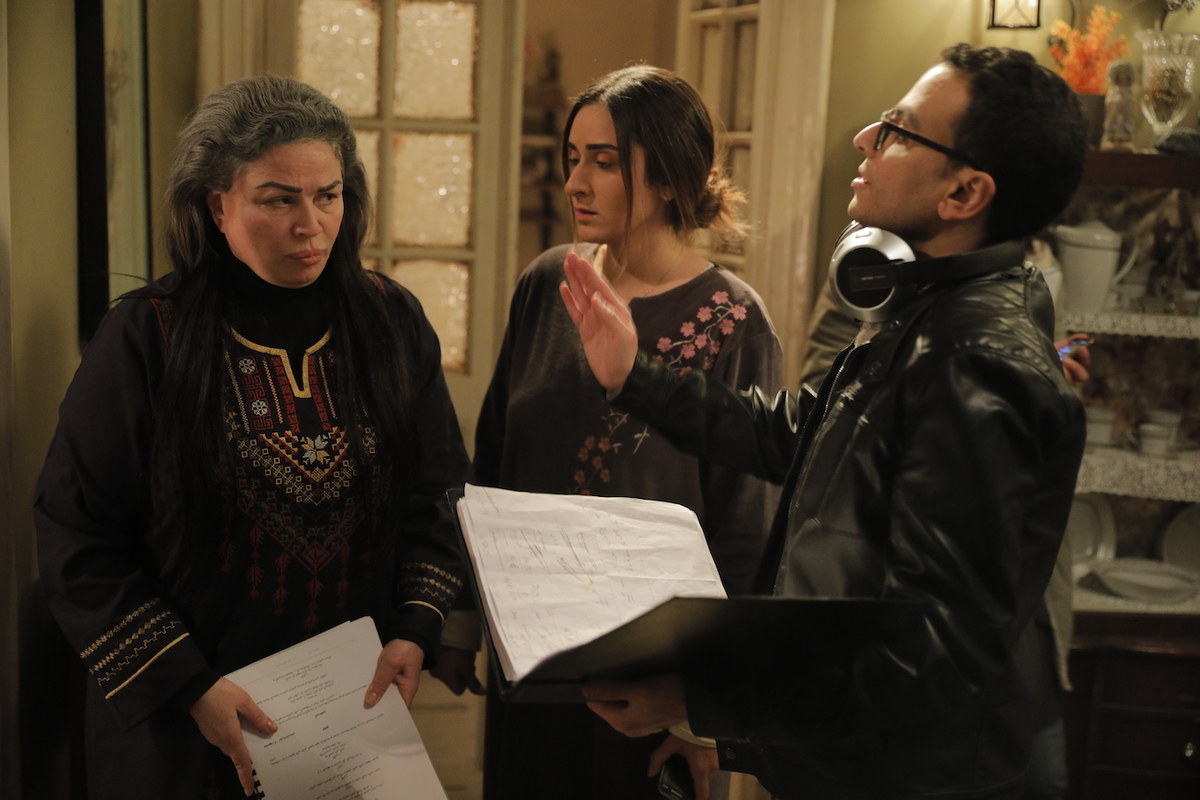
Ilham Shaheen plays the mother, Fatin, and Amina Khalil, plays her daughter Layla. (Supplied)
“For me, it's a film about the silence. It's a film about how something like this could happen, and everyone would prefer to be silent, to accept it, because it's a big scandal if people know about it. And yet, that’s what lets it happen,” Ramses tells Arab News.
Ramses had noticed how, even as no one talked about it in polite company, stories of abuse would pop up in the media at a rate of about once a week — stories so disturbing that they haunted him. What fascinated him, too, was that they usually only came to light when something else unspeakable happened in their wake, such as a murder to cover up the crime. The price of silence was painfully clear.
“It's not treated as a crime on its own, oftentimes. I think the way the film connects the dots on the crime might be irritating for a society that doesn't want to hear about it, or that just wants to pretend that everything's OK, that it doesn't happen that much. They would rather pretend it doesn't exist,” says Ramses.
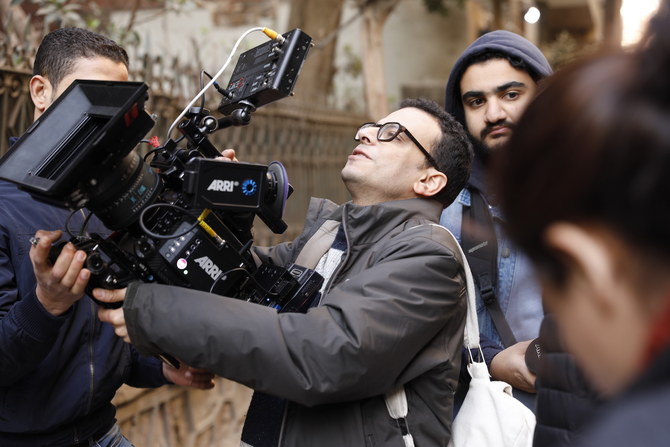
The film debuted at the Cairo International Film Festival at the end of 2020 and now streaming on OSN. (Getty)
He deliberately set the story during the 2013 curfews of a Cairo in turmoil, making the situation as claustrophobic as possible — there is nowhere to escape from the secrets that a family has kept for the sake of honor and reputation.
But the film focuses not so much on the crime itself as it does on whether or not the characters, — anchored by committed performances from its leads Ilham Shaheen, who plays the mother, Fatin, and Amina Khalil, who plays her daughter Layla — can find a way to face the truth, and whether good can prevail between characters pulled apart by the horrors of the past.
“The effect of the crime on the humans living it is the most important part,” Ramses says. “I mean, the film is based on the abuse case. But it's really a film about Layla and Fatin. It's about two people learning to love, tolerate, trust and forgive each other. It's about the ability of a daughter to forgive her mother and love again.”
Ramses has spent much of his career tackling subject matter that others shy away from. In 2012, he directed “Jews of Egypt,” a documentary that reverberated around the world, sparking controversy and debate both in Egypt and far from its borders.

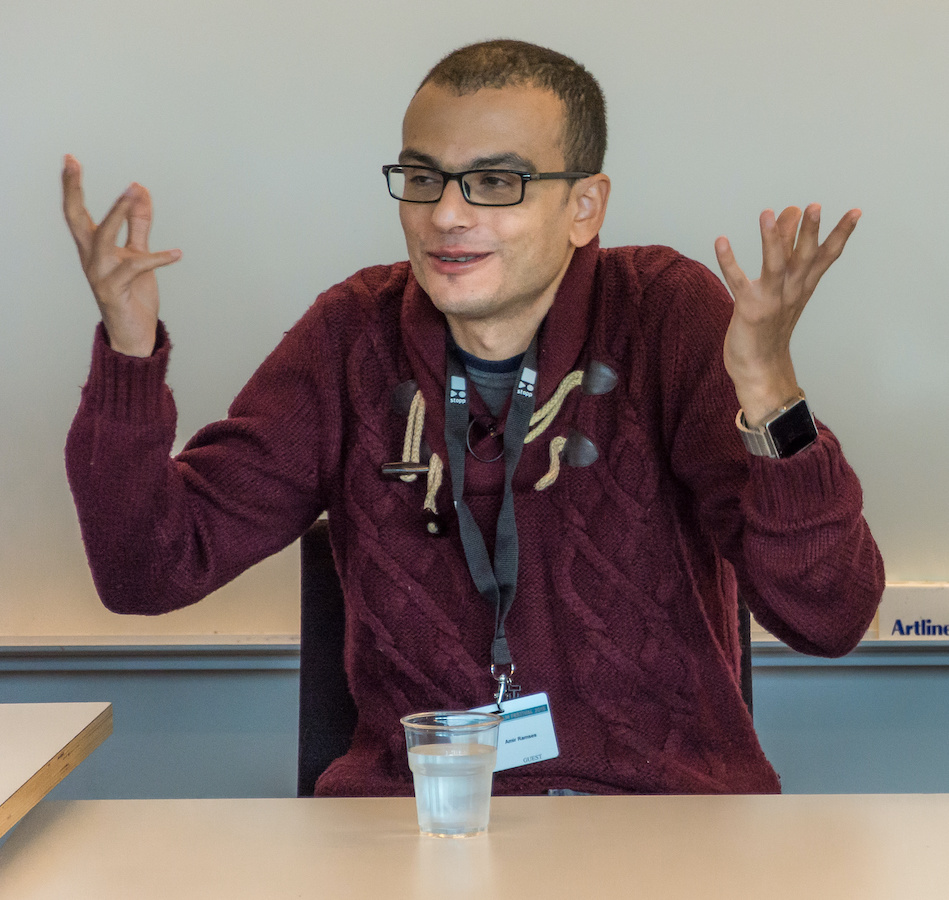
Ramses has spent much of his career tackling subject matter that others shy away from. (Supplied)
While he might be comfortable being seen as a provocateur, he has long felt uncomfortable being seen as anything close to a moralist. Ramses doesn’t want to make films that are intended to instigate social change. He wants to make art. It’s a balance that was difficult to maintain in a film as loaded as “Curfew.”
“I used to be afraid of that aspect of features, actually. Films becoming a social tool is something that always scared me,” he says. “It diminishes the role of art, in my opinion. I always thought that if your film serves only as a social tool, it's a direct, boring propaganda film, in a way. But when you make a film as you wish, and it still has that aspect, I think it's fulfilling.”
That is part of the reason that Ramses made “Jews of Egypt” as a documentary, as he believes they can operate as a message first and foremost.
“I was too afraid to make ‘Jews of Egypt’ into a narrative film. I thought the film did need to have a social impact, so I couldn’t escape it. The social impact of this film (was in) bringing tolerance back towards Egyptian Jews. I thought, ‘OK. If I make a narrative about it, it will create an impact. But it would be a very silly movie, with a lot of long, direct speeches.’ That's why I decided to make it into a documentary.”
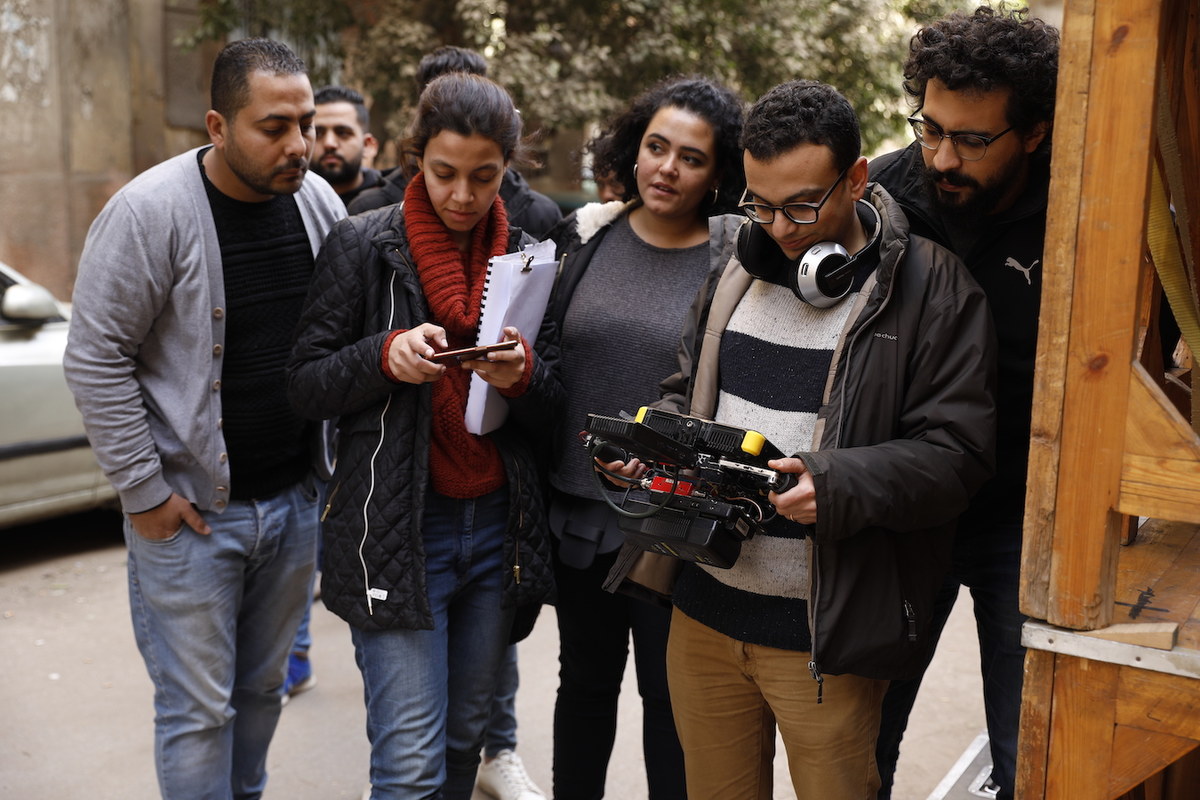
Ramses has long been focused on films as an artform. (Supplied)
Even after its release, Ramses is still grappling with the role “Curfew” should play in Egypt and beyond. He is fascinated to see how people react to the film on a social level while maintaining that, first and foremost, it was not made with that intention.
He is not shouting from the rooftops about it, but an hour into our conversation he admits that the film has already changed at least one life — that of someone who attended an early screening.
“In one of the test screenings, I had someone who had (experienced) a similar incident. After the movie they got into that mood and went home to have a family discussion about it. Again, that's not the role of the film. That's not what films are made for. But that's also intriguing to know that it can do that sometimes,” says Ramses.
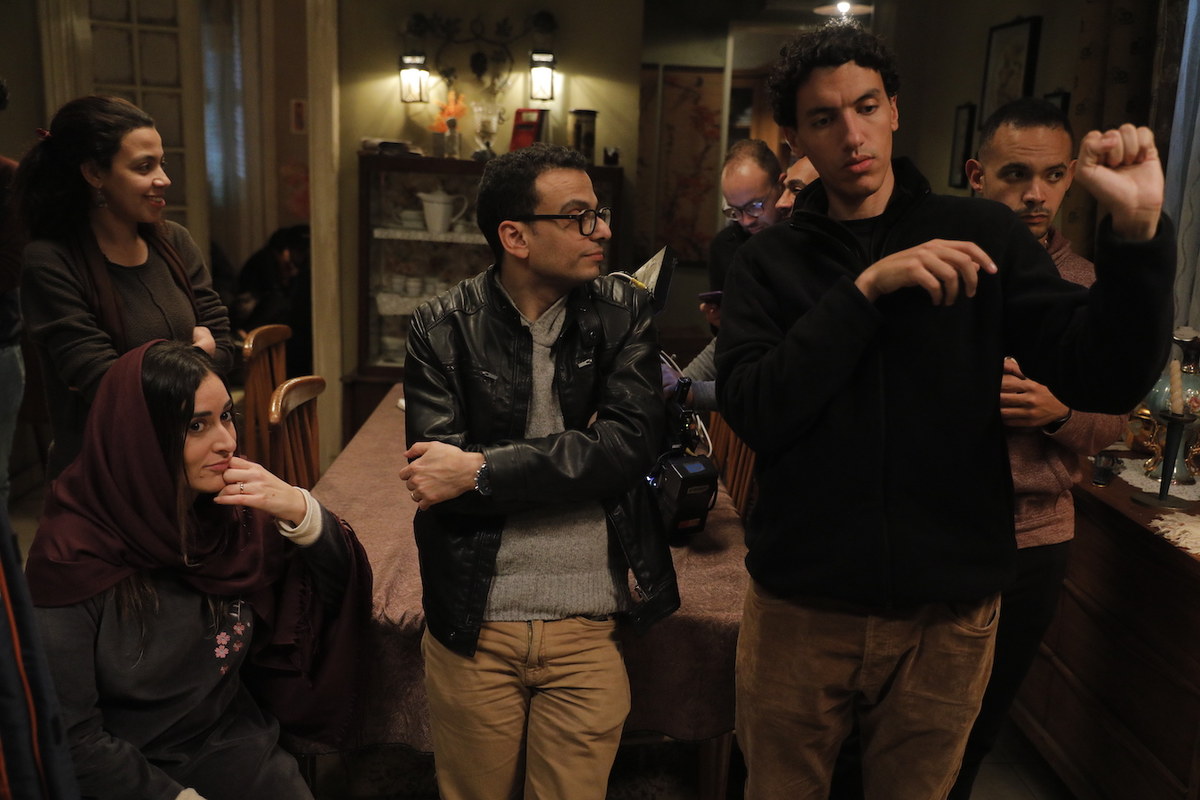
Even after its release, Ramses is still grappling with the role “Curfew” should play in Egypt and beyond. (Supplied)
Ramses has long been focused on films as an artform, first falling in love with the medium at the age of 10 watching the films of legendary Egyptian filmmaker Youssef Chahine, who made a young Ramses aware that films could not only be the blockbuster popcorn fare he’d enjoyed growing up, such as “Indiana Jones” and “Star Wars,” but could be something more, a deeper exploration of the human condition.
It’s a journey that led to him not only becoming a filmmaker, but also one of Egypt’s premiere film connoisseurs. Ramses has served as the artistic director of the El Gouna Film Festival in Egypt since its inception in 2017, a continuation of the job he was doing out of his home since he was a teenager, showing people in Egypt movies from Europe and Asia, alongside the under-appreciated greats of Egypt itself (of which there are many he still feels don’t get enough respect).
With “Curfew,” Ramses has made a film that he hopes Egyptian cinephiles screen for their friends someday the same way that he did for his. His dream, ultimately, is to instill in future generations the same passion that has driven him his entire life.
“I've always been trying to make films that would survive, that wouldn't be just about the time of the release,” he says. “I hope it continues.”


