Big banks see more than half of staff in office in Q3

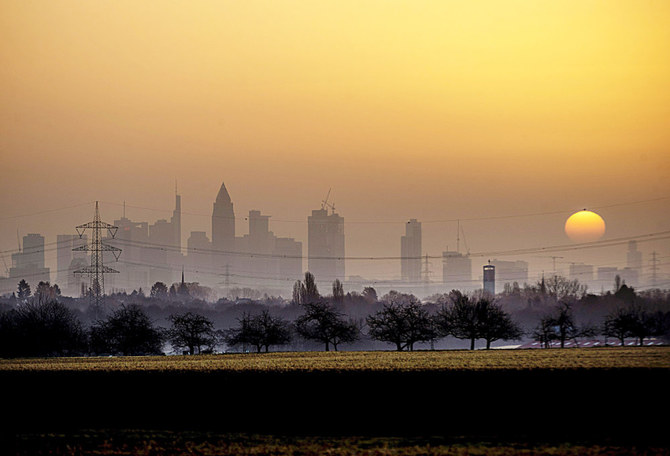
The sun rises on Frankfurt’s banking district on Thursday. (AP)
Short Url
Updated 26 February 2021
Follow

Big banks see more than half of staff in office in Q3

COPENHAGEN: Global financial institutions plan to have more than half of staff back in offices during the third quarter, up from 10 percent-15 percent now, but none are envisaging a full return anytime soon, the head of Danish services group ISS said on Thursday.

ISS provides services ranging from call centers to office cleaning, catering and security to more than 200,000 companies in 60 countries, including UBS and Deutsche Telekom.

“Many of our customers in banking, consulting and service industries are now very eager to get employees back to the office,” Chief Executive Jacob Aarup-Andersen said in an interview.

“They tell us about lack of innovation, less engagement among employees working from home and the corporate culture suffering,” he said.

But while global banking customers in general expect to have more than 50 percent of employees back on site during the third quarter, none of ISS’ customers are yet speaking about returning 100 percent of the workforce to offices, Aarup-Andersen said.

HSBC said this week it planned to nearly halve its office space globally in a sign the pandemic could mean permanent changes to working patterns, as companies prepare to reduce office space and allow employees more flexibility in working from home.

Aarup-Andersen said earlier he expected office space globally to shrink by 10 percent-15 percent over the next three years.

ISS on Thursday said sales fell 10 percent last year to 69.8 billion Danish crowns ($11.5 billion), hit by weakness in catering, retail and hotel services.


UAE, Uzbekistan expand economic cooperation with mining sector pact 

Updated 8 sec ago
Follow

UAE, Uzbekistan expand economic cooperation with mining sector pact 

JEDDAH: The UAE has signed an agreement to expand cooperation in Uzbekistan’s mining sector, as the two countries seek to scale investment, modernize infrastructure and deepen economic ties. 

The memorandum of understanding was signed by Mohamed Hassan Al-Suwaidi, UAE minister of investment, and Jamshid Khodjaev, Uzbekistan’s deputy prime minister, according to the Emirates News Agency, also known as WAM.

The agreement comes amid growing bilateral investment flows. UAE investments in Uzbekistan reached $1.3 billion in 2024, including about $700 million in renewable energy, with more than $4 billion in joint projects currently under development, WAM reported. 

Commenting on the MoU, Al-Suwaidi said that his country and Uzbekistan share a longstanding relationship built on mutual trust and strong economic cooperation. 

“Today’s signing reflects the UAE’s commitment to forging strategic international partnerships in sectors of mutual interest that support sustainable development and long-term economic value creation,” he said.

By working closely with Uzbekistan, he added, the UAE aims to unlock high-quality investment opportunities across the minerals value chain for the benefit of both nations.

The agreement focuses on the development and modernization of key supporting infrastructure, including power generation, renewable energy, grid enhancements, water systems, and logistics networks.

It also aims to advance sector digitalization, innovation, and responsible governance to reinforce long-term resilience and sustainability. 

Under the MoU, cooperation will span investment activities across the full mining value chain, from exploration and development through to downstream manufacturing. 

Khodjaev emphasized that the MoU marks an important step in strengthening cooperation between Uzbekistan and the Gulf state in the minerals sector. 

“Through collaboration on investment facilitation, governance, workforce development, and monitoring frameworks, we aim to support responsible mineral development and create sustainable industrial growth opportunities for both economies,” he said. 

According to WAM, the agreement establishes a collaboration framework involving government and regulatory authorities, state-owned investment companies and private sector partners, enabling the structuring of financing mechanisms such as foreign direct investment and public-private partnerships. 

Uzbekistan’s mining sector is a key economic driver, producing commodities such as gold, copper, uranium, coal, oil, and natural gas, according to the International Trade Administration of the US Department of Commerce. 

The sector is undergoing modernization as the government expands upstream-to-downstream capacity, attracts foreign investment, and upgrades infrastructure through state-owned enterprises while tapping international capital markets.