

Mortgage lending fueling KSA banks retail drive: Fitch

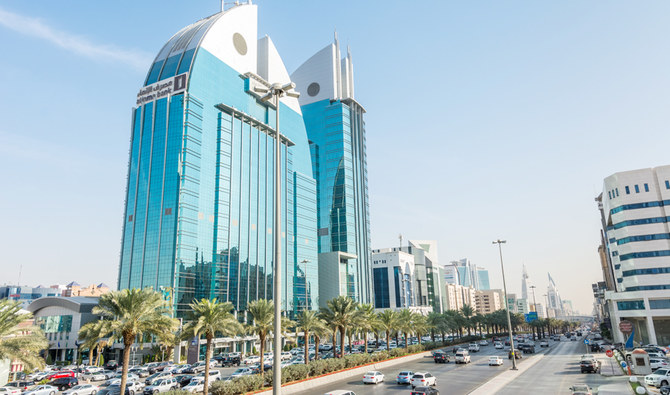
The Kingdom is the largest market in the GCC, with a population of 34.2 million. (Shutterstock)
Short Url
Updated 21 February 2021
Follow

Mortgage lending fueling KSA banks retail drive: Fitch

  • Ratings agency hails ‘strong growth potential’ amid Vision 2030 ambitions

RIYADH: The rise of retail lending by Saudi banks is a trend that is likely to continue growing in 2021, according to a report by credit ratings agency Fitch.

In the Kingdom, retail loans accounted for 38 percent of total lending in March 2020, up from 31 percent at the end of 2016.

Fitch said that credit growth in the sector increased 11.5 percent as of September last year, driven mainly by a 41 percent growth in retail mortgage lending. “We expect fast growth in this segment to continue, underpinned by strong credit demand and support from the authorities,” the agency said in the report.

The huge increase in demand for mortgages is part of the Saudi government’s plan to increase home ownership in the Kingdom to 70 percent as part of Vision 2030 targets, up from 50 percent in 2018.

Factors supporting this trend include attractive margins and government subsidies on retail mortgages. Returns on retail portfolios are underpinned by impressively low funding costs, with loans largely funded by non-interest-bearing deposits and the absence of caps on loan pricing.

Banks with a larger portion of retail lending therefore have profitability metrics at the higher end of the sector, according to the report.

The Kingdom is the largest market in the GCC, with a population of 34.2 million. About 75 percent of Saudis aged over 15 have a bank account. “Saudi Arabia also has the lowest portion of retail loans relative to gross domestic product, which gives it strong potential for growth,” the report added.

The credit ratings agency also said about 70 percent of Saudi workers are public sector employees and account for 80 to 95 percent of retail loans books for retail banks, representing higher loan quality for lenders.

“Asset quality is also underpinned by a safe retail lending structure, in which almost all lending is salary-assigned and loan repayments are deducted from a borrower’s salary prior to being remitted,” the report added.


Saudi tourism employment surpasses 1m as hospitality sector expands 

Updated 08 January 2026
Follow

Saudi tourism employment surpasses 1m as hospitality sector expands 

RIYADH: Saudi Arabia’s tourism workforce surpassed 1 million in the third quarter of 2025, underscoring the sector’s rapid expansion as the Kingdom continues to develop its hospitality infrastructure and visitor economy. 

According to the latest Tourism Establishments Statistics report released by the General Authority for Statistics, the total number of employees in tourism activities reached approximately 1,009,691 in the third quarter of 2025, marking a 6.4 percent increase compared to the same period in 2024, when employment stood at 948,629. 

The growth in employment comes alongside a significant rise in the number of licensed tourism hospitality facilities, which increased by 40.6 percent year on year to reach 5,622 in the third quarter. Of these, serviced apartments and other hospitality facilities accounted for 52.6 percent, while hotels represented 47.4 percent. 

The robust growth reflected in the latest tourism statistics aligns directly with the goals of Vision 2030, as the Kingdom aims to double tourism’s gross domestic product contribution to 10 percent. The sector is also seeking to create 1.6 million jobs, and attract 150 million visitors annually by 2030.

The report showed that non-Saudi employees made up the majority of the tourism workforce, numbering 764,520 and accounting for 75.7 percent of the total. Saudi nationals employed in the sector reached 245,171, representing 24.3 percent of all tourism workers. 

In terms of gender distribution, male employees dominated the sector with 875,658 workers, while female employees totaled 134,033, making up just 13.3 percent of the workforce. 

Hotel performance showed positive momentum, with the average room occupancy rate rising to 49.1 percent during the quarter, an increase of 2.9 percentage points from 46.1 percent in the same period a year earlier. 

In contrast, serviced apartments and other hospitality facilities experienced a slight dip in occupancy, recording 57.4 percent compared to 58 percent in the same quarter of 2024. 

The average daily room rate in hotels decreased by 3.6 percent to SR341 ($90.9), down from SR354 in the third quarter of 2024. Meanwhile, serviced apartments and similar facilities saw their average daily rate rise by 4.1 percent to SR208, up from SR200 a year earlier. 

The average length of stay in hotels was 4.1 nights, down 1 percent from 4.2 nights in the third quarter of 2024. For serviced apartments and other hospitality facilities, the average stay was 2.1 nights, reflecting a marginal decrease of 0.2 percent year-on-year. 

The statistics draw on administrative records, surveys and secondary data to capture activity across the Kingdom’s tourism sector, GASTAT said.
