

Weekly energy recap: February 19, 2021

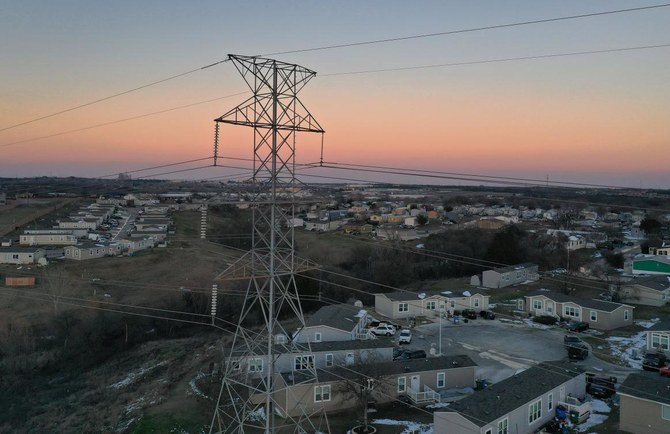
An aerial view from a drone shows electrical lines running through a neighborhood on February 19, 2021 in Austin, Texas. (AFP)
Short Url
Updated 20 February 2021
Follow

Weekly energy recap: February 19, 2021

  • Oil prices are still at a 13-month high, exceeding pre-pandemic levels

Oil extended its weekly gain, with Brent crude closing the week higher at $62.91 per barrel. The WTI crude oil price closed the week slightly lower at $59.24 per barrel after surging above $61 a day before close. Nevertheless, oil prices are still at a 13-month high, exceeding pre-pandemic levels.
The impact of the Texas winter freeze on the US market may be easing, but the restart of operations could take much longer than expected. Even as electricity returns to most of the state and oil producers prepare to begin restoring lost output, the ongoing situation may contribute to an imminent global oil supply shortfall because of earlier underinvestment.
The week witnessed a recovery in China and Asia pacific crude oil demand amid cold weather in the Northern Hemisphere. Hence, global oil inventories continue to draw down. The US Energy Information Administration reported a massive 7.3 million barrel crude oil draw that hugely exceeded expectations.
The impact of the severe winter weather in Texas will also impact demand for petroleum refined products in the US, as the affected areas represent a major portion of the total US refining capacity.
Shortly before the Texas energy crisis and the US production slump amid the Permian Basin freeze storm, US crude oil exports spiked, and that was thought to be offset by a rebound in domestic production, incentivized by higher oil prices. At the same time as issues occur with the restart of Permian Basin shale oil production, weather conditions will have a short-term impact on the rollout of COVID-19 vaccines, which will impact oil demand recovery.
The latest figures from the Commodity Futures Trading Commission on Feb. 16 show that crude futures long positions on the New York Mercantile Exchange total 693,547 contracts, a decrease of -1,663 contracts from the previous week (1,000 barrels for each contract).

  •  Faisal Faeq is an energy and oil marketing adviser. He was formerly with OPEC and Saudi Aramco. Twitter:@faisalfaeq

Saudi Arabia opens 3rd round of Exploration Empowerment Program

Updated 01 February 2026
Follow

Saudi Arabia opens 3rd round of Exploration Empowerment Program

RIYADH: Saudi Arabia’s Ministry of Industry and Mineral Resources, in collaboration with the Ministry of Investment, has opened applications for the third round of the Exploration Empowerment Program, part of ongoing efforts to accelerate mineral exploration in the Kingdom, reduce early-stage investment risks, and attract high-quality investment from local and international mining companies.

The third round of the Exploration Empowerment Program offers a comprehensive support package targeting exploration companies and mineral prospecting license holders.

The initiative aims to lower investment risks for projects and support a faster transition from prospecting to development.

"The program provides coverage of up to 70 percent of the total salaries of Saudi technical staff, such as geologists, during the first two years, increasing to 100 percent thereafter, in line with program requirements.

This support aims to develop talent, build national capabilities in mineral exploration, promote job localization, and facilitate the transfer of geological knowledge.

The application for the third round opened on Jan. 14, allowing participants to benefit from the Kingdom’s attractive investment environment, its stable legal framework, and streamlined regulatory structures, as well as integrated infrastructure that supports the transition from mineral resources to operational mines.

The ministry has set the timeline for the third round, with the application period running from Jan. 14 to March 31.

This will be followed by the evaluation, approval, and signing of agreements from April 1 to May 31, with the eligible projects set to be announced between June 1 and July 31 of the same year.

The program stages include submitting exploration data during the reimbursement and payment phase from Sept. 1 to Nov. 30, followed by technical and financial verification of work programs and approval of the disbursement of support funds in January 2027.

The exploration data will then be published on the National Geological Database in April 2027.

The ministry emphasized that the EEP focuses on supporting the exploration of strategically important minerals with national priority. It also contributes to enhancing geological knowledge by providing up-to-date data that meets international standards, helping investors make informed decisions and supporting the growth of national companies and local supply chains.

The ministry urged companies to apply early to benefit from the program’s third round, which coincided with the fifth edition of the International Mining Conference, which was held from Jan. 13 to 15.