LONDON: The United States and its allies have called for Iran to reverse and refrain from any steps that would impact its assurances to the International Atomic Energy Agency (IAEA), State Department spokesman Ned Price said on Wednesday, as Tehran said it will start banning short-notice inspections by the UN nuclear watchdog.
“Iran should reverse the steps and refrain from taking others that would impact the IAEA assurances on which not only the United States, not only our allies and partners in the region, but the entire world relies,” he said, adding that Secretary of State Antony Blinken saw an “important role” for the EU.
French Foreign Minister Jean-Yves Le Drian will host his German and British counterparts in Paris, with Blinken joining via videoconference, to see how to revive the 2015 nuclear deal, the French foreign ministry said, days ahead of a deadline set by Tehran that could hinder the efforts by limiting inspections.
Analysts say only a small window of opportunity remains to save the landmark deal, which was dealt a near-fatal blow when former US president Donald Trump walked out of the accord in 2018.
The administration of Joe Biden has said it is prepared to rejoin the deal and start lifting sanctions if Iran returns to full compliance, a precondition disputed by Tehran.
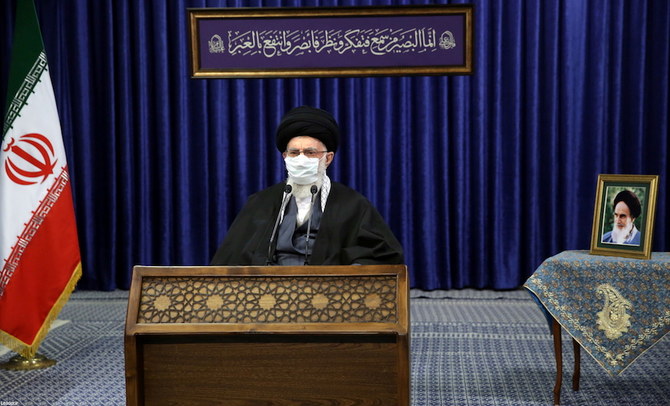
However, Supreme Leader Ayatollah Ali Khamenei said on Wednesday Iran wants to see “action not words” from parties to the country’s nuclear deal,
“We have heard many nice words and promises which in practice have been broken and opposite actions have been taken. Words and promises are no good. This time (we want) only action from the other side and we will also act,” Khamenei said in a televised speech.
Meanwhile, German Chancellor Angela Merkel pressed Iran’s president for “positive signals” that would help resolve a diplomatic standoff over the future of the nuclear deal with world powers, her office said.
In a phone conversation with Hassan Rouhani on Wednesday, Merkel stressed the “high interest” of Germany and the other remaining signatories in preserving the deal, her office added in a statement.
She voiced concern that Iran isn’t fulfilling its commitments and told Rouhani that “it is now time for positive signals that create trust and raise the chances of a diplomatic solution,” the statement added.
Iran has said it will stop part of the inspection of its nuclear facilities by the IAEA next week if the West doesn’t implement its own commitments.
The International Atomic Energy Agency said that Director General Rafael Grossi will visit Tehran on Saturday for discussions with senior Iranian officials, whom it did not identify.
It said the aim is “to find a mutually agreeable solution for the IAEA to continue essential verification activities in the country.”
Iran has said it will stop part of the inspection of its nuclear facilities by the IAEA next week if the West doesn’t implement its own commitments.
On Monday, Kazem Gharibabadi, Iran’s ambassador to the IAEA, said he had sent a letter to the agency detailing restrictions on inspectors to take effect on Feb. 23.
He said Iran would cease to adhere to the so-called Additional Protocol, an arrangement that provides the IAEA broad access and information regarding Iran’s nuclear program, including both declared and undeclared facilities.
Tehran has been using its violations of the deal to put pressure on the remaining signatories — France, Germany, Britain, Russia and China — to provide more incentives to Iran to offset crippling American sanctions re-imposed after the US pullout.
The ultimate goal of the deal is to prevent Iran from developing a nuclear bomb, something it insists it does not want to do.
The UN nuclear watchdog said last week that Iran had started producing uranium metal in a new violation of the accord, prompting the European powers to warn that Tehran was “undermining the opportunity for renewed diplomacy.”
(With AP, AFP and Reuters)


![]()

Europe, US to meet on Iran as nuclear deadline looms
Short Url
https://arab.news/58ha3
Europe, US to meet on Iran as nuclear deadline looms
- Merkel voiced concern to president Rouhani that Iran is not fulfilling its commitments
- IAEA chief to visit Iran to find a solution to continue nuclear inspections


Latest updates


© 2026 SAUDI RESEARCH & PUBLISHING COMPANY, All Rights Reserved And subject to Terms of Use Agreement.