

Louvre Abu Dhabi explores abstraction and calligraphy in first exhibition of 2021

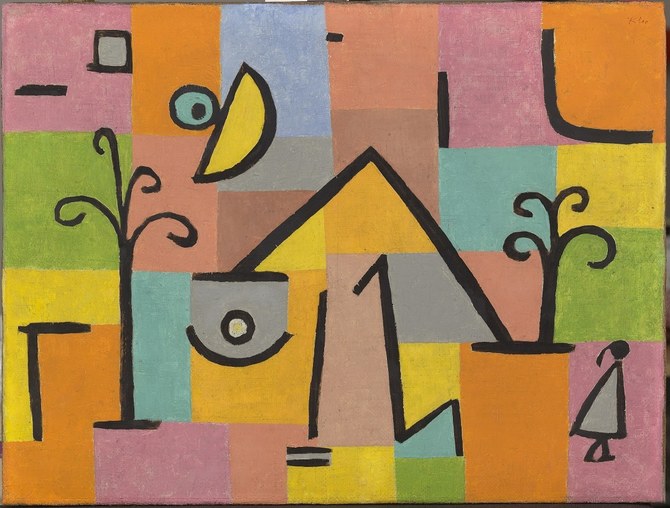
Paul Klee, 'Oriental Bliss' (1938), from the collection of Louvre Abu Dhabi. (AFP / Courtesy Department of Culture and Tourism – Abu Dhabi)
Short Url
Updated 17 March 2021
Follow

Louvre Abu Dhabi explores abstraction and calligraphy in first exhibition of 2021

DUBAI: The UAE’s Louvre Abu Dhabi is set to open its third season with international exhibition “Abstraction and Calligraphy – Towards a Universal Language,” scheduled to take place from Feb. 17 to June 12. 

The show, sponsored by the German luxury label Montblanc, will explore how 20th century artists established a new visual language by merging text and image, inspired by the earliest forms of mark-making and, particularly, calligraphy. 

To celebrate this practice, the exhibition will feature two well-established contemporary artists: eL Seed from Tunisia and Sanki King from Pakistan. 

“Abstraction and Calligraphy – Towards a Universal Language” will also bring together 101 masterworks from 16 partner institution collections, alongside seven works from Louvre Abu Dhabi’s permanent collection, and two monumental artworks by contemporary artists.

Arabic calligraphy: Ancient craft, modern art
For the Saudi Ministry of Culture's Year of Arabic Calligraphy in 2020/21, we take an in-depth look at how the craft has developed from ancient to modern times.

Enter


keywords

By highlighting the rich cultural exchange taking place during the 20th century, visitors will get the chance to discover how the abstract movements were inspired by a plethora of signs and symbols, philosophies, and artistic techniques from cultures and societies far from European and American capitals.

Artists including Paul Klee, André Masson, Vassily Kandinsky, Cy Twombly, Lee Krasner, and Jackson Pollock sought a new universal language that enabled them to express their emotions in response to a rapidly changing society, breaking away from figurative conventions. The show will also focus on how these same influences informed the practices of artists from Middle East – from Dia Azzawi and Anwar Jalal Shemza, to Ghada Amer, Shirazeh Houshiary, and Mona Hatoum. 

In keeping with the third season’s theme of exchanges between East and West, this exhibition marks the second collaboration with the French library Centre Pompidou.

Chairman of the Department of Culture and Tourism in Abu Dhabi, Mohamed Khalifa Al-Mubarak, said in a released statement: “It is with pride and great excitement that we welcome the opening of the first Louvre Abu Dhabi international exhibition of 2021, especially as masterworks from so many illustrious lending partners will be on show here at Louvre Abu Dhabi, and in the region, for the very first time.”


Riyadh to install 25 new public artworks after conclusion of Tuwaiq Sculpture symposium

Updated 09 March 2026
Follow

Riyadh to install 25 new public artworks after conclusion of Tuwaiq Sculpture symposium

  • Move will extend the impact of the annual art event beyond its conclusion, bringing large-scale contemporary artworks into the city’s streets and parks
  • Artworks produced during the symposium will now become part of Riyadh Art’s permanent collection

RIYADH: Some 25 sculptures created during the seventh edition of the Tuwaiq Sculpture symposium and exhibition will soon be installed across public spaces in Riyadh.

The move will extend the impact of the annual art event beyond its conclusion, organizers said, bringing large-scale contemporary artworks into the city’s streets and parks.

Organized by the Royal Commission for Riyadh City through the Riyadh Art Program, the 2026 edition has ended after nearly two months of live sculpting, exhibitions and public programming.

The artworks produced during the symposium will now become part of Riyadh Art’s permanent collection and will appear across the capital as part of a broader effort to integrate art into everyday urban life.

This year’s symposium began in January and took place along Prince Mohammed bin Abdulaziz Road, widely known as Tahlia Street.

The site was transformed into an open-air studio in which visitors could observe artists carving, welding and assembling sculptures.

The live sculpting phase, which was held between Jan. 10 and Feb. 5, brought together leading Saudi and international artists to produce 25 large-scale works.

The sculptures were created using locally sourced granite and reclaimed metal, highlighting both the region’s natural materials and the creative reuse of industrial elements.

Visitors were able to follow the process of each artwork’s development, from raw materials to finished sculptures, while also interacting with the artists and learning about their techniques and concepts.

The event also featured a wide-ranging community engagement program designed to deepen public understanding of contemporary art.

The program included 10 panel discussions, 105 training workshops and 15 masterclasses exploring sculptural techniques, materials and the role of public art in cities.

Educational outreach formed another key component of the symposium. Organizers hosted 25 educational visits for more than 600 students, while daily guided tours enabled visitors to explore the artworks and gain insight into the creative processes behind them.

After the live sculpting phase, the completed sculptures remained on-site until March 8, giving visitors the opportunity to experience the works in their original setting before their distribution across Riyadh.

The symposium was curated by Lulwah Al-Homoud, Sarah Staton, and Rut Blees Luxemburg, who guided the artistic direction around the theme “Traces of What Will Be,” exploring how sculpture can reflect future possibilities while responding to the city’s evolving identity.