RIYADH: Riyadh’s glitzy, upscale desert retreat, Riyadh Oasis, has generated plenty of buzz since opening to the public on Jan. 17. Located about an hour outside of Riyadh, the oasis is nestled in the heart of the dunes like a glittering jewel, with soft lamplight and music welcoming guests to its luxurious charms.
Visitors have given rave reviews to the four restaurants in the oasis.
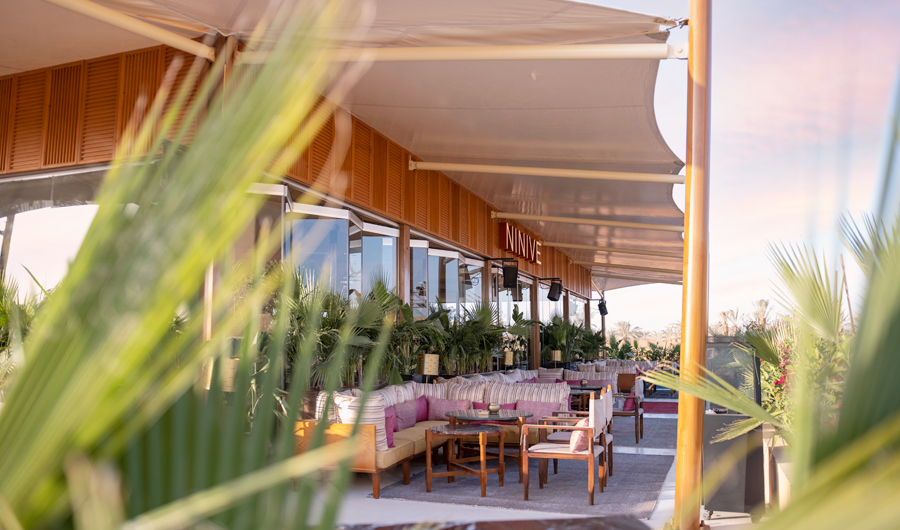
Latin-American restaurant Amazonico, masquerading as a piece of the rainforest in stark contrast to the surrounding desert; bright white and blue Nammos, the younger but equally fabulous sibling of the original seafood restaurant in sunny Mykonos; Zuma, the exotic Japanese fusion cuisine restaurant in regal blacks and reds, and Emirati cuisine hub Ninive, designed as a replica of a traditional Bedouin tent with its subtle beige and sadu weaving. And right in the middle of the oasis is Saddle, Dubai-based purveyors of the finest coffee and crepes outside of Paris, which offers a cheaper bill and a more relaxed atmosphere.
And according to Adel Al-Rajab, CEO of Seven Entertainment, one of the organizers of Riyadh Oasis and first winner of the General Entertainment Authority’s (GEA) “Ideas of Entertainment” initiative, the retreat has had no trouble drawing in crowds, despite the challenges of the coronavirus disease (COVID-19) pandemic.
Al-Rajab told Arab News that the idea had been in the works since December when it was first presented to GEA Chairman Turki Alalshikh as part of the “Ideas of Entertainment” initiative.
Al-Sheikh’s initiative was launched to boost the Kingdom’s entertainment sector as it recovers from the pandemic. Riyadh Oasis is the first of 20 ideas that the chairman has promised to support.
“We wanted to take the experience of the Saudi desert to another level. Initially, we thought of making it just one restaurant, along with a weekend experience, like a concert. But his excellency ended up loving the idea so much, he wanted to make it ten times bigger,” he said.
HIGHLIGHTS
• The retreat is part of the General Entertainment Authority’s ‘Ideas of Entertainment’ initiative.
• The initiative was launched to boost the Kingdom’s entertainment sector as it recovers from the pandemic.
• Riyadh Oasis is the first of 20 ideas that the GEA chairman has promised to support.
“The Oasis today is a destination for people to enjoy the desert, the fine dining at the four world-class restaurants, the cafe, and the concerts on the weekends.”
Al-Rajab revealed that initial plans were to invite between seven to 10 restaurants, which was reduced to four due to the limitations imposed by COVID-19.
“We wanted to stay within the regulations of the Ministry of Health, and that is why we are limiting visitors to such a small number, though the oasis could normally accommodate up to 5,000 easily,” he said.
Al-Rajab said the retreat hopes to accommodate up to 1,500 guests per day, a target that they have been successfully reaching since doors opened.
“To be honest, we are overwhelmed with the numbers, although we thought it might be a bit too far from Riyadh, or a bit too pricey, but we were surprised to find ourselves overbooked, especially during the weekends,” he said.
“We have a lot of repeat clients who are coming back, twice, sometimes three or four times, which shows us how much they love the experience,” he added.
However, considering the 80 km distance between the oasis and Riyadh coupled with the dining prices, Al-Rajab said he realizes that many will find a visit to the retreat well out of their budget.
Restaurant reservations cost up to SR800 ($213) per person. A reservation at the glamps costs SR13,800 on weekdays and SR20,700 on weekends.
“We are planning to work on other experiences that can accommodate more segments of the population. In any industry, whether it is entertainment or tourism, you plan your experience for specific segments, and we are not targeting everyone.
“We cannot offer the retreat to more people because of COVID-19 and the limitations in place. But once things are back to normal, I’m sure a lot of experiences will be open for everyone,” he said.
Al-Rajab added that while the oasis is scheduled to run until March, he would not rule out the possibility of extending the festivities further.
“We will try our best. The weather is a major factor that we can’t play with, but we are considering it and if we get the approval from the GEA, we will go ahead with it,” he said.
He also highlighted the way that the venture’s leadership was supporting the Kingdom’s youth, giving them the ability to think creatively.
“Today we have a world-class experience that has been executed 100 percent by Saudi companies. This is something that makes us proud, and I think it’s an opportunity for any Saudi to think out of the box and be creative, and can do something that makes the Kingdom different,” he said.