
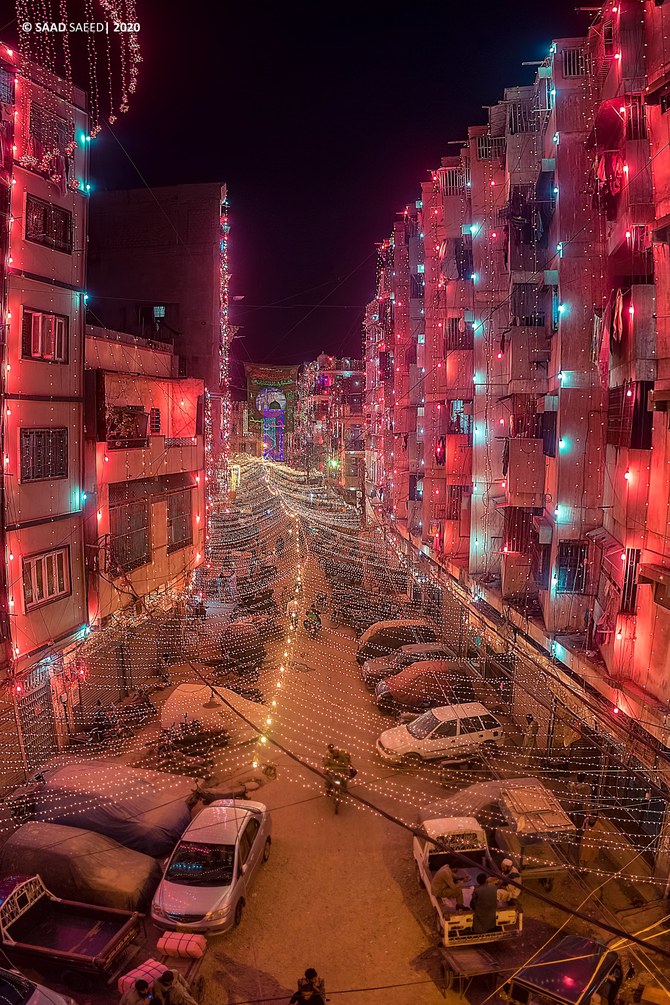


RAWALPINDI: Hundreds of Pakistani photographers capture the diversity of life in their homeland every day, and many of them share their best images with the world through social media platforms. Below are some of the local documentarians who have been highlighting different dimensions of Pakistan for those interested in its intricacies.
DANISH KHAN
Muhammad Danish Khan, 28, is an Islamabad-based content creator whose Instagram account, with over 17,000 followers, is populated with street and landscape photography. Khan also works as a cinematographer for a production house. He got his first DSLR in 2015 and, while studying engineering, started capturing life around him. “With just a click you can save emotions of people and capture breathtaking landscapes,” Khan told Arab News.
Khan’s photography has taken him all around the country, and he aims to showcase Pakistan authentically with his pictures. “Pakistan is not just limited to the spectacular mountainous scenery of the north,” he said. “You can also see and experience its true essence in its bustling cities, off the beaten track rural towns and in its many bazaars.”
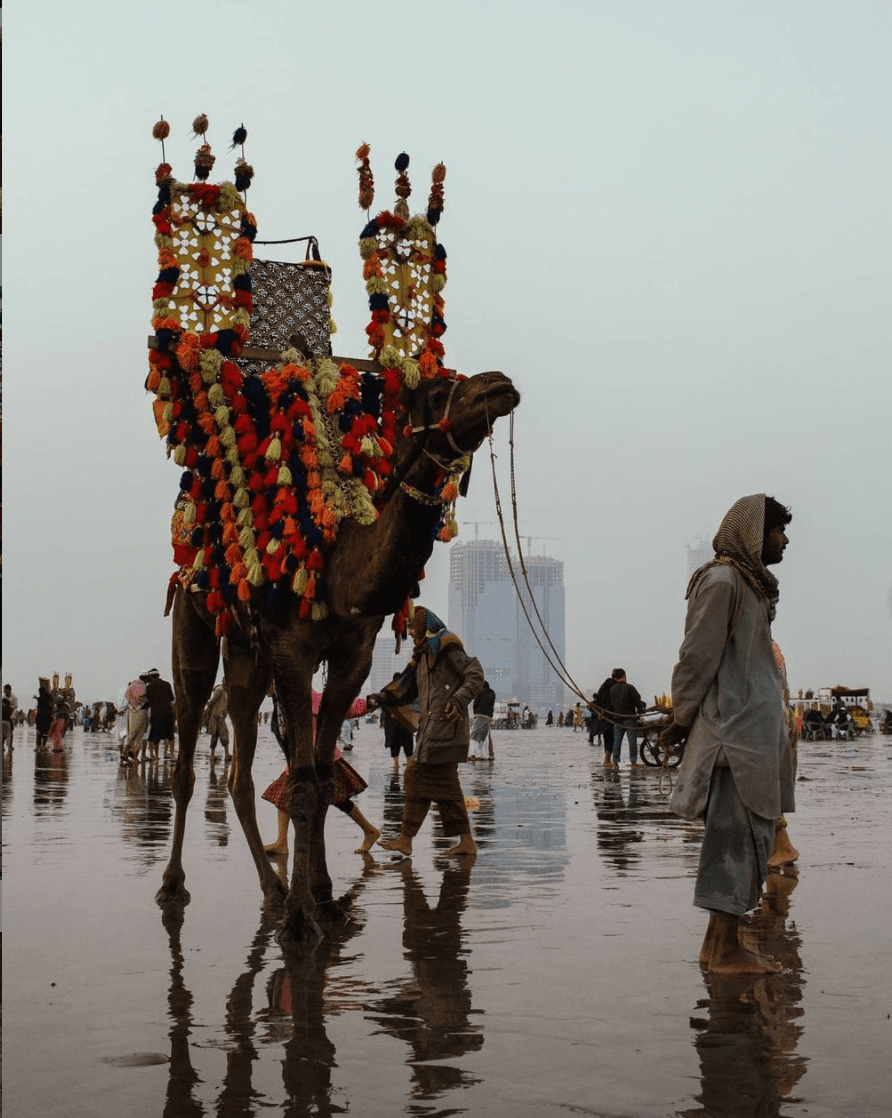
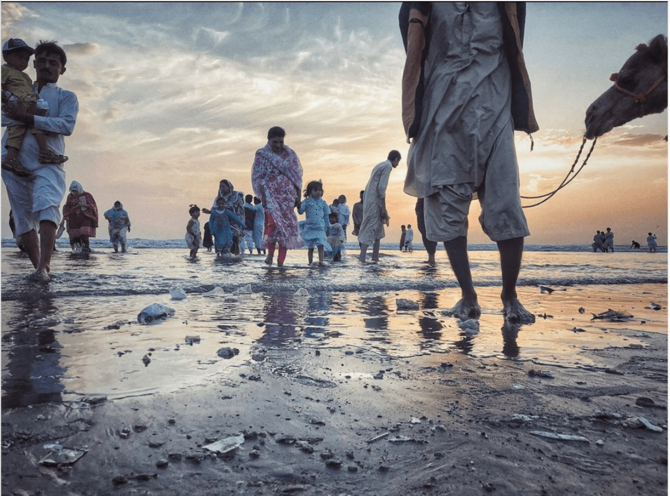
This picture of a handler and his decorated camel was taken by Danish Khan at Sea View in Karachi. Khan posted the image on Instagram on June 25, 2020. (Photo courtesy: Danish Khan)
KHAULA JAMIL
After achieving a master's degree in photography in 2012, Khaula Jamil returned to Karachi and, inspired by the popular platform Humans of New York, launched Humans of Karachi. Her vision was to go beyond the label of “violent and unlivable” for the southern port city by documenting the life of its people. This, she says, “organically turned her into a photojournalist” who is now sent across Pakistan by development organizations to photograph and tell stories that cover health, climate, agriculture, and human rights — with a focus on tapping into the humanity of not only her subjects but people viewing her pictures.
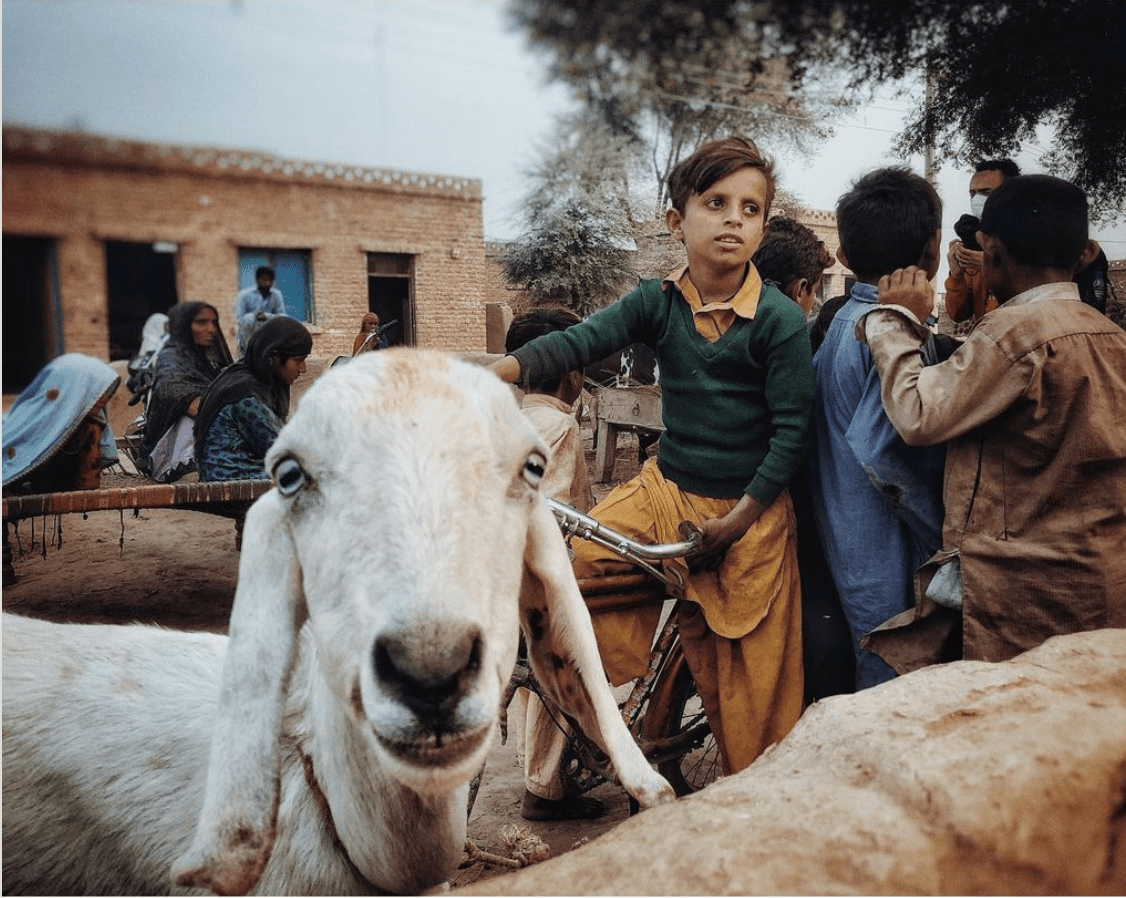
This image captures life in Bhong, Punjab, and was shared by Khaula Jamil on her Instagram on November 13, 2020. (Photo courtesy: Khaula Jamil)
“I try hard to take photos that stay true to the subject, both ethically and aesthetically, and take extra care not to gloss over difficult realities,” Jamil told Arab News. “It would be a great disservice to Pakistan if one only saw it through rose-tinted glasses because the beauty of this country runs deep, and you only truly appreciate it when you are all in.”
SAAD SAEED
Saad Saeed, 30, who has been pursuing photography for nine years, also hails from Karachi. He describes his city as his “muse,” saying that the diverse cultures and variety of inspiration it offers is “crazy.” Saad’s photos submerge the viewer in the urban life of the seaside city with an individual point of view and a unique way of capturing light sources — both natural and artificial — that define Karachi.
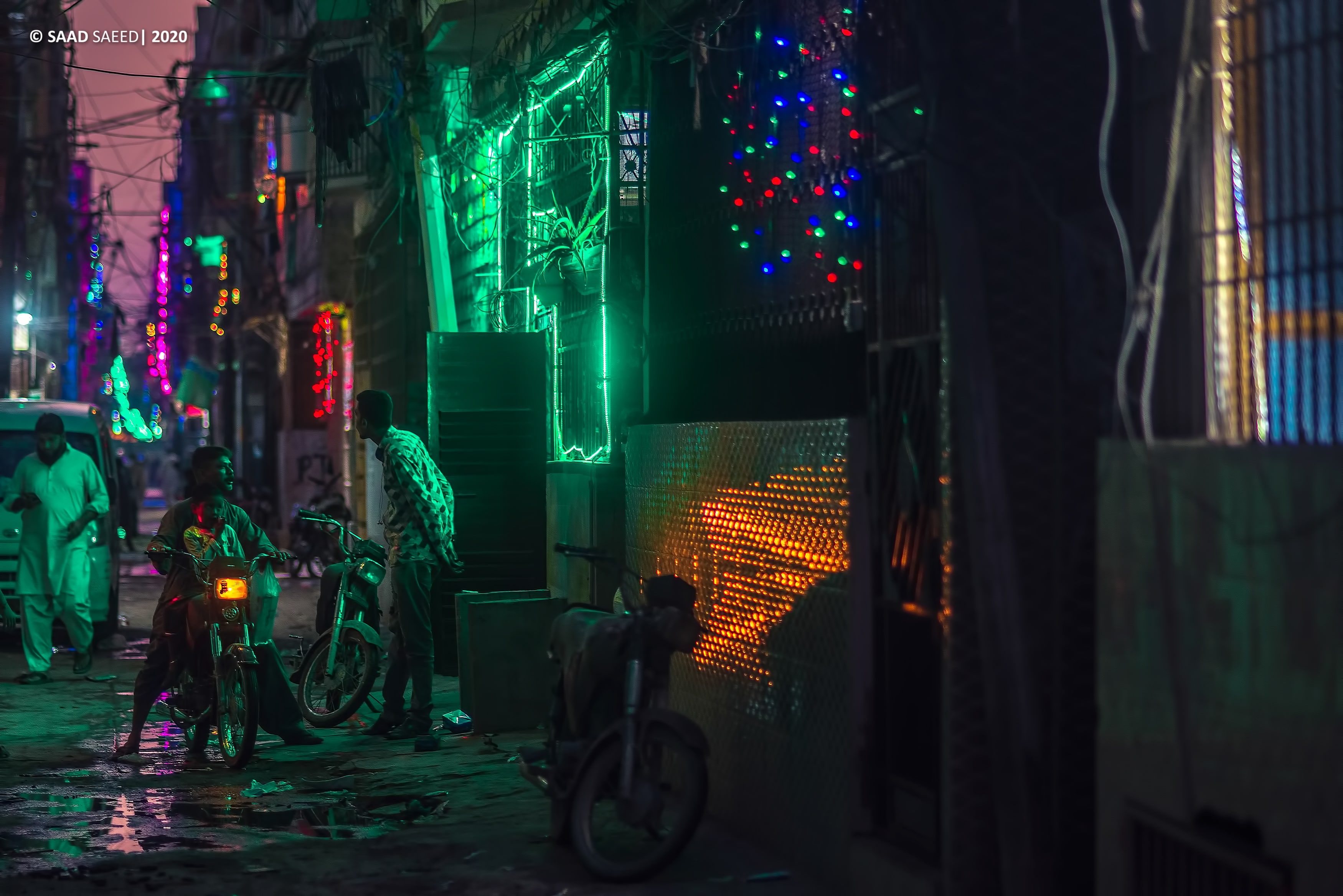
The neon lights of a dark street in Karachi are captured by Saad Saeed who shared them on Instagram on November 2, 2020. (Photo courtesy: Saad Saeed)
UMAIMA TANWEER
29-year-old Umaima Tanweer is a visual artist whose photos have a haunting quality.
“I always wanted to capture the true essence of Pakistani culture in the play of light and shadow,” Tanweer told Arab News. “There is a saying that if you want to know about the culture and history of any country, visit its old streets and bazaars first, and I fully believe in that.”
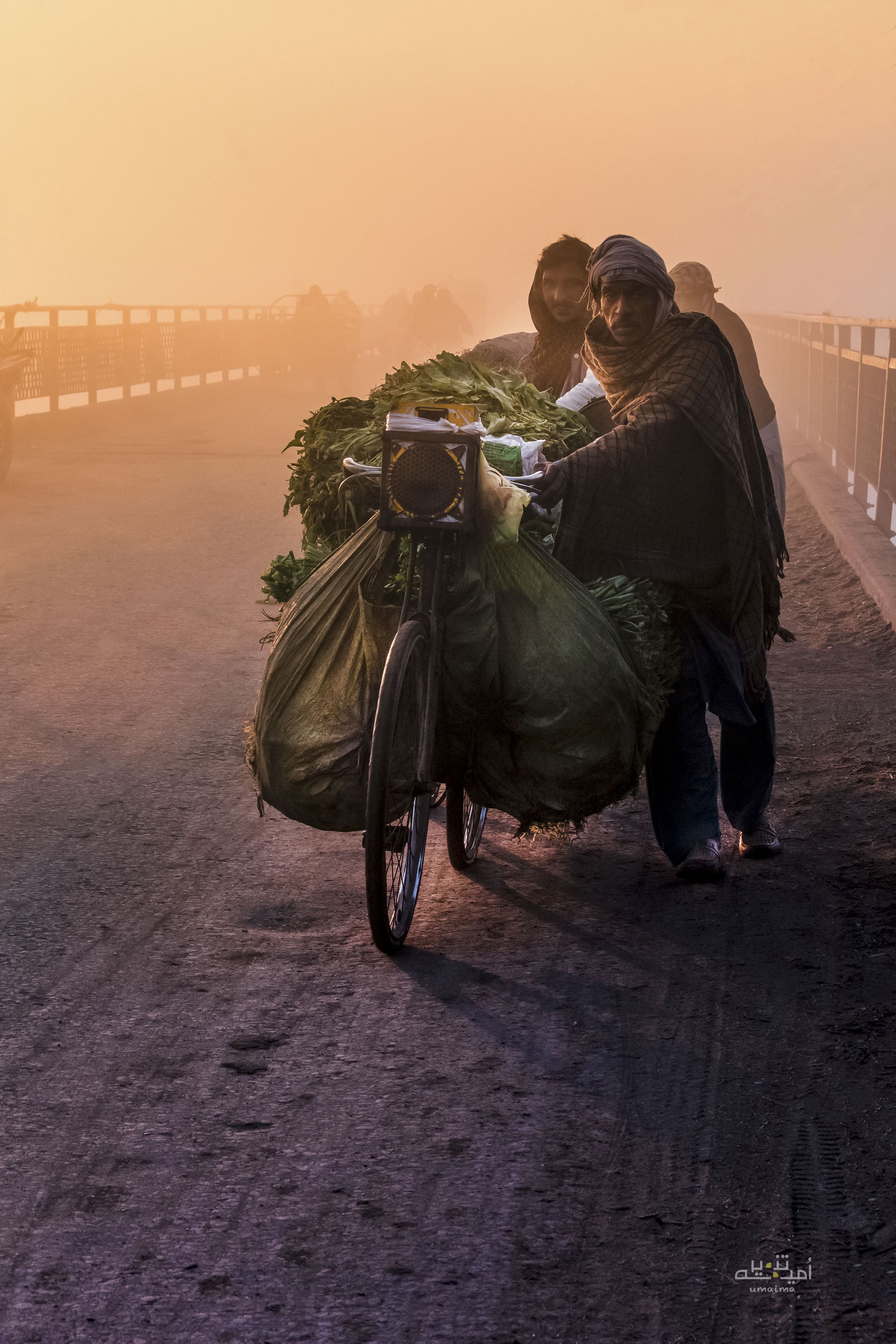
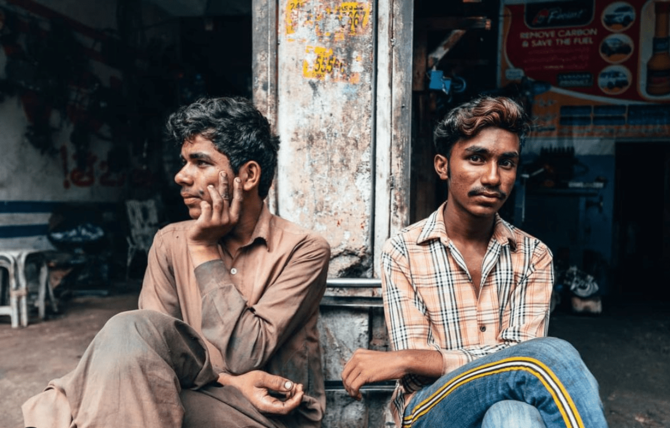
A group of men carrying vegetable was photographed during the early hours of the day in Lahore by Umaima Tanweer who posted the picture on April 30, 2019. (Photo courtesy: Umaima Tanweer)
Tanweer snaps city and rural life as a way of preserving what she says is “the fading culture of Pakistan,” calling its preservation in photographs one of her biggest dreams.
HASSAN TALAL
Muhammad Hassan Talal, 28, from Sarghoda, Pakistan is a self-taught photographer who has been photographing Pakistan while traveling. Talal captures the country through its stunningly still landscapes drenched in golden light and also defining moments of movement such as bulls pounding the ground or a polo player mid-game.
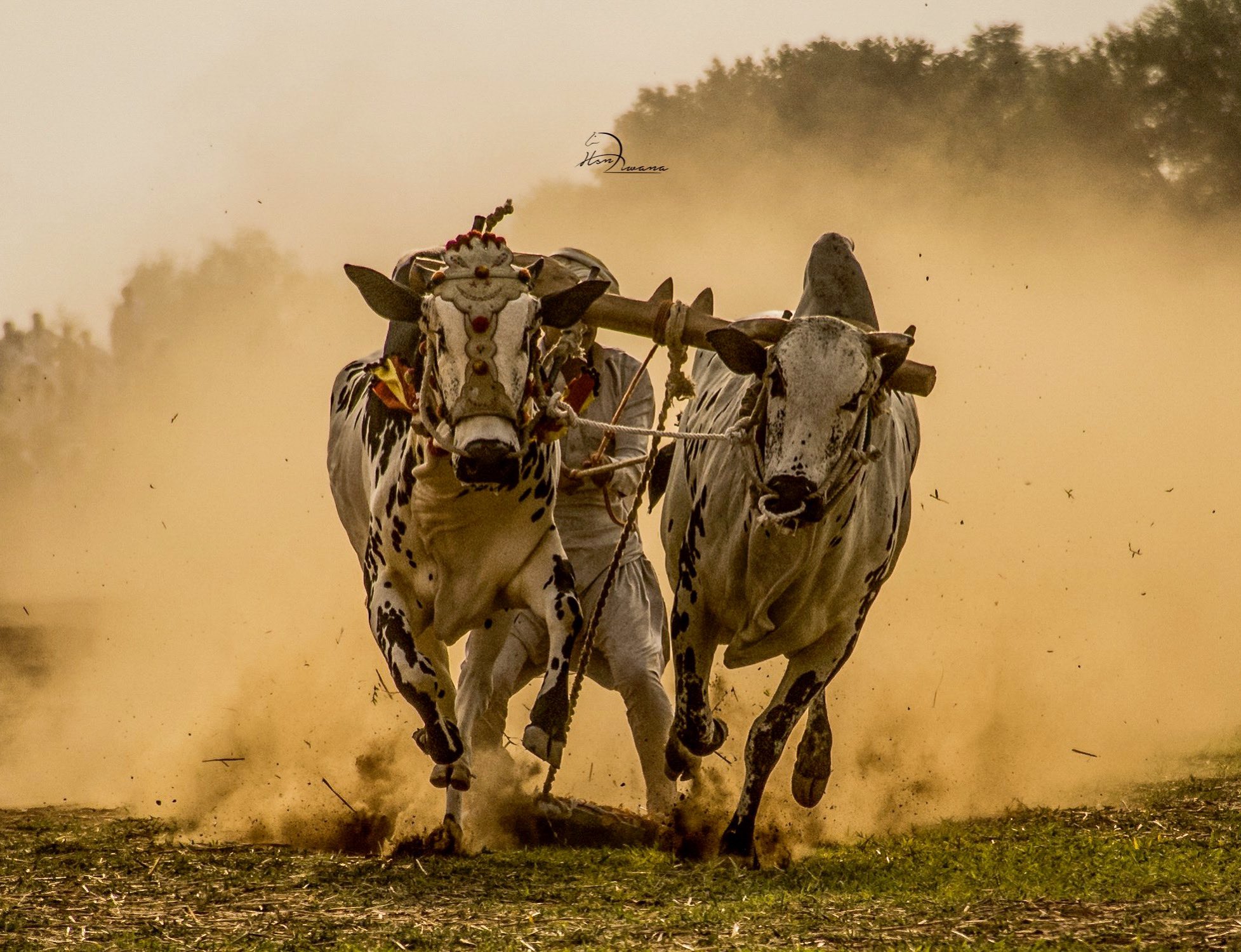
Hassan Talal shared the picture of racing bulls on Instagram on January 19, 2021. (Photo courtesy: Hassan Talal)
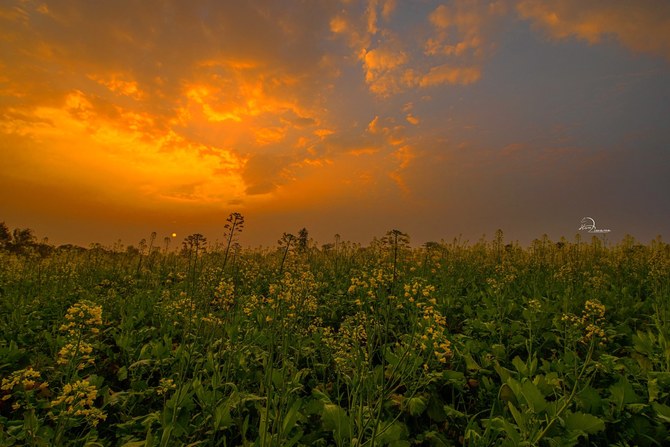
“The light of sunsets and sunrises fascinates me so much,” Talal told Arab News, “I took up photography because I wanted to show people that they could appreciate all the natural beauty surrounding them if they truly began to see it.”
HEBA MOEEN
A PR and communications professional by trade, Heba Moeen is following her hobby of wildlife and bird photography in Pakistan.
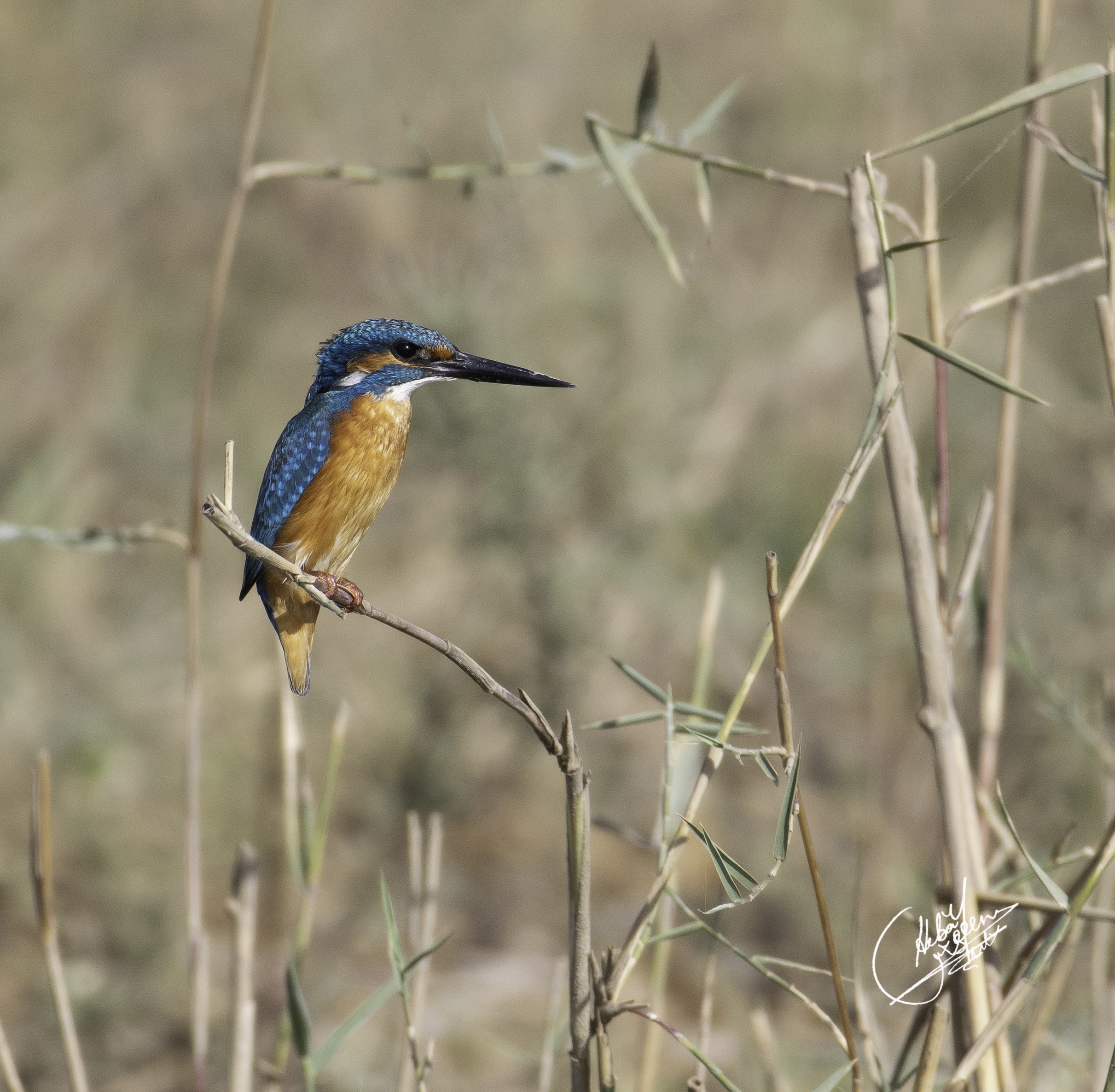
A kingfisher bird at Haleji Lake, Sindh, was captured by Heba Moeen who posted it on Instagram on January 24, 2021. (Photo courtesy: Heba Moeen)
Moeen, who is among a handful of women in Pakistan specializing in this area, says she was encouraged by a number of Facebook groups, including Birds of Pakistan, Birds of Sindh and Wildlife of Pakistan, to nurture her passion for photography.
“It feels amazing documenting Pakistan in this way especially as a woman,” Moeen told Arab News. “It is a male-dominated field, but women are encouraged and appreciated for being part of such a niche segment.”