

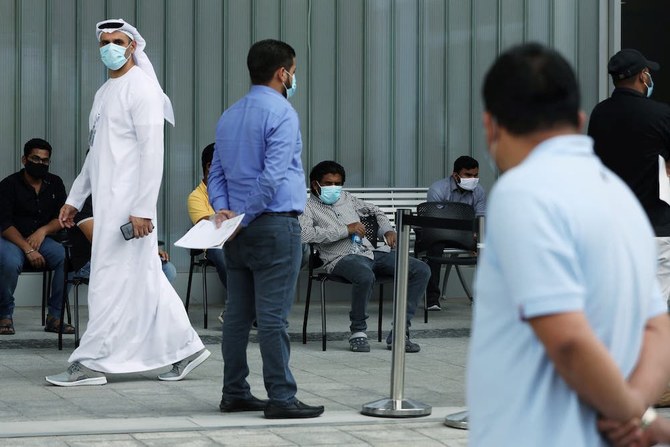

DUBAI: The UAE on Saturday recorded 2,998 new coronavirus cases and five virus-related deaths.
Officials from the Ministry of Health and Prevention (MoHAP) said the total number of cases since the pandemic began had reached 227,702, while the death toll rose to 702.
It also said that 2,264 people had recovered from the virus in the past 24 hours. The total number of recoveries is 203,660.
Dubai Health Authority said on Saturday it had opened a seventh health center to offer the COVID-19 Pfizer-BioNTech vaccine.
DHA announced the addition of a seventh centre, offering the Pfizer-BioNTech vaccine, as part of its free vaccination campaign against COVID-19 after receiving a notable turnout for the vaccine. pic.twitter.com/UAlriOMbcH
— هيئة الصحة بدبي (@DHA_Dubai) January 9, 2021
Dr. Farida Al-Khajja, CEO of Clinical Support Services and Nursing Sector at DHA and Chairperson of the COVID-19 Vaccination Steering Committee, said the authority added the Al-Safa primary health care center to the six existing facilities.
The centers are offering the vaccine for free, to accommodate for the notable turnout, and to “meet the growing requirements and the expected increased demand for the vaccination in the coming period.”
The inoculation campaign is targeting four main categories, with priority going to individuals aged 60 and above and those with chronic diseases, as well as frontline workers.
Elsewhere, Kuwait reported 427 new coronavirus cases, raising the total number to 153,900. The death toll rose to 942 after two coronavirus-related deaths were reported in the previous 24 hours.
تعلن #وزارة_الصحة عن تأكيد إصابة 427 حالة جديدة، وتسجيل 245 حالة شفاء، و 2 حالة وفاة جديدة بـ #فيروس_كورونا_المستجدّ COVID-19 ، ليصبح إجمالي عدد الحالات 153,900حالة pic.twitter.com/7ddHX5yeXx
— وزارة الصحة - الكويت (@KUWAIT_MOH) January 9, 2021
In Bahrain, one death was reported, raising the death toll to 355, while 287 new infected cases were confirmed.
Out of 10823 COVID-19 tests carried out on 9 January 2021, 287 new cases have been detected among 152 expatriate workers, 121 new cases are contacts of active cases, and 14 are travel related. There were 238 recoveries from #COVID19, increasing total recoveries to 92113 pic.twitter.com/yzl9oymFvM
— وزارة الصحة | مملكة البحرين (@MOH_Bahrain) January 9, 2021


