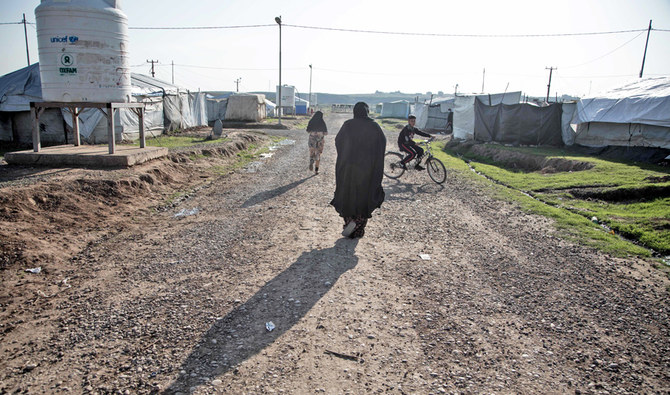
BAGHDAD: Languishing in a tent in northern Iraq, Nour yearns to return home but can’t because she is accused of supporting jihadists — an allegation she insists has been designed to obscure a land dispute.
The 22-year-old’s family is one of hundreds rights groups fear will remain stuck indefinitely in limbo due to long-standing wrangles being repackaged by neighbors or authorities into accusations they belong to the Daesh group. Exacerbating their situation, authorities have since autumn sped up long-stated plans to close displacement camps across Iraq where 200,000 people still live.
Nour’s brother left their hometown near the northern city of Mosul and joined the jihadists in 2014, the year Daesh seized a third of Iraqi territory in a lightening offensive.
But even before her brother’s departure stoked unwelcome attention, the family had already been locked for years in a dispute with an influential local sheikh. “He resented us because we owned land that he claimed belonged to him,” said Nour.
“The sheikh tried to discredit our family,” she alleged, nervously stirring sugar into her tea before downing it in one gulp.
“Every time there was a problem in town, it was my father’s or my brother’s fault,” she added.
Rights groups and others — including the International Organization for Migration — are worried about displaced families who stand accused of links to Daesh, sometimes falsely, and may face violent retribution if sent home.
“We know there are at least hundreds of families and women in particular who cannot return to their areas of origin because of these accusations,” said Belkis Wille of Human Rights Watch.
“Most of the time, the accusations are based on rumors, difficult to verify and often linked to tribal problems or problems between families,” she said.


![]()

Grievances, reborn as Daesh accusations, tie Iraqis to camps
Short Url
https://arab.news/68vz5
Grievances, reborn as Daesh accusations, tie Iraqis to camps
- Most of the time, the accusations are based on rumors, difficult to verify and often linked to tribal problems or problems between families


Latest updates




© 2026 SAUDI RESEARCH & PUBLISHING COMPANY, All Rights Reserved And subject to Terms of Use Agreement.