


ALULA: Saudi Arabia, the UAE, Bahrain and Egypt have restored full diplomatic relations with Qatar, the Kingdom’s foreign minister said Tuesday, marking the end of a three-year dispute.
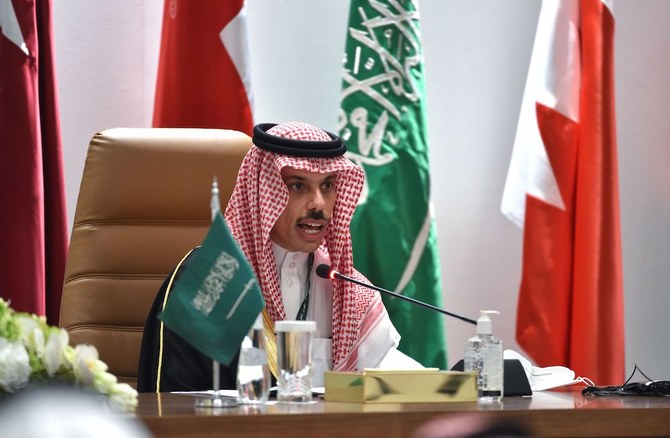
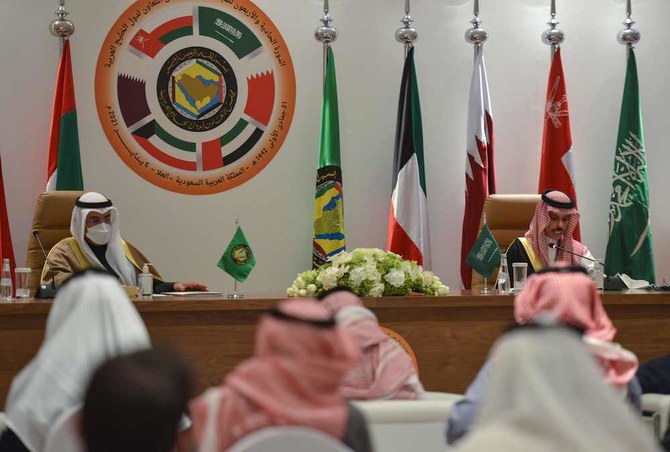
“What happened today is... the turning of the page on all points of difference and a full return of diplomatic relations,” Prince Faisal bin Farhan told a press conference at the conclusion of the 41st GCC summit in the city of AlUla, northwestern Saudi Arabia.
Leaders from the six GCC states signed two documents, the AlUla Declaration and a final communique.
Prince Faisal said the AlUla Declaration emphasized the need to combat entities that threaten the security of Gulf nations, adding that “this summit sends a message to the whole world that no matter how much disagreement is in the same house, wisdom is able to overcome all this and move the region to safety.”
The final communique called for strengthening cooperation in combating terrorist entities, and an emphasis on the GCC countries standing united, he said.
The statement affirmed the solidarity of the Gulf states regarding any direct or indirect interference in their internal affairs,” and members agreed that no country’s sovereignty be violated or its security targeted,” Prince Faisal added.
The AlUla summit resulted in “turning the page on the past and looking forward to a future dominated by cooperation and respect in a way that preserves the security and stability of states.”
GCC Secretary-General Nayef Al-Hajraf said Gulf states usually overcome all challenges with strength and determination.
The AlUla Declaration, he said, emphasized the GCC’s goals and strengthened the bonds of friendship and brotherhood among the member states.
Earlier, Crown Prince Mohammed bin Salman met separately with Qatar’s Emir Sheikh Tamim on the sidelines of the summit, after the pair embraced at the airport.
Al-Hajraf said Egypt’s signing of the AlUla declaration strengthens the fraternal relations between Cairo and the GCC countries.
The United States welcomed the outcomes of the summit and the declaration, saying it “marks a positive step toward restoring Gulf and Arab unity.
“We have long stressed that a truly united Gulf will bring added prosperity through the free flow of goods and services and more security to its people. We welcome the pledge today to restore cooperation in military, economic, health, counter-corruption, and cultural initiatives,” the State Department said in a statement.
The breakthrough announced with the Al-Ula Declaration today at the GCC summit is a positive step toward building a more secure and prosperous region. We are stronger when we stand united. https://t.co/HUhbKA6YTN
— Cale Brown (@StateDeputySPOX) January 5, 2021
The US also thanked Kuwait for its mediation efforts and said that it hopes Gulf countries would continue to reconcile their differences.
“Restoring full diplomatic relations is imperative for all parties in the region to unite against common threats. We are stronger when we stand together,” the statement added.
Meanwhile, Al-Hajraf said that the challenges posed by the coronavirus pandemic confirmed the need for Gulf cooperation and coordination. He said Gulf countries had dealt with the repercussions of COVID-19 with “economic firmness.”
The AlUla Declaration called for completing the requirements of the Gulf Customs Union and the Common Market, and achieving full economic citizenship, including enabling citizens of GCC countries freedom to work, move and invest throughout the union, and have equal access to education and health care.
It also called for building the Gulf railway network, a food and water security system.
Earlier on Tuesday, Crown Prince Mohammed said Gulf states had inked an agreement that affirms “our Gulf, Arab and Islamic solidarity and stability.”
Saudi Deputy Defense Minister Prince Khalid bin Salman said the summit and the AlUla Declaration “established a new phase in which we work together toward a bright tomorrow for our region and face all its challenges.”
He said in a tweet that “we are one people led by brothers whose primary concern is the stability, prosperity and prosperity of their homelands.”
Later on Tuesday, Saudi Arabia’s King Salman received a phone call from Kuwait’s Emir Sheikh Nawaf Al-Ahmad Al-Jaber Al-Sabah who said the AlUla summit would result in “stronger Gulf and Arab unity and cohesion.”
King Salman also received a letter from Oman’s Sultan Haitham on the strong relations between their two countries.
(With AFP)