

6,500 trees planted in northeast Riyadh to promote greenery

1 / 2
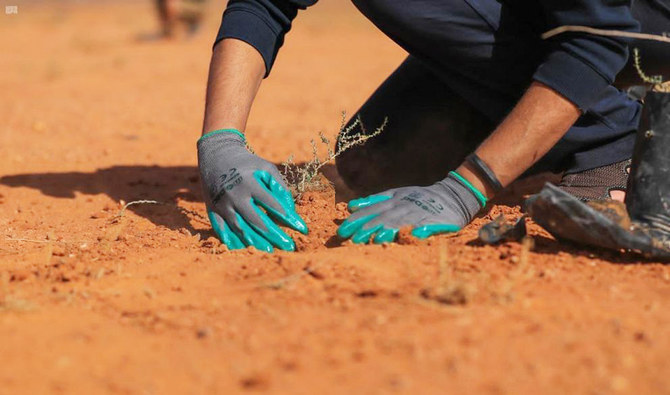
Over the next six months, trees will be planted in approximately 165 sites to tackle deforestation. (SPA)
2 / 2
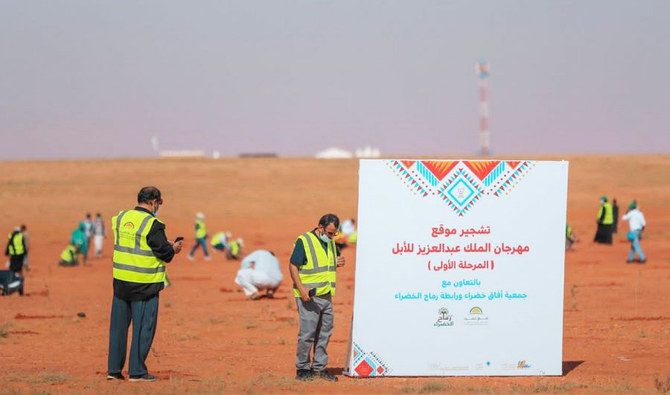
Over the next six months, trees will be planted in approximately 165 sites to tackle deforestation. (SPA)
Short Url
Updated 15 December 2020
Follow

6,500 trees planted in northeast Riyadh to promote greenery

  • The goal of planting a million trees by 2030 will help the Saudi Vision 2030 reform plan for a greener Kingdom

RIYADH: The administration of the King Abdul Aziz Camel Festival, in association with the Green Horizons Association and Green Rumah Association, planted 6,500 trees throughout the festival’s venue.
It is the first phase of the administration’s efforts to boost greenery in northeast Riyadh. In addition to planting trees, 500,000 seeds were also scattered to further beautify the area. The planted trees included Accacia gerrardii, wild sidr and ghaf. These trees will prevent soil corrosion and are an important source of food source for many desert animals.
The festival administration had earlier planted more than 100 palm trees to take part in a campaign launched by the Ministry of Environment, Water and Agriculture.
The campaign was launched with several Saudi ministries tweeting tree emojis in a push to promote the planting of trees in the Kingdom.
Over the next six months, trees will be planted in approximately 165 sites to tackle deforestation.
The goal of planting a million trees by 2030 will help the Saudi Vision 2030 reform plan for a greener Kingdom.
Afforestation campaigns have been initiated since the launch of Crown Prince Mohammed bin Salman’s strategy.


Rainfed agriculture booms 1,100% under Saudi rural development initiative

Updated 28 December 2025
Follow

Rainfed agriculture booms 1,100% under Saudi rural development initiative

  • It is one of eight agricultural segments receiving program support

RIYADH: The Sustainable Agricultural Rural Development Program, known as Saudi Reef, has announced exceptional growth in its rainfed crops sector, one of eight agricultural segments receiving program support, the Saudi Press Agency reported. 

The sector has registered extraordinary expansion, surpassing 1,100 percent, with participant numbers climbing to over 13,300 beneficiaries nationwide.

Program spokesman Majed Al-Buraikan identified rainfed agriculture as a cornerstone of Saudi Reef’s achievements, highlighting its role in boosting production efficiency, bolstering food security and self-reliance, enabling sustainable farming in water-scarce regions, and raising income levels and quality of life for smallholder farmers — all consistent with Vision 2030 priorities.

Al-Buraikan outlined the program’s principal aims, including broadening the agricultural production foundation, securing food independence across multiple crop categories, enhancing smallholder farmer prosperity and employment prospects to foster social cohesion, and safeguarding environmental and natural resources throughout rural Saudi Arabia.

Saudi Reef extends support and technical assistance across eight distinct sectors: honey production, fruit cultivation, coffee production, rose farming, rainfed crops, livestock raising, artisanal fishing, and value-added agricultural products.