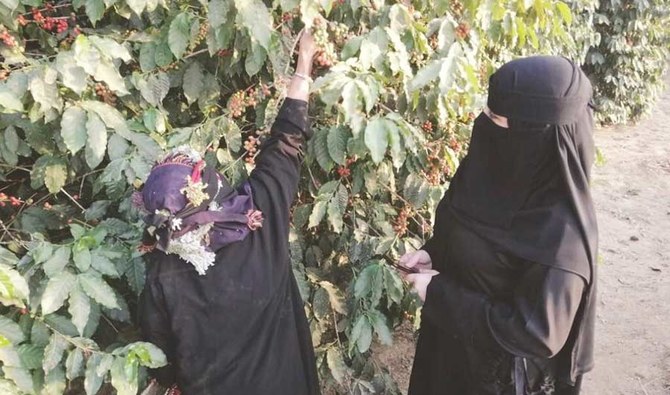


MAKKAH: A 75-year-old Saudi mom has turned her lifelong passion for growing Khawlani coffee trees into a family business venture.
Jamilah Salem Al-Maliki has been nurturing the trees on her land in the Kingdom’s Jazan region for decades, following traditional practices passed down through generations of farmers.
Khawlani coffee beans have been cultivated in the region’s rich soils for hundreds of years and are considered to be some of the finest in the world.
And Al-Maliki’s skills have been picked up by her eight daughters who now help run the family’s farming business.
Every morning after dawn, the women lovingly tend to more than 300 trees growing on their village plots.
Similar to many coffee farmers in Jazan, Al-Maliki learned the trade from a young age by watching others and through hands-on practical experience.
And despite her age, she still ploughs the land, trims leaves, harvests the beans, and dehydrates them before selling to market.
A native of Al-Dayer Bani Malek province, Al-Maliki has become something of a local legend in the Kingdom’s southern coffee-growing community.
Her relationship with the trees stems from a feeling of natural belonging to the area where her family roots go back through several generations. Over the years, she has steadily expanded the farm and now owns eight plantations dedicated to growing her favorite trees.
In the past, it was shameful to trade the coffee tree beans and instead they were presented as gifts to relatives and guests visiting from outside the area, a local tradition and custom.
Jamilah Salem Al-Maliki
Al-Maliki told Arab News that she considered the coffee tree to be “sacred” and would do anything possible to protect them.
Her family had originally only used the farm’s produce for domestic consumption and to share with relatives and friends in the village.
“In the past, it was shameful to trade the coffee tree beans and instead they were presented as gifts to relatives and guests visiting from outside the area, a local tradition and custom,” she said.
“However, Khawlani coffee beans have now become a product consumed globally.” The international boom in demand for the coffee has helped to boost the local economy and many farms have grown to become large-scale manufacturing operations.
Al-Maliki said she fully intended to continue developing her agricultural talent. “I want to have the most accurate information that ensures caring for the coffee tree and learning ways to protect it,” she added.
The provincial branch of the Saudi Ministry of Agriculture runs courses and workshops to help farmers hone their techniques and Al-Maliki hopes to attend sessions in the future. By increasing her skills and knowledge she also aims to compete for prize money worth SR3 million ($800,000) in a Jazan business awards scheme. Al-Maliki’s farm is open to visitors who can watch age-old agricultural activities being carried out using traditional tools.