ISLAMABAD: The Pakistani military said on Tuesday it had concluded its probe into the arrest of the son–in-law of ousted Prime Minister Nawaz Sharif last month and decided to removed officers from the paramilitary Rangers and the ISI spy agency who had acted “zealously” in the incident.
The probe, ordered by the country’s army chief, General Qamar Javed Bajwa, came after local politicians alleged that Sindh province’s top police official, Mushtaq Ahmed Mahar, had been abducted by paramilitary troops, taken to the office of a local ISI official, and coerced into signing an order to arrest opposition leader Muhammad Safdar, a member of the Pakistan Muslim League (PML-N) party.
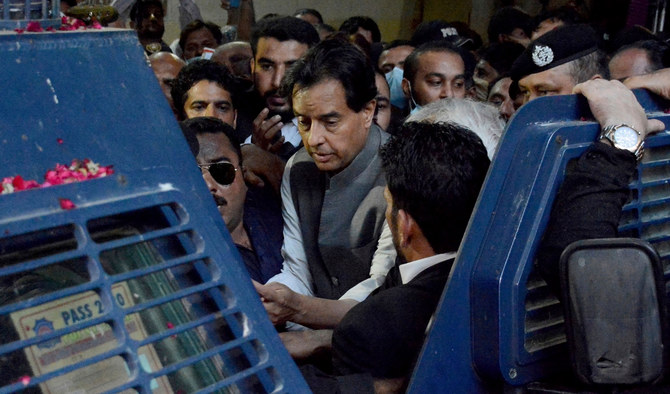
Safdar was arrested by officials who barged into his hotel room, as seen in cellphone footage, the day after a protest by an opposition alliance in Karachi, capital of the southern province of Sindh. He was subsequently released on bail.
“Based on the recommendations of the Court of Inquiry, it has been decided to remove the concerned officers from their current assignments for further departmental proceedings and disposal at GHQ [general headquarters],” the military said in a statement.
It said the Rangers and ISI officers were “experienced enough to have acted more prudently and could have avoided creating an unwarranted situation that led to misunderstanding between the two state institutions.”
Last week, the PML-N and an alliance of opposition parties kicked off nationwide protests against the government of Prime Minister Imran Khan and accused the military of interference in Pakistani politics - an allegation the army vociferously denies. Safdar was among those leading the protests.
The Sindh government, under which the Sindh police operate, said it had not ordered Safdar’s arrest and that the police had been pressured into taking the action.
“The police chief’s phones were seized. He was taken to the sector commander’s office and asked to sign the arrest orders,” Maryam Nawaz, Safdar’s wife and Sharif’s daughter, told media. Mahar was reported to have been allowed to leave on Monday after signing the arrest order.
Bilawal Bhutto Zardari, whose Pakistan Peoples Party rules Sindh, publicly called for the army and intelligence chiefs to investigate the matter, saying the incident had “crossed a red line”.


![]()

Pakistan army says will remove Rangers, ISI officers who arrested Nawaz Sharif's son-in-law
Short Url
https://arab.news/w5pnt
Pakistan army says will remove Rangers, ISI officers who arrested Nawaz Sharif's son-in-law
- Safdar was arrested by officials who barged into his hotel room a day after a protest by an opposition alliance in Karachi
- Army ordered a probe after politicians alleged Sindh’s top police official had been abducted by Rangers and coerced into signing the arrest order
Latest updates


© 2026 SAUDI RESEARCH & PUBLISHING COMPANY, All Rights Reserved And subject to Terms of Use Agreement.