Dutch mapping and navigation company TomTom on Wednesday forecast a 25 percent drop in full-year sales, as it reported a better-than-feared fall in third-quarter earnings, although its automotive division surpassed expectations.
The Amsterdam-based company, whose customers range from major carmakers to leading global tech firms, said it now expects reported revenue of 530 million euros ($622.33 million) for the full-year, slightly below consensus estimates of 536 million.
The group said it saw growth in its automotive business, which provides maps and navigation software to carmakers.
“For Q4, we expect that automotive operational revenue continues to show strong sequential growth,” said finance chief Taco Titulaer, citing improved car production as the division beat expectations, growing sales 19% year-on-year.
European new car sales gradually picked up over the summer, after lockdowns shuttered showrooms and brought traffic to a halt. Industry data showed new registrations down 18% in August, after falling 24% in July and 78% in June.
However, both the consumer and enterprise divisions — which sell portable satnavs and mapping software to tech firms and government bodies — performed worse than expected.
The group reported earnings before interest, taxes, depreciation and amortization (EBITDA) of 3.9 million euros ($4.58 million), down from 15.9 million a year earlier, but beating analysts’ estimates of an EBITDA of 1 million euros.
TomTom also announced on Tuesday the extension of its maps and traffic supply contract with Uber, the ride-hailing company now becoming a map editing partner. ($1 = 0.8516 euros)


TomTom reports drop in earnings, automotive gains

https://arab.news/yb4aw
TomTom reports drop in earnings, automotive gains

- The Amsterdam-based company said it now expects reported revenue of $622.33 million
- European new car sales gradually picked up over the summer, after lockdowns shuttered showrooms and brought traffic to a halt


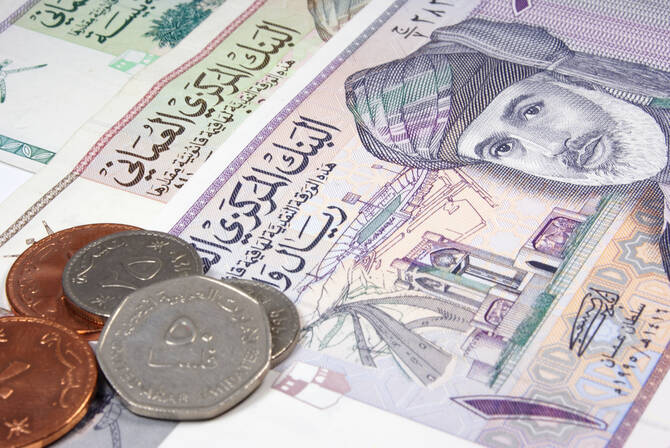
Oman inflation at 1.6%, latest figures show
RIYADH: Oman’s consumer price index rose by 1.6 percent in December compared with the same month a year earlier, reflecting moderate inflationary pressures at year’s end.
Average inflation for the January–December 2025 period increased by 1 percent, according to official data.
Figures released by the National Center for Statistics and Information showed that miscellaneous personal goods and services recorded the sharpest price increase, rising by 10 percent year on year.
This was followed by transport at 2.8 percent, restaurants and hotels at 2.6 percent, and furniture, household equipment and routine maintenance at 2.4 percent, as well as education at 2.2 percent.
Food and non-alcoholic beverages prices increased by 1.1 percent, while clothing and footwear rose by 0.2 percent and health by 0.1 percent. In contrast, prices in the culture and recreation group declined by 0.1 percent.
Housing, water, electricity, gas and other fuels, as well as tobacco and communications, remained unchanged over the period.
Within the food and non-alcoholic beverages category, December prices compared with the same month of 2024 showed notable increases in fish and seafood at 6 percent and fruits at 4 percent.
Sugar, jam, honey and confectionery rose by 3.5 percent, milk, cheese and eggs by 2.1 percent, and non-alcoholic beverages by 0.9 percent.
Meat prices increased by 0.8 percent, bread and cereals, oils and fats by 0.7 percent, and other unclassified food products by 0.4 percent, while vegetable prices fell by 5.8 percent.
Regionally, Al Dhahirah governorate recorded the highest inflation rate at 2.5 percent by the end of December compared with a year earlier.
Inflation also rose by 2.1 percent in Al Dakhiliyah, 1.7 percent in Muscat and Al Buraimi, and 1.5 percent in South Al Batinah.
South Al Sharqiyah and Musandam each posted increases of 1.1 percent, while North Al Sharqiyah and North Al Batinah rose by 0.9 percent. Al Wusta and Dhofar recorded inflation of 0.8 percent.
The report highlights the relative importance of expenditure groups within the consumer price index basket, underscoring why movements in certain categories have a greater impact on overall inflation.
Housing, water, electricity, gas and other fuels carry the largest weight at 31.7, followed by food and non-alcoholic beverages at 20.6 and transport at 14.5.
Together, these three groups account for more than two-thirds of the CPI basket, meaning price stability in housing and utilities can significantly moderate headline inflation even when sharper increases are recorded in smaller-weight categories such as miscellaneous goods and services.
The analysis also notes that around 56,640 individual price quotations were collected from 3,907 sources across the Sultanate during the reference period.
In addition, rental data were gathered from a dedicated sample of 1,509 rented housing units, providing a detailed and representative measure of housing costs, which remain the most heavily weighted component of the inflation basket.