

Kurds again under threat of clampdown in Turkey

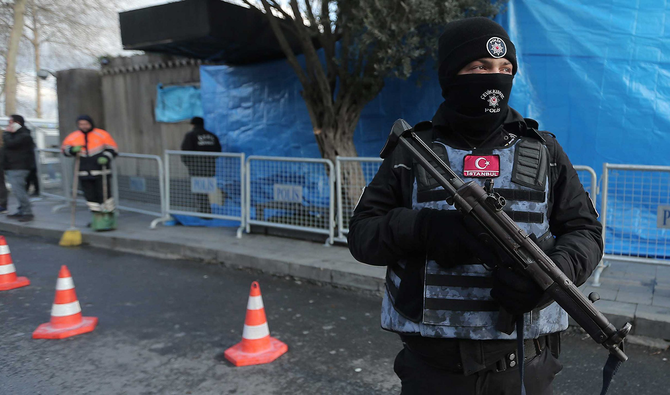
The Ankara regime is accused of curbing voices of the opposition. (Reuters/File)
Short Url
Updated 16 September 2020
Follow

Kurds again under threat of clampdown in Turkey

  • Violence and deliberate targeting affects politicians and members of the public alike

ISTANBUL: Crackdowns against Kurdish people in Turkey continue across the country, with elected politicians, soldiers and even seasonal workers falling victim.

On Tuesday, Sirri Sakik, a former lawmaker from the pro-Kurdish Peoples’ Democratic Party (HDP) and ex-mayor of eastern Agri province, was sentenced to five years and 10 months in prison on terrorism charges.

The case centered on a press statement he gave five years previously about clashes between the outlawed Kurdistan Workers’ Party (PKK) and the Turkish military.

He was charged with “helping the PKK willingly” and “holding terror propaganda,” though he was among a group of 250 people, including several Kurdish politicians and NGO representatives, to call on the government to restart negotiations with the PKK to end the violence.

“We got tired of these clashes; and we are here, as NGOs and people of Agri province, for these clashes not to reoccur,” he had said at the time.

Sakik, a prominent Kurdish politician since the 1990s, was dismissed from his post in 2017 when the government appointed a trustee to the municipality.

Last week, HDP deputy Remziye Tosun received a 10-year prison sentence on terrorism charges after she was accused of treating injured members of the PKK during clashes in Diyarbakir province in 2016.

A short truce between Ankara and the PKK ended in the summer of 2015, opening the way for violent clashes in the southeastern and eastern provinces of the country where Kurdish people mainly reside.

Elsewhere, Dogan Cetin, a 20-year-old Turkish soldier of Kurdish origin, was allegedly attacked during his mandatory military service by two other soldiers, and was insulted by his commander, who called him a “terrorist and a backstabber” over remarks about the use of the Kurdish language in Turkey.

“People from the cities of Urfa, Van, and Sirnak are all my brothers. We are Kurds but we cannot understand each other. If only we were all able to have Kurdish education,” Cetin reportedly told his fellow soldiers.

An investigation was launched by the Turkish military after Cetin contacted the country’s Directorate of Communications.

Tulay Hatimogullari, an HDP lawmaker from the southern province of Adana, told Arab News: “Several Kurdish politicians and mayors are now behind bars. People are beaten just because they want to speak in Kurdish, their mother tongue. The government seems to push the HDP, as the parliament’s third largest party, outside the political sphere by labeling us as terrorists and executing a political massacre. These attempts are meant to break our social influence.”

There have also been several other physical attacks on Kurds in recent days. On Sept. 4, a group of Turkish people assaulted 16 Kurdish seasonal agricultural workers harvesting hazelnuts in the western province of Sakarya. The attack sparked public outrage, with two people taken into custody and then bailed for the attack.

On Sept 13. an armed attack targeting Kurdish construction workers in Turkey’s eastern province of Van saw a worker lost his life, while two others were injured in the Aegean province of Afyon.

“Against all these attacks, the HDP will keep struggling for democracy, peace and justice,” Hatimogullari said.


Sudan army breaks RSF siege on southern city Dilling

Updated 3 sec ago
Follow

Sudan army breaks RSF siege on southern city Dilling

  • Army says its forces 'succeeded in opening the Dilling road after carrying out a successful military operation'
  • Victory comes as the military attempts to stem a sweeping paramilitary advance across the wider Kordofan region
KHARTOUM: The Sudanese army said on Monday it had broken a long-running siege of Dilling, a city in the country’s south, where paramilitary forces had choked off access for more than a year and a half.
Since April 2023, Sudan has been engulfed in a conflict between the army and the paramilitary Rapid Support Forces (RSF) that has killed tens of thousands of people.
The war has also left 11 million people displaced and triggered what the UN describes as the world’s largest displacement and hunger crises.
In its statement, the army said its forces “succeeded in opening the Dilling road after carrying out a successful military operation,” claiming they had inflicted “heavy losses” on the RSF.
If confirmed, the advance would secure the army’s hold over both the northern and southern approaches to Dilling, located in South Kordofan state.
The city lies halfway between Kadugli — the besieged state capital — and El-Obeid, the capital of neighboring North Kordofan, which the RSF has sought to encircle.
Videos shared on social media showed army forces, said to be in Dilling, celebrating atop pick-up trucks as people ululated and cheered alongside them.
AFP could not independently verify the army’s claim or the footage, and the RSF has not yet commented.

- Sweeping offensive -

The push around Dilling comes as the army attempts to stem a sweeping paramilitary advance across the wider Kordofan region.
Since seizing the army’s last stronghold in western Darfur last October, the RSF has shifted its focus eastward, aided by its local allies, namely the Sudan People’s Liberation Movement-North faction led by Abdelaziz Al-Hilu.
Since then, the paramilitary group has tightened its grip on West Kordofan, taken Heglig — home to Sudan’s largest oil field — and intensified its siege of Kadugli.
A UN-backed assessment last year already confirmed famine in Kadugli, which has been under RSF siege for more than a year and a half.
The assessment said conditions in Dilling were likely similar, but security issues and a lack of access have prevented a formal declaration.
The UN has repeatedly cautioned that atrocities similar to those reported during the RSF offensive in El-Fasher — including mass killings, sexual violence, abductions and widespread looting — could spread into Kordofan.
More than 65,000 people have fled the Kordofan region since October, according to the latest UN figures.
Those escaping, particularly from South Kordofan, face “long and uncertain journeys” lasting up to 30 days and sleep “wherever they can,” according to Mercy Corps, one of the few aid groups operating there.