


LONDON: Britain on Friday said that it had secured its first major post-Brexit trade agreement — a free trade deal with Japan — the day after bitter wranglings with the EU.
The Department for International Trade said that the deal, which largely replicates the current EU-Japan deal, will be worth £15.2 billion ($19.5 billion).
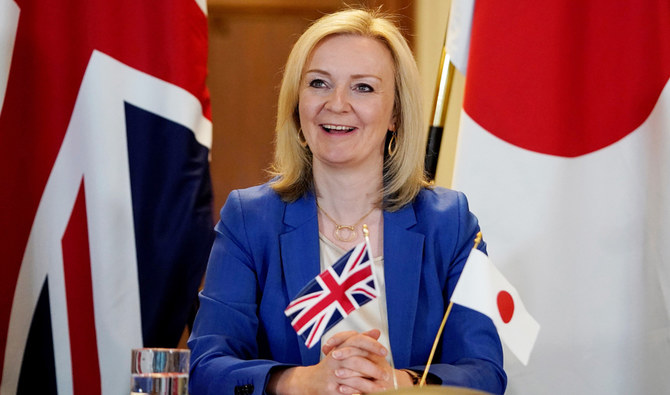
The UK-Japan Comprehensive Economic Partnership Agreement was agreed in principle by International Trade Secretary Liz Truss and Japan Foreign Minister Toshimitsu Motegi during a video call.
Bilateral trade is currently conducted under the EU-Japan deal that came into effect last year, but that agreement will no longer apply to Britain from Dec. 31.
Britain left the EU in January, nearly four years after a seismic referendum that saw voters opt to end close to five decades of European integration.
A standstill transition period is in place until the end of the year while London and Brussels try to thrash out the terms of their new relationship from Jan. 1 next year.
But the talks are increasingly fractious, and on Thursday the EU threatened legal action after the UK vowed to implement a new law that would break its binding divorce treaty.
The UK government will hope the new bilateral deal with Japan shows Brexit opponents that agreements can be made elsewhere.
“This is a historic moment for the UK and Japan as our first major post-Brexit trade deal,” said Truss.
“The agreement we have negotiated goes far beyond the existing EU deal, as it secures new wins for British businesses in our great manufacturing, food and drink, and tech industries.”
The deal was an “important step” toward joining the Trans-Pacific Partnership, she added.
Negotiating counterpart Motegi said that the deal should take effect on Jan. 1, following domestic ratification.
“It was a very tough negotiation, but we reached the agreement in principle in about three months, at an unusually fast pace,” he said.
“While maintaining the high levels of access to the British market under the Japan-EU EPA, we improved our access to the British market on train cars and some auto parts.”
FASTFACT
UK-Japanese trade was worth more than £30 billion last year, according to the British government.
About 99 percent of exports between the two nations will be tariff-free under the deal, according to the British government, with a particular focus on the food and drink, finance and tech sectors.
Manufacturing parts coming from Japan will benefit from reduced tariffs, as will British pork, beef and salmon traveling in the opposite direction.
British business welcomed the agreement, with Carolyn Fairbairn, director general of the Confederation of British Industry, calling it a “breakthrough moment.” “The government and business now need to work together to make the most from the deal,” she added.
“It’s a huge opportunity to secure new Japanese investment across a wider range of sectors and UK regions. The Japan deal can be the first of many.”
Britain and Japan came close to securing the deal last month, but failed to wrap up negotiations, with British media reporting that some aspects of the agriculture sector were still up for debate.


