


NEW YORK: As questions mount over whether the US will authorize a coronavirus disease (COVID-19) vaccine ahead of November’s elections, experts say there is a slim chance that enough evidence will be available to prove one is safe and effective in that time frame.
US President Donald Trump has repeatedly said a vaccine is possible before Nov. 3, and accused a “deep state” within the nation’s top health regulator of trying to slow clinical trials to hamper his chances at a second term.
The US Food and Drug Administration (FDA) refuted that claim, saying its decisions were guided by data. Drugmakers, seeking to bolster public confidence amid political squabbles, on Tuesday pledged to uphold scientific safety and efficacy standards.
However, comments from companies suggest they could have an answer in that time frame.
“It would really be an amazing vaccine to show that,” Dr. Anthony Fauci, director of the National Institute of Allergy and Infectious Diseases, told Reuters.
Fauci said initial trial results are likely to become available in November or December, but late October remains a possibility. “It is conceivable that if there are enough infections documented early on that you might get that answer earlier,” he said.
Vaccines must demonstrate they are at least 50 percent more effective than a placebo to be considered for approval. To prove that, government officials have said, at least 150 COVID-19 infections must be recorded among trial participants with at least twice as many occurring among the placebo group.
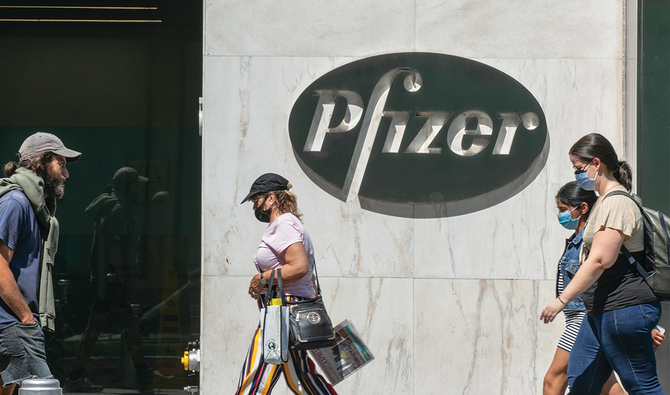
If a vaccine is especially effective, companies could have their answer sooner. Pfizer Inc. and Moderna Inc., whose US vaccine trials have enrolled thousands of people and are the most advanced, say they may have proof after just a few dozen become infected.
Independent panels of experts called data and safety monitoring boards (DSMB) will review trial data at pre-specified points. These boards can recommend companies stop trials if evidence is overwhelmingly positive or negative.
For Pfizer, the first interim look occurs when 32 trial volunteers get infected.
Experts interviewed by Reuters cautioned that information gleaned from a limited number of subjects could miss important safety issues.
Pfizer’s trial calls for four interim analyzes by the DSMB, the first after just 32 recorded infections. “We may have enough data to be able to share the first analysis by October,” said Pfizer spokeswoman Jerica Pitts.
Moderna’s first interim analysis will come after 53 trial subjects become infected, the company told investors last month.
Basing a decision on 53 cases, is “an absolutely insufficient number,” said Dr. Gregory Poland, a vaccine researcher at the Mayo Clinic in Rochester who has advised the FDA. “You would know very little about safety.”
To halt the trials due to positive results, vaccines would likely have to exceed the 50 percent efficacy threshold.
Pfizer has not disclosed what standard will be used for stopping its trial early. William Gruber, head of vaccine clinical research and development for Pfizer, said “the standard would be evidence of very high efficacy.”
A senior US official said companies had created appropriate trials to hold interim analyses that could detect effective vaccines earlier.
Although both drugmakers began vaccinating people in their respective 30,000-subject trials on July 28, Pfizer is in position to generate results earlier in part because it has administered the second shot of its two-dose vaccine a week earlier than Moderna. Moderna also slowed enrollment to ensure greater participation of at-risk minorities in its study.
Pfizer’s trial also collects data on infections that occur a week after it administers its second shot. Moderna has a two-week lag between the second shot and when it begins collecting data.
Dr. Henry Miller, a senior fellow at the Pacific Research Institute think tank and former director of the FDA’s office of biotechnology, said an emergency use authorization based on a small number of infections would not deliver an adequate answer on the safety of a vaccine intended for use by millions of healthy people. Some side effects could take four to six months to occur, he said.
Dr. Gregory Glenn, research chief for Novavax Inc, which is also developing a vaccine, said the October timeline was possible, but would likely be longer.
“I just think humility is a good thing right now,” he said. “The FDA set out some pretty strict criteria for success. So that’s going to take a pretty good vaccine to do that.”


