

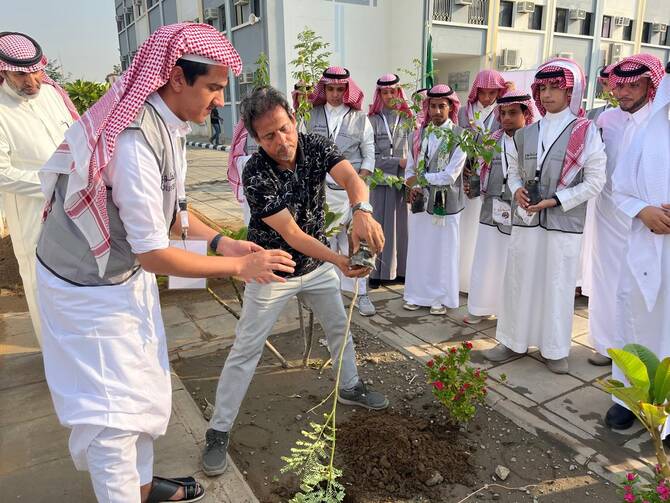
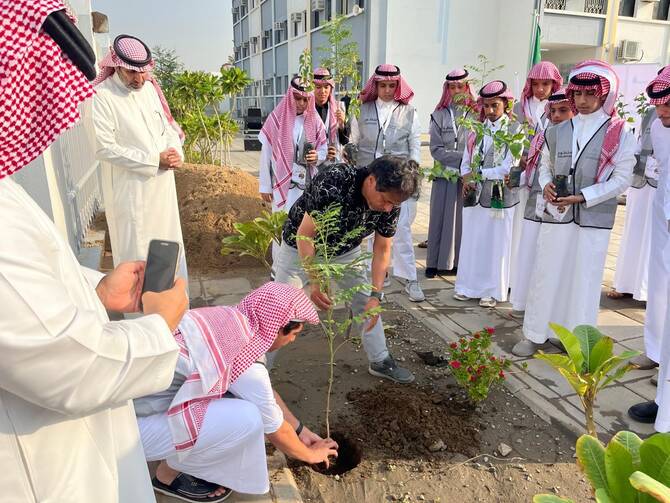
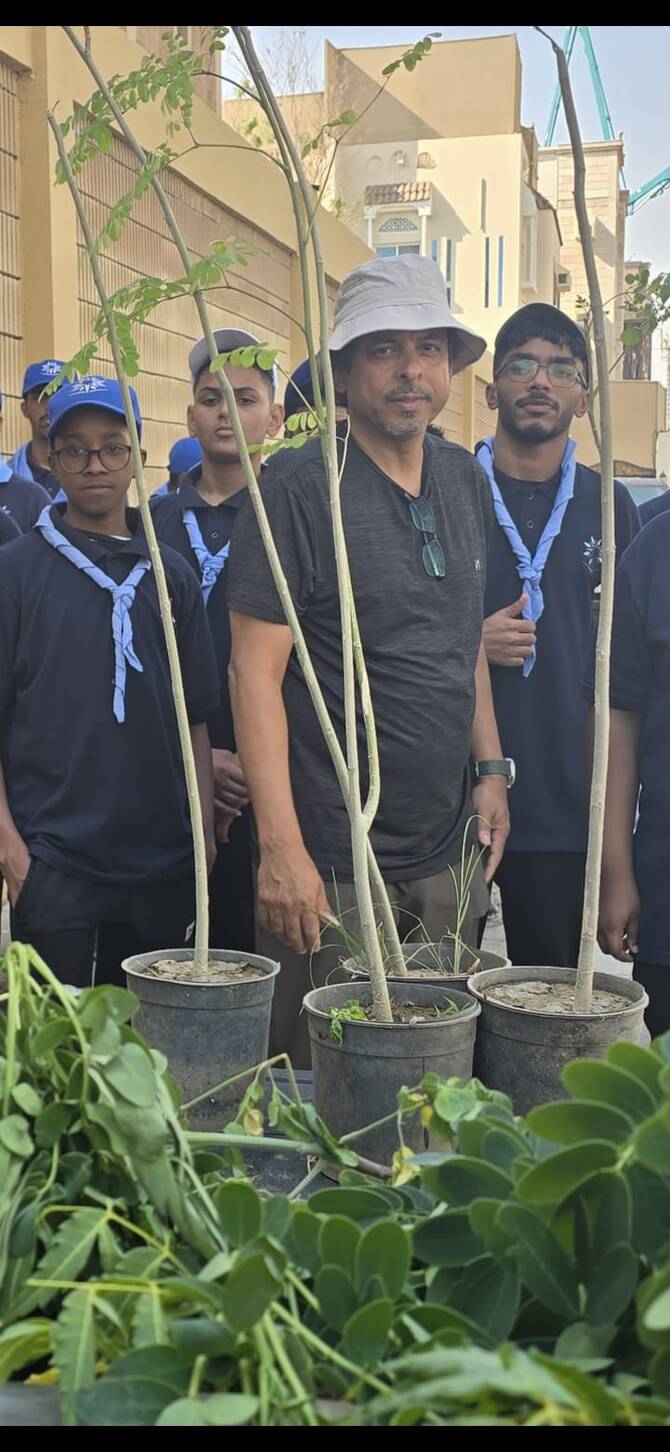
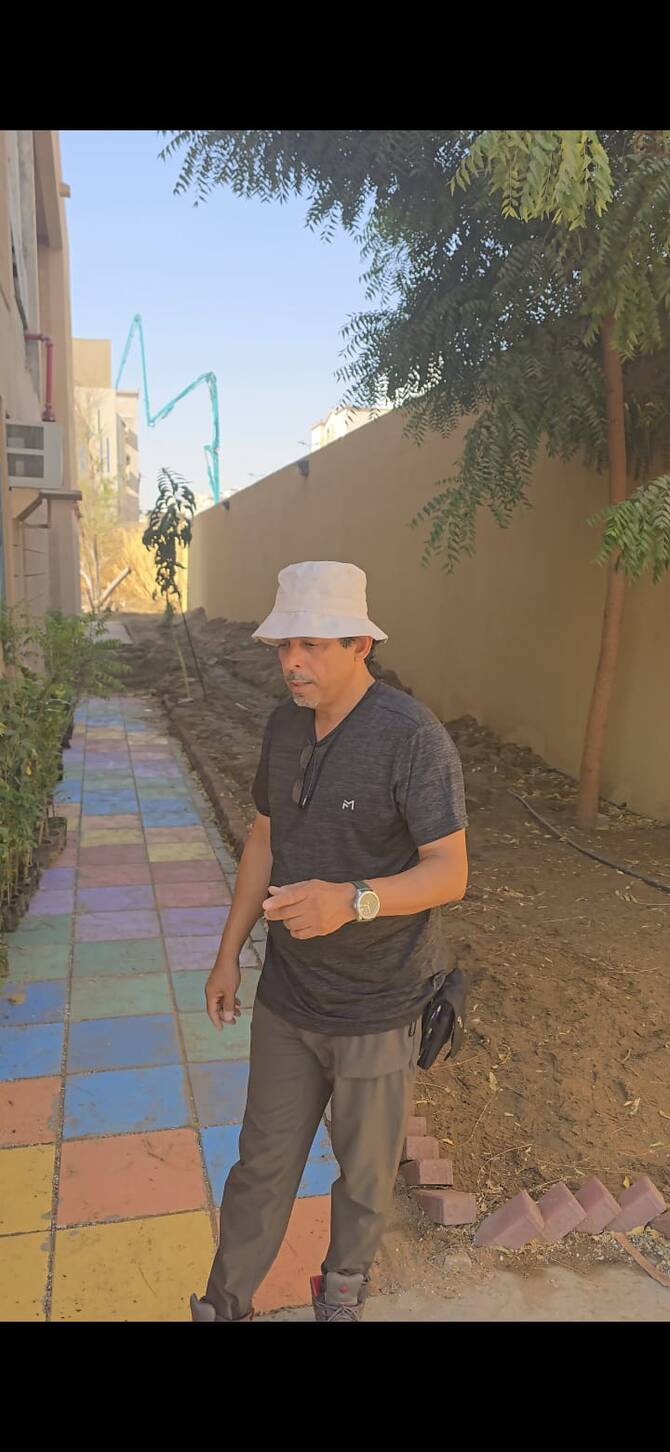

MAKKAH: Environmental volunteer Faleh Al-Juhani has turned a personal interest in agriculture into a series of initiatives to expand green spaces in schools, universities and public parks across western Saudi Arabia, particularly in Makkah, Jeddah and Taif.
Al-Juhani said the idea began as a hobby before developing into a community effort aimed at encouraging students to engage with planting and environmental care. He formed volunteer teams to support tree planting and raise awareness of issues such as pollution and vegetation loss.
The initiative has planted trees across educational institutions, public parks and government sites, while also distributing free seedlings to community groups. Al-Juhani said the work is carried out entirely on a voluntary basis.
The project focuses on plant species suited to the local environment, including ghaf, neem, sidr, jatropha, tecoma and star jasmine.
He said these contribute to improving school environments, providing shade and promoting environmental awareness among students.
Al-Juhani added that student participation helps build a lasting connection with nature and encourages long-term responsibility toward the environment.
“As an environmental activist, I believe that the school is not merely walls and curricula, but rather the first womb in which a person’s awareness toward their planet is formed,” he told Arab News. “Transforming our schoolyards from silent concrete spaces into green oases is a strategic investment in the future of our generations and the health of our environment.”
He stressed that his message to the community is to take the initiative in planting, starting from homes, then neighborhoods, workplaces, and schools, noting that increasing vegetation cover is a shared responsibility that contributes to improving quality of life and protecting the environment.
Al-Juhani pointed out that his primary motivation for continuing is divine reward, citing the saying of the Prophet Muhammad (Peace Be Upon Him): “Any plant or crop a Muslim grows which benefits people, animals, or birds is considered charity (sadaqah) for them.”
He explained that planting trees in schools is not merely “decoration,” but a living laboratory in which students learn lessons in patience, giving, and ecological balance.
According to Al-Juhani, when a student plants a seedling with their own hands, they plant alongside it roots of belonging to the land; whoever protects a tree in their school today will protect a forest in their homeland tomorrow.
Al-Juhani concluded by saying that these trees contribute to moderating temperatures inside classrooms, absorbing carbon, and providing shade that protects children, thereby improving air quality and their psychological and physical health.
“We need to transform afforestation” from a seasonal initiative into a sustainable culture in which the teacher, the student, and the parent all participate,” he said.
“Our call today to every school: make your courtyards a breathing lung and teach students that green is the color of hope and survival. Every tree we plant today in a schoolyard is an environmental legacy we leave for future generations, so they may live in a cleaner and more sustainable world.”


