

BinDawood confidence shows in Tadawul IPO plans

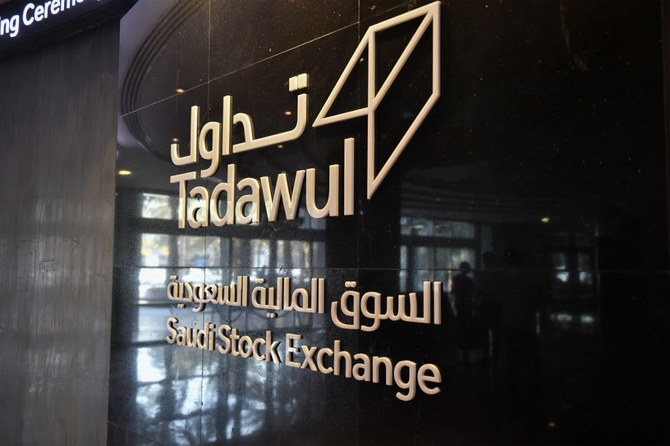
This picture taken December 12, 2019 shows a view of the sign showing the logo of Saudi Arabia's Stock Exchange Market (Tadawul) bourse in the capital Riyadh. (File/AFP)
Short Url
Updated 02 September 2020
Follow

BinDawood confidence shows in Tadawul IPO plans

  • Ahmad BinDawood said the time is right for the listing despite the economic volatility of the pandemic lockdowns
  • In the first half of 2020, when the COVID-19 outbreak first hit the global and Saudi economies, revenue was “resilient”

DUBAI: In a vote of confidence in the economy of Saudi Arabia and its capital markets, BinDawood Holding, one of the Kingdom’s leading retailers, is to list its shares on Tadawul in an initial public offering (IPO).

Ahmad BinDawood, CEO of the company that owns the eponymous supermarkets and the Danube chain, said the time is right for the listing despite the economic volatility of the pandemic lockdowns and the recent introduction of 15 percent value-added tax (VAT).

“There have been so many ups and downs since 2008, when we had only four stores. Now we have 73. Every time, we come through stronger,” he said.

He added that in the first half of 2020, when the COVID-19 outbreak first hit the global and Saudi economies, revenue was “resilient,” up 22 percent over the same period last year.

Net income for the first six months was 82 percent higher, driven by “pantry restocking” and higher domestic food consumption as more people stayed at home and ordered food online.

BinDawood has invested significantly in its online business even before the pandemic affected physical shopping.

It is the market leader in the western region, including the big population centers of Makkah and Madinah.

On the VAT rise, BinDawood said consumers and businesses have managed the change to a higher rate better than they had the initial introduction of 5 percent VAT at the start of 2018. “We have a clearer idea and know about the implications of VAT now,” he added.

The company plans to sell some 22.86 million shares, or 20 percent of its existing capital, at a price yet to be determined.

Most of the shares will go to institutional investors in the Kingdom and foreign qualified institutions, but 2 percent are likely to be offered to retail investors.

The IPO will be a “cash out” exercise, BinDawood said, with existing shareholders raising money via the share sale and no new cash raised.

He added that the company has zero borrowings and a healthy balance sheet, and could fund expansion — likely to remain in Saudi Arabia for the time being — through its own resources.

But the IPO listing is valuable as a means of strengthening governance, and he does not rule out using the capital markets for funding in the future. “It gives us more options on capital raising,” he said.

BinDawood highlighted the fact that Saudi Arabia has a relatively low level of penetration of what he termed “modern retail,” with 41 percent in the Kingdom compared to 70 percent across the Gulf Cooperation Council member states and 85 percent in the UAE.

He added that BinDawood would welcome “cornerstone investors” in the form of big Saudi or international institutions. “They would help stabilize the share price in future,” he said.

Details on pricing of the shares and the value of the offering will be made known when the prospectus is published soon. American banking giants Goldman Sachs and JP Morgan advised on the IPO.


Education spending surges 251% as students return from autumn break: SAMA

Updated 12 December 2025
Follow

Education spending surges 251% as students return from autumn break: SAMA

RIYADH: Education spending in Saudi Arabia surged 251.3 percent in the week ending Dec. 6, reflecting the sharp uptick in purchases as students returned from the autumn break.

According to the latest data from the Saudi Central Bank, expenditure in the sector reached SR218.73 million ($58.2 million), with the number of transactions increasing by 61 percent to 233,000.

Despite this surge, overall point-of-sale spending fell 4.3 percent to SR14.45 billion, while the number of transactions dipped 1.7 percent to 236.18 million week on week.

The week saw mixed changes between the sectors. Spending on freight transport, postal and courier services saw the second-biggest uptick at 33.3 percent to SR60.93 million, followed by medical services, which saw an 8.1 percent increase to SR505.35 million.

Expenditure on apparel and clothing saw a decrease of 16.3 percent, followed by a 2 percent reduction in spending on telecommunication.

Jewelry outlays witnessed an 8.1 percent decline to reach SR325.90 million. Data revealed decreases across many other sectors, led by hotels, which saw the largest dip at 24.5 percent to reach SR335.98 million. 

Spending on car rentals in the Kingdom fell by 12.6 percent, while airlines saw a 3.7 percent increase to SR46.28 million.

Expenditure on food and beverages saw a 1.7 percent increase to SR2.35 billion, claiming the largest share of the POS. Restaurants and cafes retained the second position despite a 12.6 percent dip to SR1.66 billion.

Saudi Arabia’s key urban centers mirrored the national decline. Riyadh, which accounted for the largest share of total POS spending, saw a 3.9 percent dip to SR4.89 billion, down from SR5.08 billion the previous week.

The number of transactions in the capital settled at 74.16 million, down 1.4 percent week on week.

In Jeddah, transaction values decreased by 5.9 percent to SR1.91 billion, while Dammam reported a 0.8 percent surge to SR713.71 million.

POS data, tracked weekly by SAMA, provides an indicator of consumer spending trends and the ongoing growth of digital payments in Saudi Arabia. 

The data also highlights the expanding reach of POS infrastructure, extending beyond major retail hubs to smaller cities and service sectors, supporting broader digital inclusion initiatives. 

The growth of digital payment technologies aligns with the Kingdom’s Vision 2030 objectives, promoting electronic transactions and contributing to the nation’s broader digital economy.