Iraq PM Mustafa Al-Kadhimi calls early election for June 6, 2021

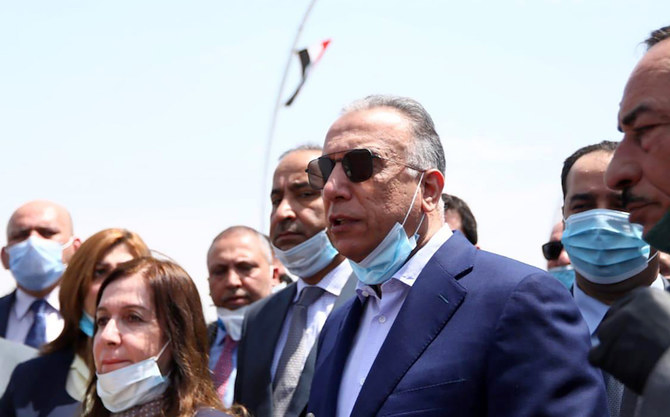
Iraqi Prime Minister Mustafa Al-Kadhimi said general elections will be held next year. (File/AFP)
Short Url
Updated 31 July 2020
Follow

Iraq PM Mustafa Al-Kadhimi calls early election for June 6, 2021

  • Elections in Iraq are sometimes marred by violence and often by fraud
  • The next parliamentary elections had originally been due to take place in May 2022

BAGHDAD: Iraq’s Prime Minister Mustafa Al-Kadhimi on Friday called an early general election for June 6, 2021, roughly a year ahead of when it would normally be held.
Early elections are a key demand of Iraqi anti-government protesters who staged months of mass demonstrations last year and were killed in their hundreds by security forces and gunmen suspected of links to militia groups.
Iraqi’s parliament must still ratify the election date.
Kadhimi was selected by parliament in May to head a government that would guide the country toward early elections. His predecessor Adel Abdul Mahdi quit under pressure from protests in December last year.
Activists have also demanded fairer elections and changes to Iraq’s voting process and election committee after widespread accusations of fraud in the last nationwide vote in 2018.
The United Nations praised Kadhimi’s announcement saying it would promote “greater stability and democracy.”
Voter turnout in Iraq’s last election was 44.5 percent, but especially low in some impoverished southern Shiite Muslim areas. Many Iraqis say they have no faith in Iraq’s electoral system.
Demonstrators who took to the street in their hundreds of thousands last year accuse the political elite, especially lawmakers, of squandering Iraq’s oil wealth to line their own pockets.
Kadhimi’s government faces a health crisis with a rapid spread of the coronavirus, a fiscal crisis because of low oil revenues and exports, challenges from powerful militia groups which oppose him and a rising Daesh insurgency. 


UN chief warns Israel’s actions in West Bank are eroding prospects for a two-state solution

Updated 13 min 48 sec ago
Follow

UN chief warns Israel’s actions in West Bank are eroding prospects for a two-state solution

  • Secretary-General Antonio Guterres ‘gravely concerned’ by new rules that tighten Israeli control of the territory and make it easier for Israeli settlers to buy land there
  • He calls on Israel to reverse the decision, urges all parties to safeguard what he describes as the only viable path to lasting peace: a negotiated two-state solution

NEW YORK CITY: UN Secretary-General Antonio Guterres warned on Monday that the approval by Israeli authorities of new administrative and enforcement measures in the West Bank undermine the prospects for a two-state solution.

Israel’s Security Cabinet this weekend approved new rules designed to strengthen control over the occupied West Bank, make it easier for Israeli settlers to buy land there and give Israeli officials stronger powers to enforce laws on Palestinians.

Guterres said he was “gravely concerned” by the reported decision to authorize the new measures in Areas A and B of the West Bank, warning that the current trajectory of developments on the ground was eroding the possibility of a negotiated settlement between Israelis and Palestinians.

He reiterated that all Israeli settlements in the occupied West Bank, including East Jerusalem, lack legal validity and constitute a “flagrant violation of international law.”

Such actions, including Israel’s continuing presence in the occupied Palestinian territory, were destabilizing and unlawful, he added, as recalled by the International Court of Justice.

Guterres called on Israeli authorities to reverse their decision and urged all parties to safeguard what he described as the only viable path to lasting peace: a negotiated two-state solution in line with international law and Security Council resolutions.

Israel has rejected international criticism of its settlement policies and disputes claims that they violate international law.