

Meet Ghazi Karim from Pakistan, trainer to Dubai’s stars and royals 

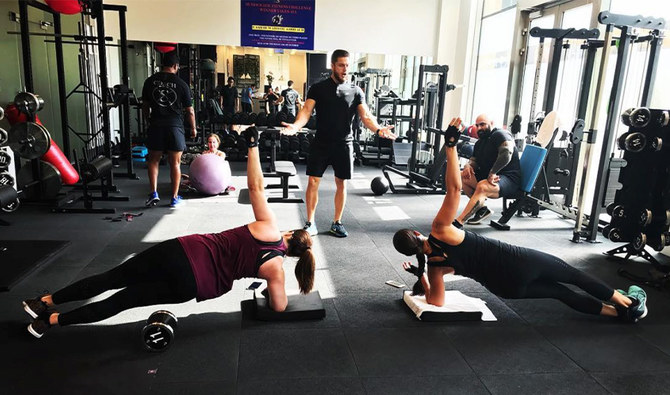
In this October 10, 2017 photo, clients work out with trainers at Seven Gym where Pakistani Ghazi Karim is coaching, in Dubai, United Arab Emirates (Photo courtesy Ghazi Karim instagram).
Short Url
Updated 19 July 2020
Follow

Meet Ghazi Karim from Pakistan, trainer to Dubai’s stars and royals 

  • Karim moved to the UAE from Islamabad in 2011 and set up Symmetry, which went on to become one of Dubai’s best fitness facilities
  • He now works independently at Seven Gym and among his clients are members of the UAE royal family and celebrities like Emirati skydiver Shaikha Atiq

DUBAI: When Ghazi Karim started offering fitness coaching sessions out of a garage in the Pakistani capital of Islamabad in 2007, he could never have imagined that he would one day be training members of the royal family of the United Arab Emirates (UAE). 
Karim, who hails from Pakistan’s picturesque northwestern region of Hunza, moved to Dubai in 2011 after what he described as a “tough but exciting” journey of bringing the science of fitness to Islamabad. 
“Our work grew from there and then we decided to move to Dubai since we got to know that the fitness business was flourishing here,” Karim told Arab News at Seven Gym in Dubai’s Al Quoz area, where he is a personal trainer. 
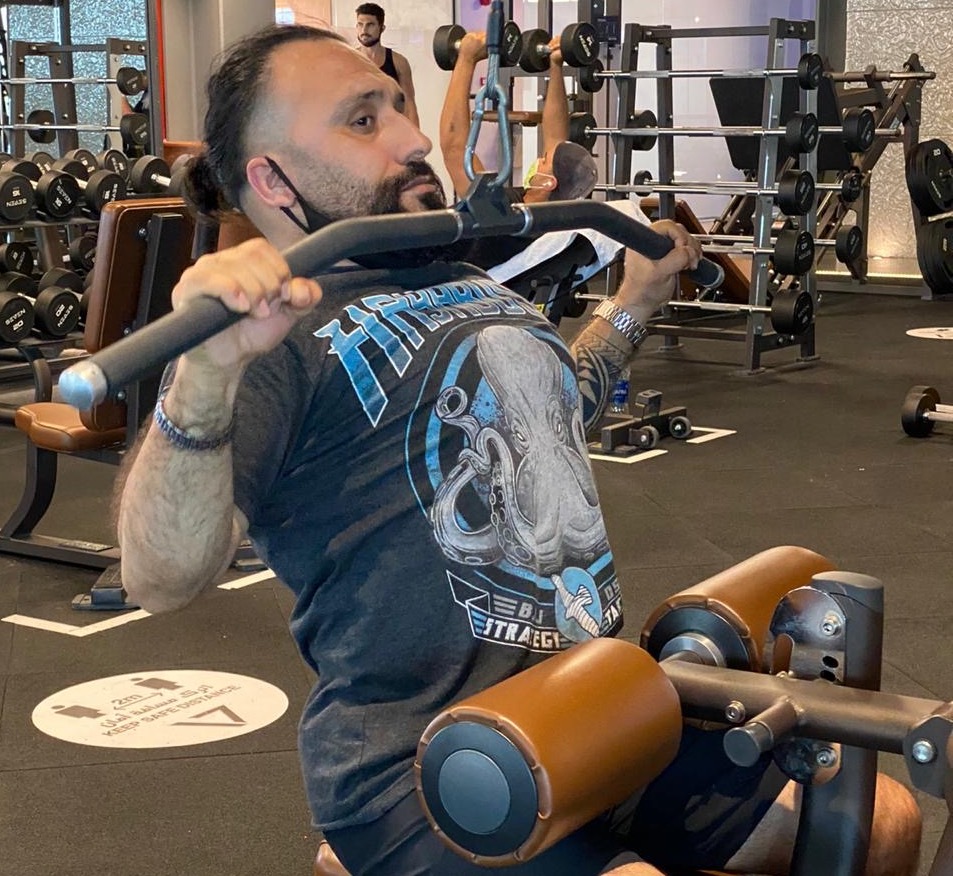


Pakistani trainer Ghazi Karim, 39, works out at Seven Gym in Dubai, United Arab Emirates on July 11, 2020. (AN Photo by Asma Ali Zain)

With a partner, who also moved to Dubai from Islamabad, Karim set up a studio called Symmetry, which went on to become one of Dubai’s best fitness facilities. It wasn’t long, then, before word spread about Karim’s body transformation stories, following which he says he was approached by members of Dubai’s royal family.
“Though I cannot mention names of my clients, I can say that both male and female members of Dubai’s royal family are my clients and are very happy with my work,” Karim said, adding that his clients also include Shaikha Atiq, an Emirati skydiving expert, and many notable Pakistani expats. 
But seven years into Symmetry, life took a difficult turn for Karim and he had an ugly fallout with his partner and longtime friend. 
“It was a tough time for me because I was under financial burden, which I had to clear, but my reputation preceded me and I overcame the difficulties,” said the trainer who now works independently and says his clients are loyal to him and appreciate his “tough task master” attitude. 
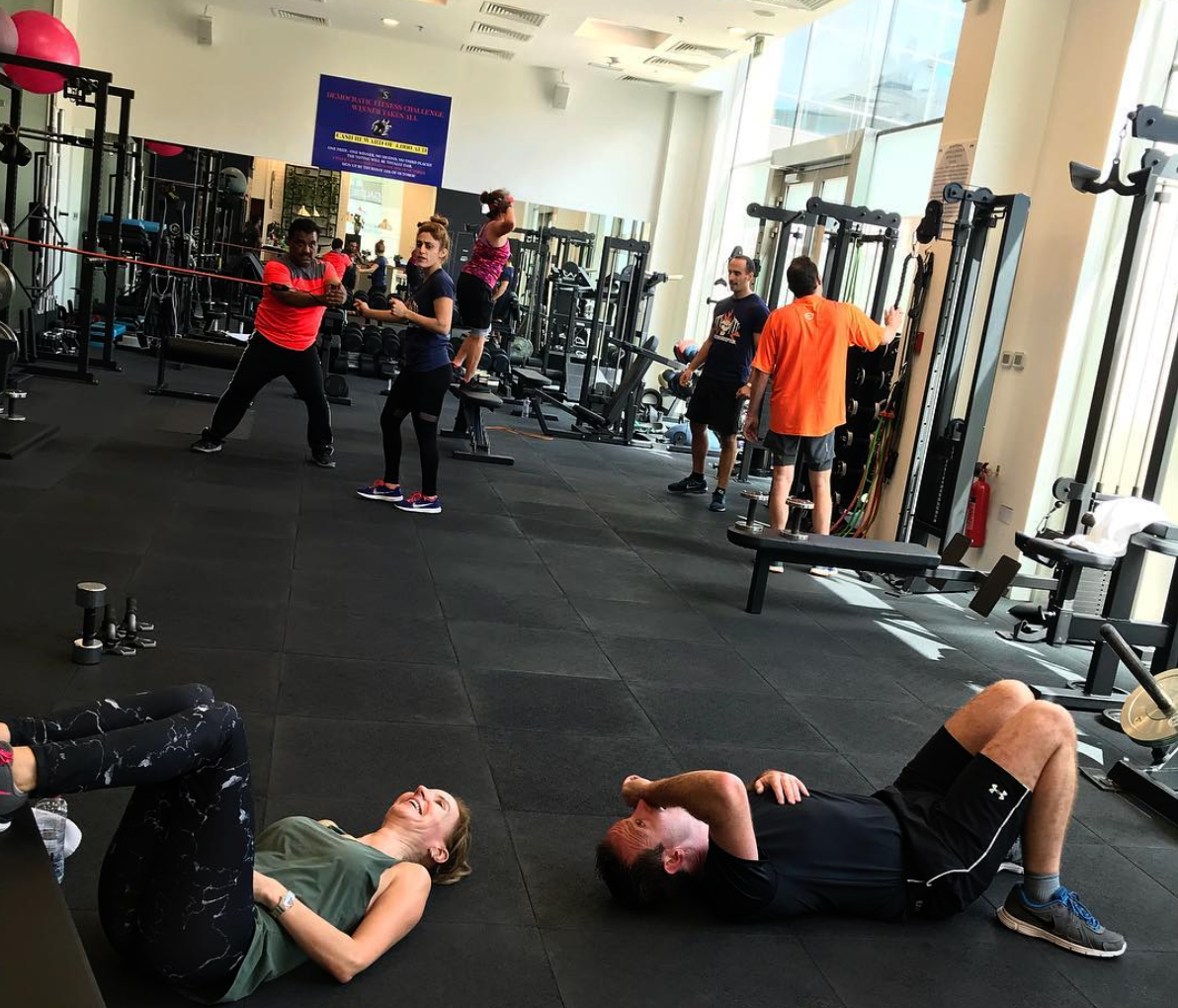


In this October 17, 2017 photo, clients work out with trainers at Seven Gym where Pakistani Ghazi Karim is coaching, in Dubai, United Arab Emirates (Photo courtesy Ghazi Karim instagram).

According to Karim, he designs specific diets and workouts for different clients and says there is no one-size fits all routine when it comes to fitness. 
“I work on the metabolic aspect initially by asking people their daily diet and then work on building muscles,” he said, saying he assesses clients on their individual lifestyles and problems as well as gender, age and body type before coming up with a plan. “I have many Indian clients too who are vegetarians. So a special food chart has to be made for them.”
Karim says for clients who are consistent with exercise and diet, he guarantees 6-7 kilos in weight loss in the first four weeks: “The most difficult time for any coach is the first four weeks after which clients set into a routine.”
“One client of mine is 75-years-old and with my help, she dropped six dress sizes,” Karim said, smiling, adding that his clients have on average lost up to 17 kilos and four dress sizes. 
Karim’s three major tips for people hoping to stay fit are to keep moving (walk at least 30 minutes a day if you cannot afford a gym and run 20 minutes if you are young), avoid oily foods and control portion sizes. 
To keep fit himself, Karim works out three or four times a week but laments that his busy routine does not leave him much time for himself, including for family and marriage. 
“I’ve tried but I’ve not been able to give time to my relationships,” he said. “I’ll give this business another year and then hope to get married.”
Then, pointing to his heavily-tattooed arms, Karim grinned and said: “Hope she accepts this.”


A family, a recipe, a city: ras malai dessert defines a Sialkot institution

Updated 5 sec ago
Follow

A family, a recipe, a city: ras malai dessert defines a Sialkot institution

  • Founded in 1947, Inayat Sweets draws devotees from across Pakistan and abroad for a dessert steeped in tradition
  • Customers and shop owners say decades-old methods, pure ingredients have kept taste unchanged across generations

SIALKOT: In the narrow streets of Pakistan’s eastern city of Sialkot — best known globally for footballs stitched by hand and precision surgical instruments — a modest sweet shop has quietly built a reputation that stretches far beyond the city.

For nearly eight decades, Inayat Sweets has drawn crowds for a single dessert: ras malai, a soft, milk-based delicacy that occupies a special place in South Asian food culture.

Ras malai, traditionally made from fresh cheese patties gently simmered and soaked in lightly sweetened milk, is prized for its delicate texture and subtle richness. It is often reserved for celebrations, family gatherings and moments of indulgence. At Inayat Sweets, customers say, it has become something closer to ritual.

The shop’s story began in 1947, the year British colonial rule ended and the Indian subcontinent was partitioned, when its founder migrated from India and set up a small business selling milk and yogurt in the newly formed Pakistan.

Today, the legacy is carried forward by Abdul Rashid, who runs the shop much as his grandfather once did.

“My grandfather opened this shop in 1947 when he migrated from India. It was a very small business. Basically, we were selling milk and yogurt,” Rashid told Arab News.

Over time, the offerings expanded, but one item emerged as the shop’s defining identity.

“Our most famous item is ras malai, ” Rashid said. “Then we have winter halwas [confection] like carrot halwa, pumpkin halwa, egg halwa, beans halwa etc.” 

Rashid says the secret behind the shop’s longevity lies less in innovation than in discipline, and a refusal to compromise on ingredients.

“All sweets have the same sugar and ghee, but we do everything with honesty. Most important is everything here is made of pure organic ghee, milk is 100 percent pure.”

That emphasis on quality has turned Inayat Sweets into a destination rather than a neighborhood stop, with customers traveling specifically for its ras malai.

“God has been so kind on me that not only in Pakistan but from whole world people want the ras malai of Inayat Sweets,” he said, adding that family support remains central to the business. “I have big support of my wife.”

For many customers, the relationship stretches back decades.

“The ras malai here is the best. We are coming here for last 25, 26 years and by the grace of God no one has made such ras malai. Neither someone has made such halwas,” said customer Shahbaz Ishaq.

Others say they have searched widely, without success, for the same flavor elsewhere.

“This taste is nowhere in Sialkot and I have gone outside Sialkot and tried it in other cities. This ras malai can be found only in this shop. I am coming here since I was 10-year-old,” said Yaseen Chohan.

For some, the distinction lies in the shop’s use of khoya, or reduced milk solids, a labor-intensive ingredient that many modern producers avoid.

“This is good! Specially khoya is used in every product,” said Altaf Hussain. “It’s very tasty and high quality.”