AMMAN: Jordan began putting electronic bracelets Saturday on travelers who have recently arrived in the country to ensure that they observe home-quarantine against the spread of coronavirus, an official said.
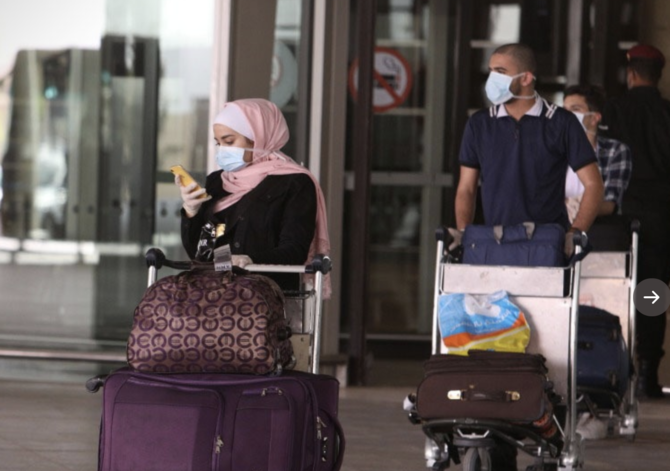
People arriving in Jordan must isolate for 14 days at hotels designated by the authorities on the shores of the Dead Sea, west of the capital Amman.
After that period, they must self-isolate for an additional 14 days at home, according to Nizar Obeidat, spokesman for Jordan’s virus task force.
He told state-run Al-Mamlaka television that “the use of the electronic bracelet began on Saturday for those self-isolating at home” in order to ensure quarantine rules are respected.
Jordan imposed tough measures, including curfews and the deployment of drones, to curb the spread of COVID-19, before easing policies in early June.
The kingdom has so far registered 1,147 coronavirus infections, including only 10 deaths.
But health authorities have almost daily been reporting new cases among Jordanians and foreigners entering the country.
They have also maintained measures such as social distancing and the compulsory use of face masks in most public places, with those breaking the rules fined.
Several countries around the world have turned to electronic tracking devices including bracelets and smart watches connected to special apps to contain the spread of coronavirus.
In March, Hong Kong began ordering all arrivals from overseas to wear electronic bracelets to monitor observance of quarantine.
South Korea, China, Taiwan and Singapore have also employed a range of tech solutions to tackle coronavirus.

Jordan slaps wristbands on arrivals to monitor virus quarantine
Short Url
https://arab.news/76m8x
Jordan slaps wristbands on arrivals to monitor virus quarantine
- People arriving in Jordan must isolate for 14 days at hotels designated by the authorities
- Jordan imposed tough measures to curb the spread of COVID-19 and then eased policies in June
Gazans long for reopening of ‘lifeline’ Rafah crossing
- The border crossing between Gaza and Egypt is the Palestinian territory’s only gateway to the outside world
- If Rafah opens in coming days, residents of the territory are hoping to reunite with family, or are looking to leave themselves
GAZA CITY: With Gaza’s vital Rafah border crossing expected to soon reopen, residents of the war-shattered territory are hoping to reunite with family members, or are looking to leave themselves.
The Rafah crossing between Gaza and Egypt is the Palestinian territory’s only gateway to the outside world that does not lead to Israel and is a key entry point for both people and goods.
It has been closed since Israeli forces took control of it in May 2024, except for a limited reopening in early 2025, and other bids to reopen failed to materialize.
Following a US-brokered ceasefire that took effect in October, Rafah is expected to reopen for pedestrians, after visiting US envoys reportedly pressed Israeli officials to reopen the crossing.
“Opening the Rafah crossing means opening the door to life for me. I haven’t seen my wife and children for two years since they left at the beginning of the war and I was prevented from traveling,” said 48-year-old Mahmud Al-Natour, who hails from Gaza City.
“My children are growing up far away from me, and the years are passing by as if we are cut off from the world and life itself,” he told AFP.
Randa Samih, 48, also called the crossing “the lifeline of Gaza,” but is worried about whether she would be able to leave.
She had applied for an exit permit to get treatment for her injured back, which she fears might not be serious enough to be allowed out.
“There are tens of thousands of injuries in Gaza, most of them more serious than mine,” she said.
“We’ll die or our health will decline before we get to travel.”
- ‘Limited reopening’ -
Gaza, a tiny territory surrounded by Israel, Egypt and the Mediterranean Sea, has been under Israeli blockade even before Hamas’s attack sparked the war.
Palestinian militants took 251 people hostage on October 7, 2023, in an attack that killed 1,221 others, most of them civilians.
Israel’s retaliatory offensive has killed at least 71,662 Palestinians, according to figures from the health ministry in Hamas-run Gaza that the United Nations considers reliable. The ministry does not say how many of the dead were fighters, though its data shows that more than half were women and children.
Ali Shaath heads the National Committee for the Administration of Gaza (NCAG), created as part of the ceasefire agreement. He announced last week that Rafah would reopen in both directions.
Israel said it would only allow pedestrians to travel through the crossing as part of its “limited reopening” once it had recovered the remains of the last hostage, Ran Gvili.
His remains were brought back to Israel later on Monday.
A Palestinian official told AFP on condition of anonymity that “estimates indicate that the Rafah crossing could be opened in both directions by the end of this week or early next week.”
A member of the NCAG told AFP that the technocratic committee would be responsible for sending lists of travelers’ names to the Israeli authorities for approval.
Outward travel will intially be limited to patients, the injured, students with university admission and visas, and holders of Egyptian citizenship or other nationalities and residency permits, the source said.
- ‘Burning with anticipation’ -
Gharam Al-Jamla, a displaced Palestinian living in a tent in southern Gaza, told AFP she counted on the crossing’s opening for her future.
“My dreams lie beyond the Rafah crossing. I applied for several scholarships to study journalism in English at universities in Turkiye. I received initial acceptance from two universities there,” the 18-year-old said.
She added she would then want to return to Gaza “to be one of its voices to convey the truth to the world.”
Gaza’s civil defense agency spokesman, Mahmud Bassal, appealed for the full reopening of Rafah to allow the entry of unlimited aid and equipment for reconstruction.
“There are thousands of bodies under the rubble, including children, women and people with disabilities, which have not been recovered since the beginning of the war,” he said.
The civil defense is a rescue force operating under Hamas authority.
Mohammed Khaled, 18, said he wanted to move on from the war.
“I’m burning with anticipation,” he told AFP.
“I haven’t seen my mother and sisters for two years. My mother traveled for medical treatment, and they only allowed my sisters to accompany her.”
Khaled said he also hoped to be able to travel to have surgery for a shrapnel injury sustained during the war.
The Rafah crossing between Gaza and Egypt is the Palestinian territory’s only gateway to the outside world that does not lead to Israel and is a key entry point for both people and goods.
It has been closed since Israeli forces took control of it in May 2024, except for a limited reopening in early 2025, and other bids to reopen failed to materialize.
Following a US-brokered ceasefire that took effect in October, Rafah is expected to reopen for pedestrians, after visiting US envoys reportedly pressed Israeli officials to reopen the crossing.
“Opening the Rafah crossing means opening the door to life for me. I haven’t seen my wife and children for two years since they left at the beginning of the war and I was prevented from traveling,” said 48-year-old Mahmud Al-Natour, who hails from Gaza City.
“My children are growing up far away from me, and the years are passing by as if we are cut off from the world and life itself,” he told AFP.
Randa Samih, 48, also called the crossing “the lifeline of Gaza,” but is worried about whether she would be able to leave.
She had applied for an exit permit to get treatment for her injured back, which she fears might not be serious enough to be allowed out.
“There are tens of thousands of injuries in Gaza, most of them more serious than mine,” she said.
“We’ll die or our health will decline before we get to travel.”
- ‘Limited reopening’ -
Gaza, a tiny territory surrounded by Israel, Egypt and the Mediterranean Sea, has been under Israeli blockade even before Hamas’s attack sparked the war.
Palestinian militants took 251 people hostage on October 7, 2023, in an attack that killed 1,221 others, most of them civilians.
Israel’s retaliatory offensive has killed at least 71,662 Palestinians, according to figures from the health ministry in Hamas-run Gaza that the United Nations considers reliable. The ministry does not say how many of the dead were fighters, though its data shows that more than half were women and children.
Ali Shaath heads the National Committee for the Administration of Gaza (NCAG), created as part of the ceasefire agreement. He announced last week that Rafah would reopen in both directions.
Israel said it would only allow pedestrians to travel through the crossing as part of its “limited reopening” once it had recovered the remains of the last hostage, Ran Gvili.
His remains were brought back to Israel later on Monday.
A Palestinian official told AFP on condition of anonymity that “estimates indicate that the Rafah crossing could be opened in both directions by the end of this week or early next week.”
A member of the NCAG told AFP that the technocratic committee would be responsible for sending lists of travelers’ names to the Israeli authorities for approval.
Outward travel will intially be limited to patients, the injured, students with university admission and visas, and holders of Egyptian citizenship or other nationalities and residency permits, the source said.
- ‘Burning with anticipation’ -
Gharam Al-Jamla, a displaced Palestinian living in a tent in southern Gaza, told AFP she counted on the crossing’s opening for her future.
“My dreams lie beyond the Rafah crossing. I applied for several scholarships to study journalism in English at universities in Turkiye. I received initial acceptance from two universities there,” the 18-year-old said.
She added she would then want to return to Gaza “to be one of its voices to convey the truth to the world.”
Gaza’s civil defense agency spokesman, Mahmud Bassal, appealed for the full reopening of Rafah to allow the entry of unlimited aid and equipment for reconstruction.
“There are thousands of bodies under the rubble, including children, women and people with disabilities, which have not been recovered since the beginning of the war,” he said.
The civil defense is a rescue force operating under Hamas authority.
Mohammed Khaled, 18, said he wanted to move on from the war.
“I’m burning with anticipation,” he told AFP.
“I haven’t seen my mother and sisters for two years. My mother traveled for medical treatment, and they only allowed my sisters to accompany her.”
Khaled said he also hoped to be able to travel to have surgery for a shrapnel injury sustained during the war.
© 2026 SAUDI RESEARCH & PUBLISHING COMPANY, All Rights Reserved And subject to Terms of Use Agreement.