


‘In Saudi Arabia, one finds his soul in the desert’

1 / 9
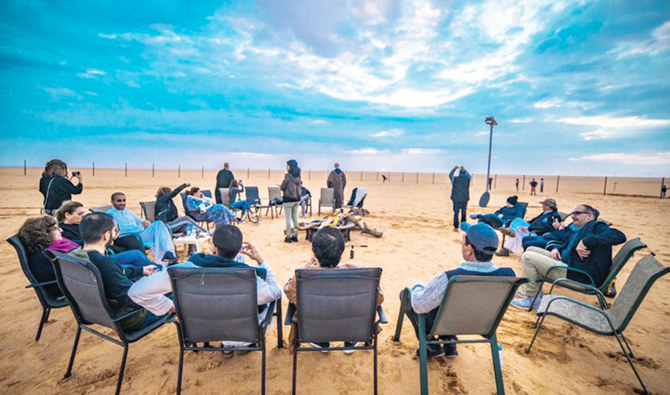
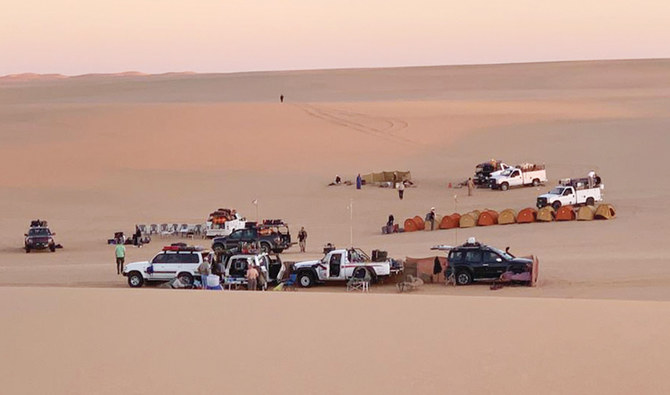
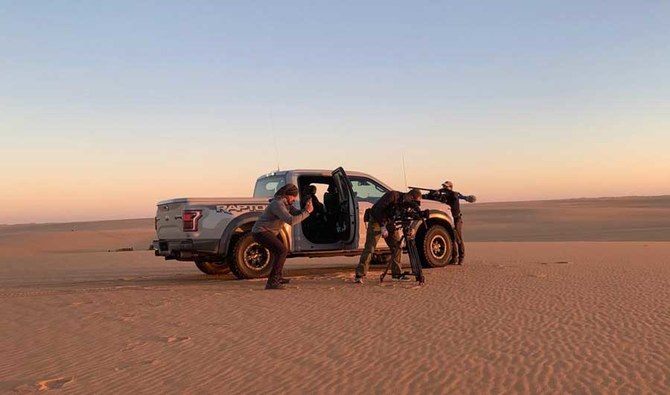
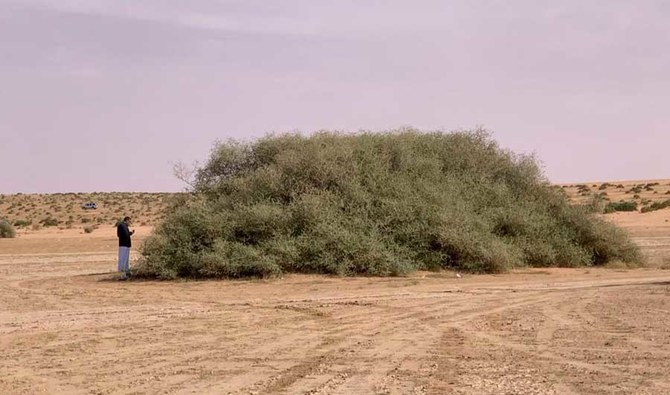
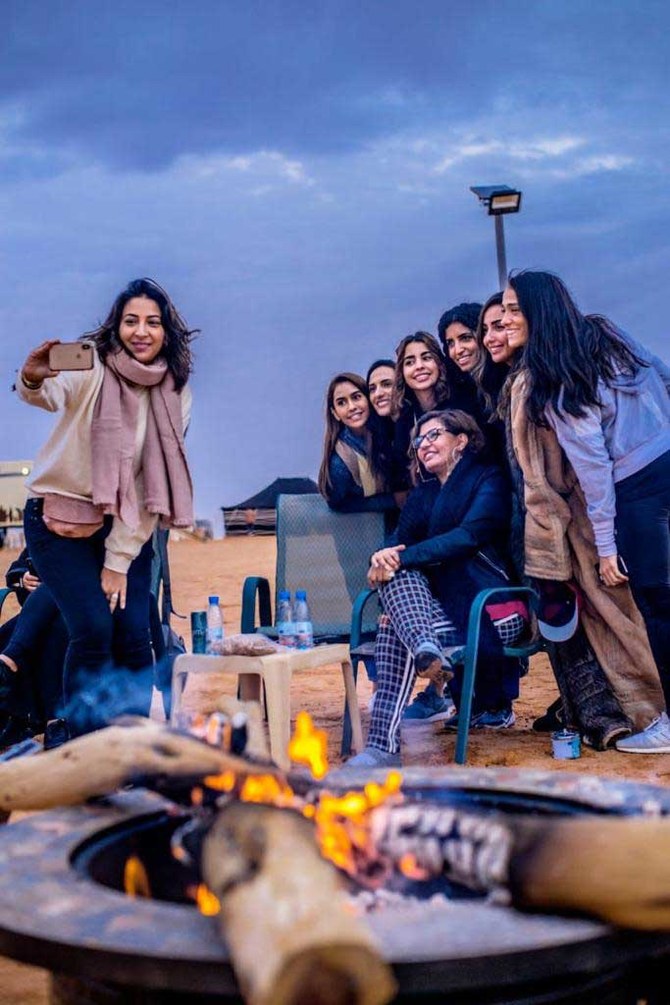
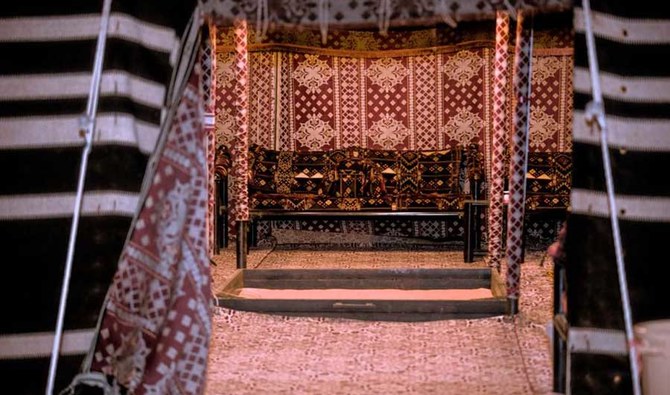
Desert tourism will play a massive role in the growing tourism sector. (Supplied)
2 / 9
Desert tourism will play a massive role in the growing tourism sector. (Supplied)
3 / 9
In Saudi Arabia, desert adventures are gaining popularity among citizens and residents, as well as international tourists seeking the ultimate desert experience to discover the culture, customs and nomadic way of life. Desert tourism will play a massive role in the growing tourism sector. (Supplied)
4 / 9
5 / 9
6 / 9
7 / 9
8 / 9
9 / 9
Short Url
Updated 04 July 2020
Follow

‘In Saudi Arabia, one finds his soul in the desert’

  • A group of adventurers and history enthusiasts is opening new horizons for tourists in Saudi Arabia

JEDDAH: In our hectic world, nature escapes have become a growing trend, attracting different types of people with a range of experiences and adventures, and creating new business opportunities and nature-based adventure tourism.

Now, after months of lockdown, residents of the Kingdom are seeking new ways of experiencing life’s adventures and there is no better place than our own backyard.
In Saudi Arabia, desert adventures are gaining increasing popularity among citizens and residents, as well as international tourists seeking the ultimate desert experience to discover the culture, customs and nomadic way of life.
Delta Adventures, a Saudi-based adventure excursion business that opened in 2018, offers unforgettable adventures to the beautiful unreachable destinations in the Arabian Peninsula, including the Empty Quarter, for a varied clientele.
Though it may suggest emptiness, loneliness and a lack of basic needs, deserts are diverse and they attract different types of tourists.
Some people look to the desert for a digital detox and to escape the bustle of demanding city life, while others, such as hikers, campers and nature lovers, seek fun adventures. Deserts also offer something for archaeology and history enthusiasts.
Muhammad and Eddie, sons of Sheikh Abdullah bin Khamis and founders of Delta Adventures, were inspired by their father, a Saudi intellectual and historian who influenced the geographical and historical documentation and research of the country’s deserts.
Bin Khamis has written over 50 works of literature, poetry, criticism, and history.
“We have a long accumulated experience and knowledge about desert trips for more than 40 years, as we used to accompany our father,” Muhammad bin Khamis told Arab News.


After their father died, the two brothers continued planning trips with friends and families, as well as diplomats, and by the end of 2018 had established their company in Riyadh to provide their services to travelers and break new ground in the area of desert tourism.
Delta Adventures designs trips in accordance with their clients’ requests, and is the first in the country to specialize in organizing trips to Rub’ Al-Khali (the Empty Quarter), also known as “The Abode of Emptiness.”

BACKGROUND

● Delta Adventures, a Saudi-based adventure excursion business that opened in 2018, offers unforgettable adventures to the beautiful unreachable destinations in the Arabian Peninsula.

● Muhammad and Eddie, sons of Sheikh Abdullah bin Khamis and founders of Delta Adventures, were inspired by their father, a Saudi intellectual and historian who influenced the geographical and historical documentation and research of the country’s deserts.

The vast area of desert located in the southern half of Saudi Arabia was not unexplored until the 1930s. Though the name suggests a barren, desolate place, many explorers consider it the ultimate resemblance of nature’s sheer beauty and power.
“Considering that desert tourism is an emerging market in the Kingdom, this gives us an opportunity to invest our experience in these type of projects to develop domestic tourism,” bin Khamis said.
“We aim to take advantage of the facilities provided by the Saudi government to contribute to the advancement of this sector in the country, in accordance with Vision 2030 that aspires to make tourism revenues contribute 10 percent of the country’s gross domestic product.”
Desert tourism is a perfect choice for visitors looking for tranquility, rest, and connection with nature.
It will also appeal to cultural visitors as well as gastronomic and nature lovers. Delta Adventures offers a wide range of long and short trips to different destinations with natural and historical value around the Kingdom, with a wide range of prices, too.
“By the end of our trips to unreachable places, we want to make our customers permanent ambassadors of Delta Adventures in their communities,” Bin Khamis said, adding: “We have been keen in choosing diverse sites for our trips to meet all tastes and aspirations. Until now, residents in Saudi Arabia have been our main customers, and we have previously taken five ambassadors and three of their wives on a 10-day trip to the Empty Quarter.”
He added: “There is also an increasing interest in such activities from overseas tourists and citizens. This season was our biggest so far, and it is encouraging us to offer our best.”
Bin Khamis said that desert tourism will play a massive role in the country’s growing tourism sector, especially with the Kingdom’s deserts’ enchanting and diverse beauty.

Tourists are coming to Saudi Arabia, bored with the cities’ huge buildings and manifestations of civilization in their countries. They usually come wanting to see a different nat ure and live a unique experience, and this is what our wonderful desert offers them.

Muhammad bin Khamis, Delta Adventures

“Tourists are coming to Saudi Arabia, bored with the cities’ huge buildings and manifestations of civilization in their countries. They usually come wanting to see a different nature and live a unique experience, and this is what our wonderful desert offers them.”
According to Bin Khamis, desert tourism is possible over three seasons of the year and varies from one region to another. For example, the Empty Quarter trips start from the beginning of November till the end of February, while trips to the northern regions such as Hail, Al-Jawf and Al-Ula begin from mid-September to mid-May.
Bin Khamis said the spirit of adventure and exploration is part of human nature, but has shrunk in modern life.
He said that people traveling in Saudi Arabia find their souls in the silent world, far away from any polluting sight, under the deserts’ night sky.
“People have the right to fear leaving their lives’ welfare, but as the Tunisian poet Abu Al-Qasim Al-Shabbi said: ‘He who doesn’t like to climb mountains will forever live among the hollows,’” said Bin Khamis.
He added that adventure tourism is different from any other type of travel, and is a fuller experience, as it relates to suspense, enjoyment, self-exploration, and discovering and learning new things.
Bin Khamis agreed that adventure tourism had become one of the most prominent tourist trends in recent years, and is more popular among young people.
Delta Adventures welcomes anyone who is in good health to join its trips.
“We provide participants with everything from a sleeping tent and bedding for each participant, in addition to meals, refreshments, as well as care and assistance.”



What new technologies are revealing about the Silk Road’s forgotten landscapes

Updated 17 January 2026
Follow

What new technologies are revealing about the Silk Road’s forgotten landscapes

  • Drones and digital tools are allowing archaeologists to map vast areas in hours rather than months of ground surveys
  • In Saudi Arabia, aerial mapping has uncovered dense prehistoric and Bronze Age sites previously thought to be empty

DUBAI: Across the deserts and mountain valleys of the Arab world, drones are now doing work that once took teams of archaeologists months to complete.

In northern Saudi Arabia, for example, aerial surveys can map an entire ancient settlement in minutes, revealing faint outlines of walls, pathways and structures hidden beneath the surface.

These images are later turned into 3D models — part of a growing effort across the region to use technology to trace old trade routes, map forgotten sites and better understand how people once moved across Arabia and beyond.

Much of this work is connected to renewed interest in the Silk Road and the networks that once linked Arabia with the wider world.

Harrat, Khaybar. (Supplied)

The Silk Road refers to a network of ancient trade routes that linked East Asia with the Middle East, North Africa and Europe for more than 1,500 years.

Rather than a single road, it was a vast web of caravan paths and maritime corridors connecting cities from China and Central Asia to Iran, Iraq, the Arabian Peninsula, the Levant and the Mediterranean.

Along these routes, merchants, scholars and travelers exchanged goods such as silk, spices and metalwork, as well as ideas, technologies and cultural traditions that shaped the development of the wider region.

In more recent times, scholars, students and heritage authorities across the Middle East and Central Asia are increasingly relying on drones, laser scanning, photogrammetry and satellite analysis to document archaeological landscapes.

In Saudi Arabia’s AlUla and Khaybar regions — now considered some of the world’s densest concentrations of prehistoric and Bronze Age structures — drone surveys have helped researchers record sites that would otherwise remain inaccessible.

Dr. Hugh Thomas, a lecturer in archaeology at the University of Sydney and co-director of the Prehistoric AlUla and Khaybar Excavation Project, says the scale of the Saudi landscape makes aerial work essential.

“Saudi Arabia contains an exceptionally dense archaeological landscape distributed across a vast geographic area,” he told Arab News. “Drone-based surveys allow large volumes of archaeological data to be collected efficiently.” 

A Neolithic mustatil next to a Bronze Age pendant burial in Kaybar. (Supplied/Mat Dalton)

Indeed, many structures sit on steep or remote terrain that ground teams cannot easily reach. This shift to aerial archaeology has also revealed details that would be almost impossible to see from ground level.

Thomas notes that researchers have long suspected a link between water sources and Neolithic mustatil structures, which date back approximately 7,000 years. In 2020, drone images captured by his team near Khaybar also strengthened theories linking mustatil to water sources.

“The drone images revealed that recent rains had settled in specific parts of wadi valleys, exactly where the mustatil were built,” he said. Since then, multiple surveys and peer-reviewed studies have supported this connection, with many mustatil shown to point directly toward water.

In parallel, new technologies are reshaping how archaeologists understand the wider landscape. Thomas says tools such as drones, satellite imagery and 3D modelling allow researchers to document vast areas quickly and at far higher resolution than ever before.

These approaches “enable the rapid, cost-effective documentation of this vast and previously understudied landscape” and create permanent digital records that support long-term monitoring and analysis, he said.

This has been transformative for understanding past movement and land use.

Remote sensing work in northern Saudi Arabia has revealed extensive Bronze Age funerary avenues — pathways lined with monumental tombs, running for thousands of kilometers and linking major oases such as Khaybar, Al-Hait and Al-Huwayyitt.

Drone surveys and 3D models have allowed researchers to classify tomb types more accurately and identify where excavation would yield the most useful results. Thomas says these techniques directly contributed to one of the project’s most significant achievements.

“This has ultimately assisted us with our most recent paper, where we were able to publish the C14 dates of remains found in 40 Bronze Age tombs, helping us understand when these tombs appeared on the landscape and how they developed over time,” he said.

While international collaborations play a central role, Thomas says long-term progress in the Kingdom depends on building local capacity.

He says contributions from Saudi researchers, students and even members of the public are becoming increasingly important.

Archaeologist Don Boyer measures a tower of stones next to a 525m long Mustatil in Khaybar. (David Kennedy)

“Local researchers, students, and members of the public are taking photographs of archaeological sites and sharing them digitally,” he said. “Each image provides a lasting record of archaeological remains.”

In Saudi Arabia’s AlUla, one of the region’s most active archaeological hubs, the Royal Commission for AlUla has supported wide-ranging surveys that combine aerial photography, remote sensing and targeted excavation.

Published research from the AlUla and Khaybar Aerial Archaeology Project describes how thousands of structures — from ancient hunting traps to tombs and settlements — have been recorded using these methods in recent years.

“We’re seeing landscapes we did not even know existed before this kind of work began,” said archaeologist Dr. Rebecca Repper of the University of Sydney in an RCU briefing. 

“Technology is helping us reassess northern Arabia’s role in long-distance connections.”

Recent research across Central Asia shows how drones and LiDAR, a remote-sensing technology used to create extremely accurate 3D maps of landscapes, buildings, or buried features, are transforming the study of Silk Road-era landscapes.

In Uzbekistan, a team led by Dr. Michael Frachetti — an archaeologist at Washington University in St. Louis, who specializes in ancient mobility systems — used drone-mounted LiDAR to scan remote high-altitude terrain, revealing two previously undocumented medieval cities, Tugunbulak and Tashbulak.

Researchers excavate medieval pottery at the newly rediscovered medieval Silk Road city Tugunbulak located in the mountains of southeastern Uzbekistan June 8, 2022 (Michael Frachetti)

A 2024 peer-reviewed study, “Automated analysis of high-resolution lidar traces large-scale medieval urbanism in highland Central Asia,” details how these surveys exposed plazas, fortifications and settlement layouts previously invisible from the ground.

In southeast Kazakhstan, a 2021 study in the journal Applied Sciences shows how UAV photogrammetry helped map irrigation networks, settlement traces and burial mounds linked to medieval trade and pastoral routes.

Together, these findings demonstrate how high-resolution aerial mapping is reshaping our understanding of the landscapes and movement patterns that framed the Silk Road.

For governments, these discoveries are more than scientific. UNESCO describes the Silk Roads as a shared heritage space where cooperation is critical, and regional countries have increasingly embraced cross-border research partnerships.

In Saudi Arabia, AlUla’s collaborations with universities including Oxford, Bologna and the French National Centre for Scientific Research reflect a growing diplomatic interest in cultural research.

These partnerships have generated shared excavations, joint field schools and open-access databases — opportunities that were rare in the region two decades ago.

Digital access is also reshaping how the public engages with this history.

The International Dunhuang Project, a global consortium led by the British Library and multiple Asian national libraries, has digitized hundreds of thousands of manuscripts, murals and archaeological fragments linked to the Silk Road.

Its open platform has become a major educational resource for schools and researchers worldwide.

A LiDAR image of Tugunbulak shows a dense settlement along a ridge. (Michael Frachetti)

In AlUla, digital reconstructions and virtual models are increasingly used in classroom activities and community programs.

Youth involvement is part of this shift. In Saudi Arabia, RCU’s assorted heritage guardian programs introduce young people to survey techniques, basic archaeology and remote-sensing tools, helping train a new generation of community researchers.

In parts of Central Asia, student volunteers often support field surveys and digital documentation under national heritage ministries and international missions.

Across deserts, mountains and oasis towns, a fuller picture of ancient networks is beginning to emerge. Every drone flight reveals structures long buried under sand and stone.

“On the plateau, we found a hidden valley with large mounds and undulations on the surface,” Frachetti explained in a Washington University Magazine feature about his team’s drone-assisted work.

“It was obvious, both in person and on the drone-acquired surface model we created, that we had stumbled across something much larger and different from the typical campsite we had expected.”

Recent archaeological work has discovered a fortified 2.6-hectares Bronze Age town (al Natah) in Khaybar oasis (dating around 2400 BCE- 1300 BCE). (RCU)

Meanwhile, every 3D model helps trace how people once traveled, traded and settled across continents.

And every partnership — whether in AlUla, the Gulf, or Central Asia — reinforces the idea that this heritage connects far more than a single nation.

The Silk Road’s story is being rediscovered not through speculation but through data, satellites and the work of a generation that is documenting the past with new precision.