

Bain Capital agrees deal over Virgin Australia administrator to buy struggling airline

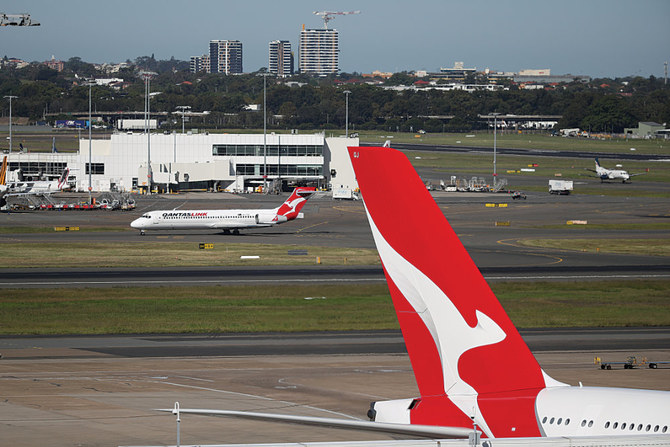
Virgin Atlantic rival Qantas said it was also facing job cuts. (Reuters)
Short Url
Updated 27 June 2020
Follow

Bain Capital agrees deal over Virgin Australia administrator to buy struggling airline

  • The proposal will be put forward to the airline’s creditors for their approval

SYDNEY: US private equity group Bain Capital said on Friday it has agreed with the administrator of Virgin Australia Holdings to buy Australia’s second-biggest airline for an undisclosed sum, banking on an aviation industry recovery.

Bain’s bid was chosen over a rival offer from Cyrus Capital Partners and a recaptalization proposal put forward by Virgin Australia bondholders, administrator Deloitte said.

Deloitte said it was not yet possible to estimate the return to creditors and did not expect any return to shareholders. An update on the return will be provided ahead of a creditor’s meeting in August, it said.

Many contracts with suppliers and aircraft lessors must be renegotiated before the return to creditors can be finalized, a source with knowledge of the matter told Reuters on condition of anonymity.

The deal will need to be approved by 50 percent of creditors by value and 50 percent by number to be finalized.

A spokesman for the 6,000 unsecured bondholders owed A$2 billion ($1.4 billion) said that despite Deloitte’s selection of Bain, they would continue to push for genuine consideration of their rival debt-to-equity swap proposal.

Bain is using private equity as well as its distressed and special situation funds for the deal, according to Deloitte, which said the deal provided a “significant” injection of capital into the airline.

HIGHLIGHTS

  • Not yet possible to estimate return to creditors.
  • Offer picked over rival one from Cyrus.
  • Deal will be voted on by creditors in August.

The Australian, the newspaper which carried the report, said Bain would inject A$600 million of cash up front, A$600 million to cover travel credits held by customers and A$450 million to cover employee entitlements, without saying where it got the information.

Deloitte and Bain declined to comment.

Bain plans to strengthen Virgin’s regional services and ensure the airline offers good value for leisure customers while continuing to serve business travelers, Mike Murphy, an Australia-based managing director at Bain, said in a statement.

Virgin Australia entered administration in April owing nearly A$7 billion to creditors, but is viewed as an attractive investment given the Australian domestic aviation market duopoly it shares with larger rival Qantas Airways.

Cyrus on Friday morning said it had pulled out of the bidding, citing Deloitte’s unwillingness to engage in meaningful talks.

The Bain proposal supports Virgin Australia’s current management team, led by Chief Executive Paul Scurrah, and its improvement plan for the airline, Deloitte said in a statement.

Virgin Australia has about 9,000 employees and Bain plans to keep 5,000 to 6,000 and operate 60 to 70 of its Boeing Co. 737 planes, Murphy told The Australian Financial Review on Friday, adding the airline could break even by February. 

Qantas on Thursday said it would cut more than 20 percent of its 29,000-strong workforce because of the bleak international travel outlook associated with the coronavirus outbreak.

Virgin Australia has a smaller international business than Qantas and is more exposed to the domestic market.


GCC debt markets poised for major growth in 2026, led by record sukuk issuance: Fitch

Updated 17 sec ago
Follow

GCC debt markets poised for major growth in 2026, led by record sukuk issuance: Fitch

RIYADH: The Gulf Cooperation Council's debt capital market is set to exceed $1.25 trillion in 2026 as project funding and government initiatives fuel a 13.6 percent expansion, according to Fitch Ratings.

The region is set to remain one of the largest sources of US dollar debt and sukuk issuance among emerging markets , according to the agency, which also flagged cross-sector economic diversification, refinancing needs, and funding for deficits as drivers behind the growth.

The Gulf’s debt capital markets — which stood at $1.1 trillion at the end of the third quarter of 2025 — have evolved from primarily sovereign funding tools into increasingly sophisticated financing means, serving governments, banks, and corporates alike.

As diversification agendas accelerate and refinancing cycles intensify, regional issuers have become regular participants in global debt markets, strengthening the GCC’s role in emerging-market capital flows.

The report noted that the market is expected to be further supported by forecasted lower oil prices, averaging $63 per barrel in 2026 and 2027, and anticipated US Federal Reserve rate cuts to 3.25 percent and 3 percent in those respective years.

Bashar Al-Natoor, Fitch’s global head of Islamic Finance, highlighted the market’s resilience and the rising dominance of sukuk. “Most GCC issuers continued to maintain strong market access in 2025 and so far in 2026 despite global and regional shocks,” he stated, adding: “Sukuk funding share in the GCC DCM outstanding expanded to over 40 percent, the highest to date.”

The analysis noted the high credit quality of the region’s Islamic debt. “About 84 percent of Fitch-rated GCC sukuk are investment-grade, and 90 percent of issuers are on Stable Outlooks,” Al-Natoor added. “While there were no defaults or falling angels, there were rising stars with many Omani sukuk upgraded following the sovereign upgrade.”

In 2025, GCC nations accounted for 35 percent of all emerging market US dollar debt issuance, excluding China. Growth in US dollar sukuk issuance notably outpaced that of conventional bonds. The region’s total outstanding DCM grew by over 14 percent year on year to $1.1 trillion.

The market remains fragmented, with Saudi Arabia and the UAE hosting the most developed ecosystems.

Notably, Kuwait issued $11.25 billion in sovereign bonds, its first such issuance in eight years, while Oman’s DCM is expected to grow more conservatively as the country focuses on deleveraging. “Digitally native notes emerged in Qatar and the UAE,” the report said.

Fitch identified several risks to the outlook, including exposure to oil-price and interest-rate volatility, geopolitical tensions, and evolving Shariah compliance requirements for sukuk. 

Despite this, issuers are increasingly diversifying their funding through private credit, syndicated financing, and certificates of deposit.