



DUBAI: British auction house Christie’s will on Thursday host its first live sale since the coronavirus disease (COVID-19) lockdown which will be dedicated to Islamic and Indian art.
The auction, which will take place at the firm’s King Street sales room in London, will also include Oriental rugs and carpets and follows three months of conducting sales online.
Behnaz Atighi Moghaddam, Christie’s Islamic art specialist, told Arab News: “The sale provides collectors with a unique opportunity to discover magnificent items from regions that can be hard to reach.
Lot 3 Sale, 18371.jpg
“The sale will be conducted with all social-distancing measures put in place to protect our staff and clients and we will therefore welcome a smaller group of clients to the auction room than usually present, but online and phone bidding ensures full opportunity for collectors to participate. We look forward to being back in the sales room.”
The auction will feature a range of manuscripts, objects, and paintings from throughout the Middle East, India, and Europe.
One of the highlights will be the collection of the late Dr. Mohammed Said Farsi. Born in Makkah in 1935, he grew up near the Grand Mosque where he learned to recite the Qur’an and also drank water from the well of Zamzam.
Lot 1 Sale, 18371. (Supplied)
In 1956 he left Saudi Arabia to study in Egypt where he was one of just 35 students from the Kingdom sent abroad to further their education that year.
He went on to gain a bachelor’s degree in architecture and town planning from Alexandria University and returned to Saudi Arabia to work in town planning for 10 years. Farsi then became the first mayor of Jeddah and during that time, in 1982, he also gained a master’s degree from Alexandria University for his thesis on the architecture and town planning of Makkah.
On his resignation from public office in 1986, Farsi focused his energies on research. He obtained a Ph.D. in town planning, again from Alexandria University, and wrote a series of essays on art history and architecture that were collected in 1989 and published as “The Story of Art in Jeddah.”
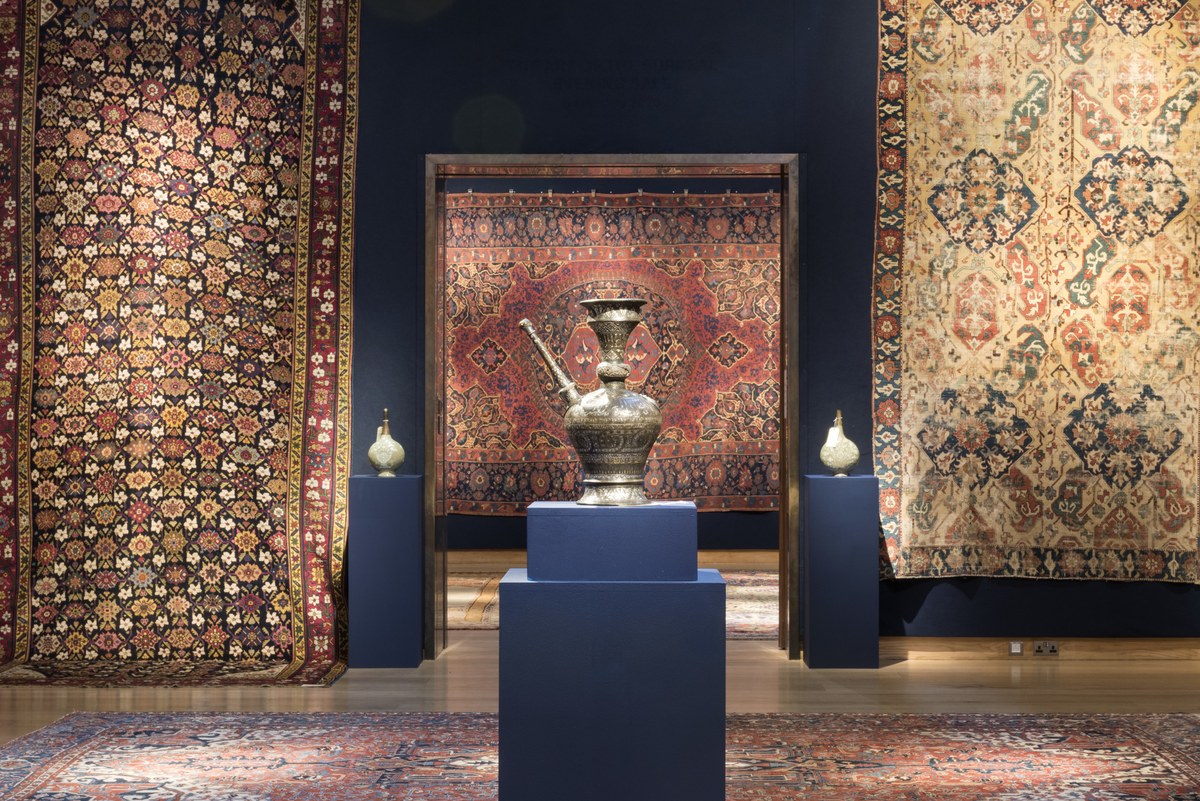
The auction will take place at the firm’s King Street sales room in London. (Supplied)
One of the Middle East’s great modern patrons of the arts, Farsi died in March 2019. He was one of the region’s driving forces behind the Egyptian art scene, providing guidance and support to many young artists.
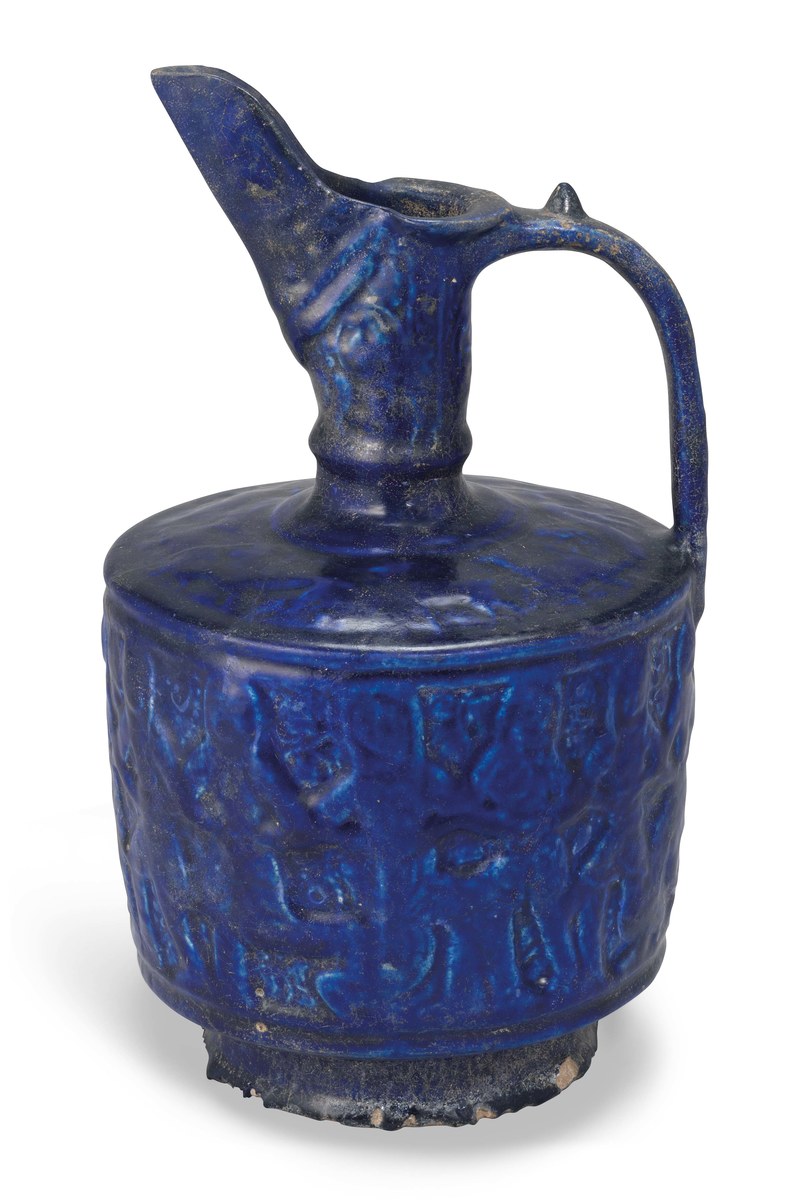
Highlights from his collection in Christie’s upcoming sale include a number of early Islamic objects, Qur’ans, and pottery, including a large molded cobalt blue ewer from Kashan in central Iran, dating to circa 1200 and priced at an estimated $25,080 to $37,620. The body of the ewer is decorated with a scrolling vine around a band of dancing figures with linked arms.
“They created these designs using a mold. You easily become transfixed by the figures dancing around the ewer’s body,” said Moghaddam.
Lot 29 Sale, 18371. (Supplied)
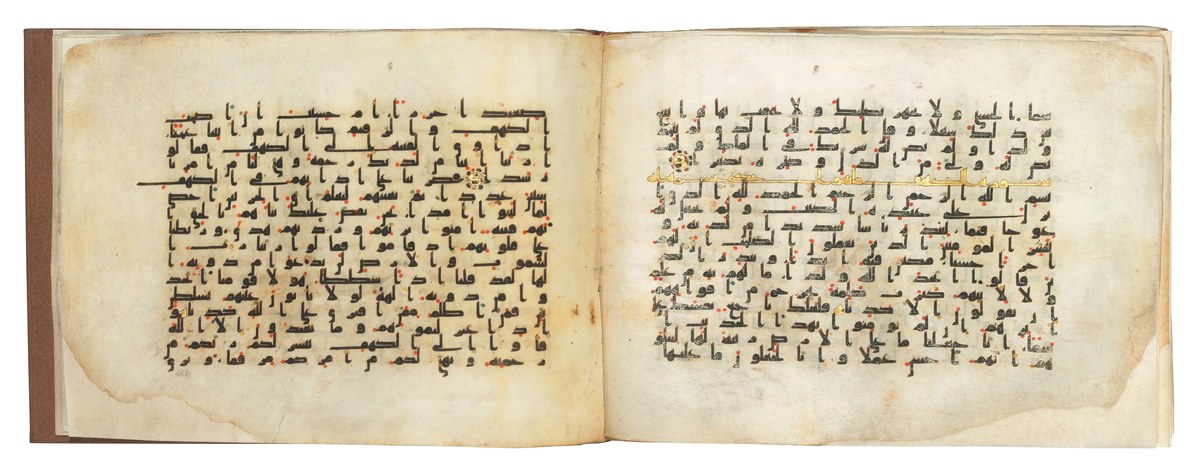
The sale kicks off with the first lot, also from Farsi’s collection, of a Kufic Qur’an section from North Africa or the Near East, dated to circa ninth century with an estimated sale price of between $376,200 and $627,000.
One of the highlights of sale is a rare Mamluk ewer intricately decorated in silver and gold. It is thought to be from the period of Sultan Al-Malik Al-Nasir Muhammad ibn Qalawun (13th-14th century) and is expected to fetch between $200,000 and $300,000.
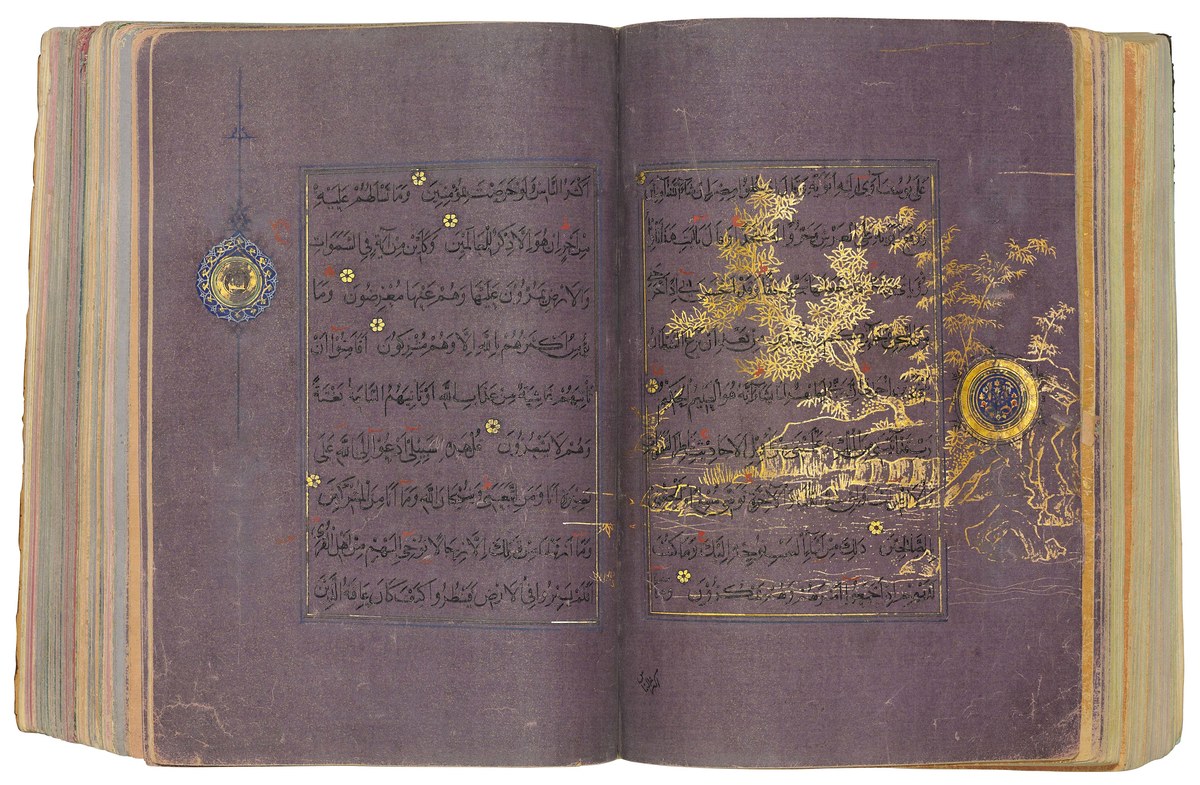
Another star lot is a Timurid or Aqquyunlu Qur’an written on a vast range of colored Chinese papers dating to the 15th century. It is richly decorated with mountainous landscapes, Chinese buildings, flowers, plants, and fruit trees. It highlights the rich artistic exchange between Iran and China and is valued from $752,400 to $1,128,600.
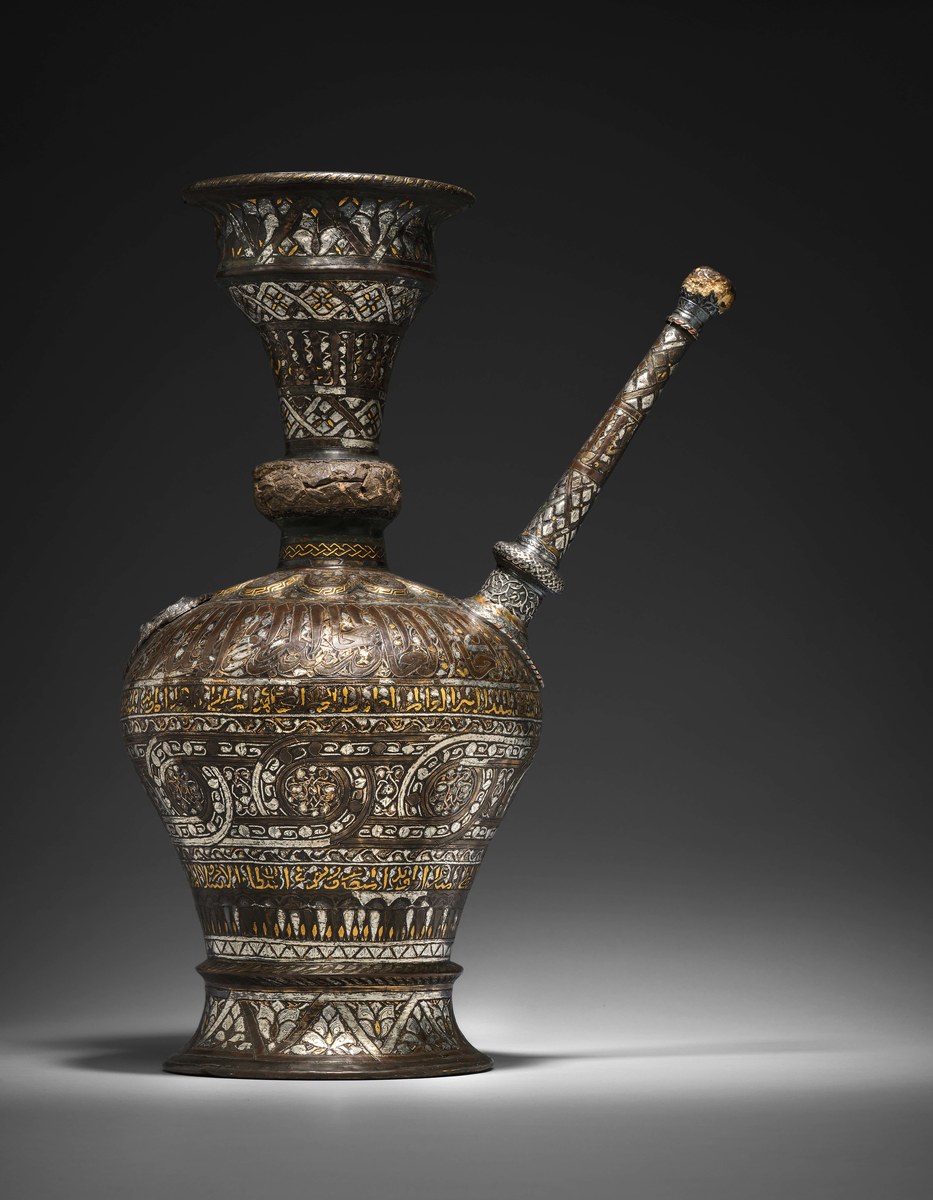
Lot 24 Sale, 18371. (Supplied)
A further aspect of the sale will be a rich range of Oriental carpets spanning 300 years from across the Silk Road. Highlights from this section will include a rare azure blue Agra carpet woven in the first half of the 19th century and given an estimated price tag of $50,000 to $75,000. Also for sale will be a silk Yarkand carpet from East Turkestan of iconic pomegranate design which is expected to sell for between $62,491 and $87,488.
Bidding will also take place on a selection of intricate Iznik tiles and Seljuk-style pottery.


