
PESHAWAR: In Pakistan’s resource-starved tribal districts, one of the country’s most high achieving martial arts athletes quietly registered his 31st Guinness World Record earlier this month-- without so much as a facility to train in.
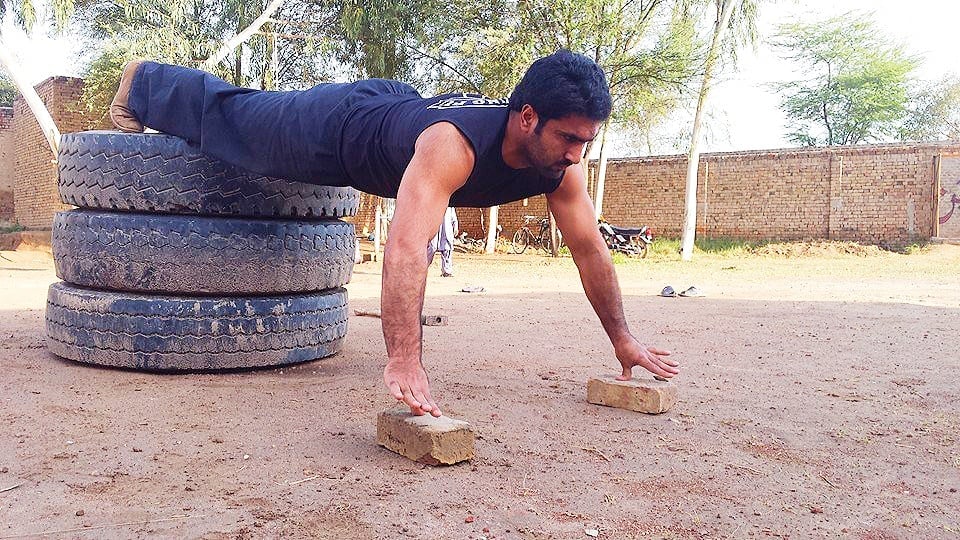
Irfan Mehsud trains using bricks and tyres at a ground in Dera Ismail Khan on April 4, 2019. (Photo courtesy: Lion’s Den Fight Club)
Irfan Mehsud succeeded in completing 60 push ups in one minute with a leg raised while carrying a 40 lb pack, breaking the previous record held by Ron Cooper of the United States by seven push ups. Massachusetts-based Cooper is also a serial record holder and has been called pound-for-pound the world’s strongest man by the annual world record listing.
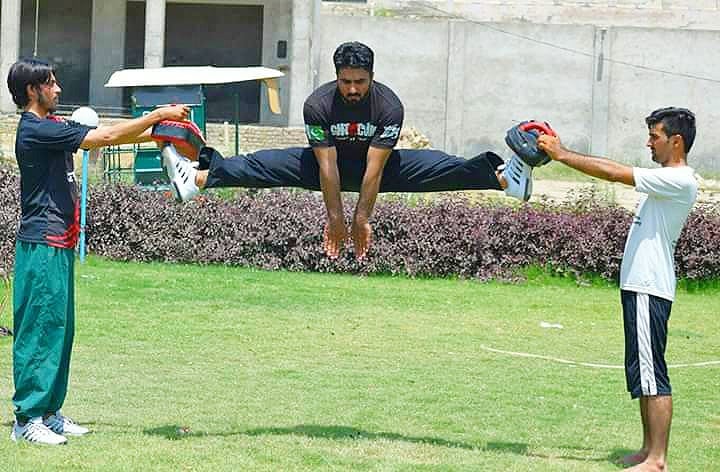
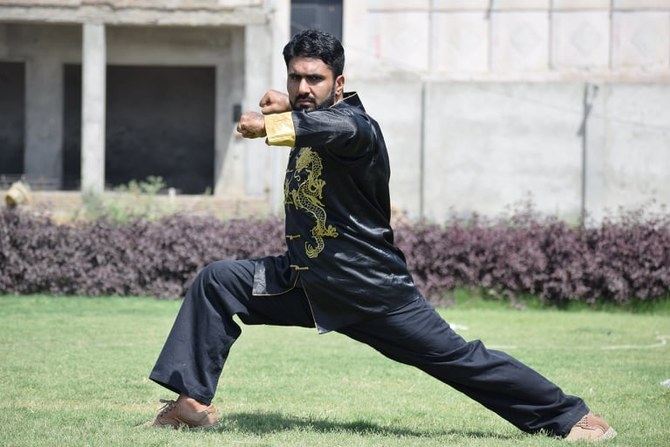
Irfan Mehsud performs in Dera Ismail Khan on April 10, 2019. (Photo courtesy: Lion’s Den Fight Club)
But in a different world from the East Coast’s Pioneer Valley, the athlete and trainer from Pakistan’s South Waziristan runs a martial arts academy under the open sky, teaching his students Wushu Kung Fu and other techniques after the school he had previously rented as a facility was sold off.
Mehsud has dozens of challenging speed records to his name, largely in the “most in a minute” category, including completing the most side lunges, the most knuckle push-ups completed while carrying a 60 lb pack, most jumping jacks carrying an 80 lb pack and the most push ups on his fingertips while carrying a 60 lb pack.
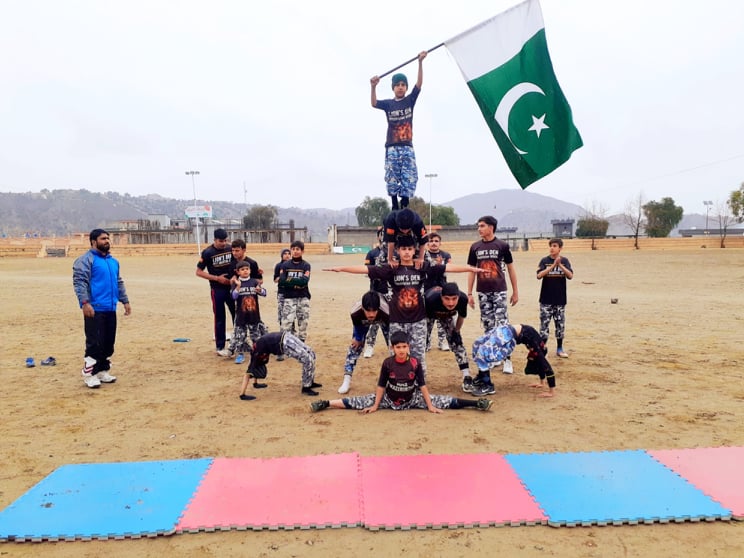
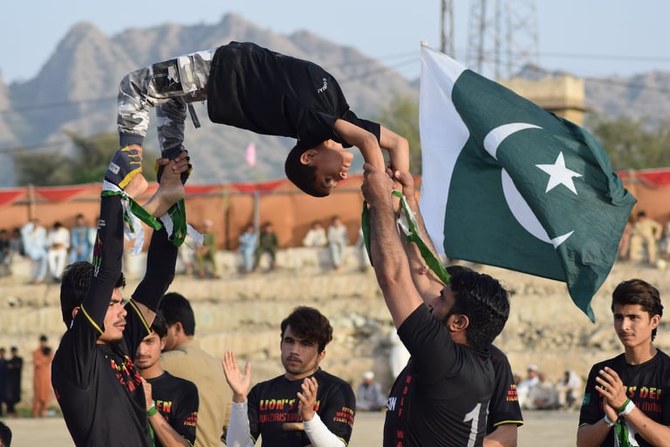
Irfan Mehsud (left) oversees his students performing in a field in South Waziristan, a newly-merged district in Khyber Pakhtunkhwa province, on April 20, 2019. (Photo courtesy: Lion’s Den Fight Club)
But the multiple fitness record holder said in South Waziristan, there were no resources to help him inspire a new generation of athletes and record breakers.
“I continue to achieve records and train my 70 plus students at a time when I have no proper building for training,” he said.
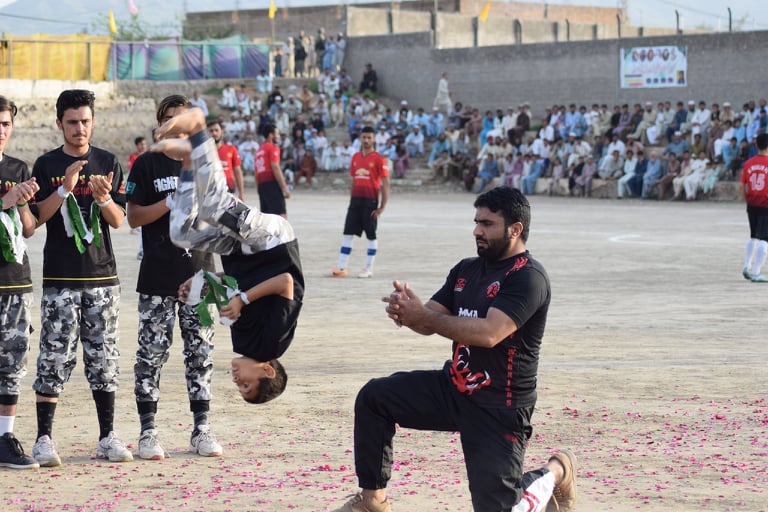
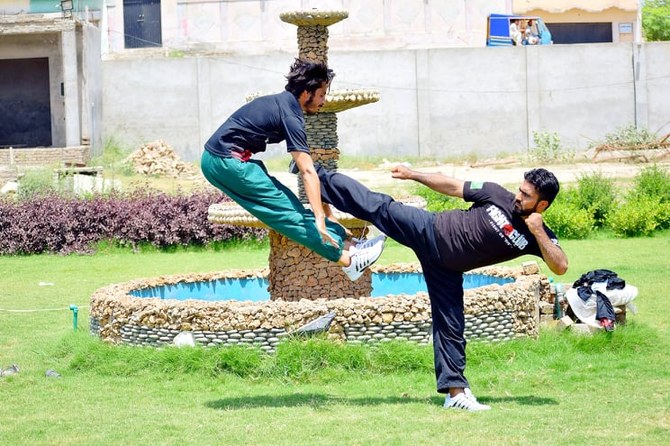
Irfan Mehsud teaches his students during a training session in Dera Ismail Khan on May 10, 2019. (Photo courtesy: Lion’s Den Fight Club)
“I have no special diet to keep myself fit because I can’t afford it-- but daily exercise keeps me competitive,” he added.
In the absence of facilities, Mehsud teaches his students using makeshift training stations made out of old tires and bricks. Training includes running barefoot in the sun for miles, and his students come from all age groups to attend what he calls the Lion’s Den Fight Club.
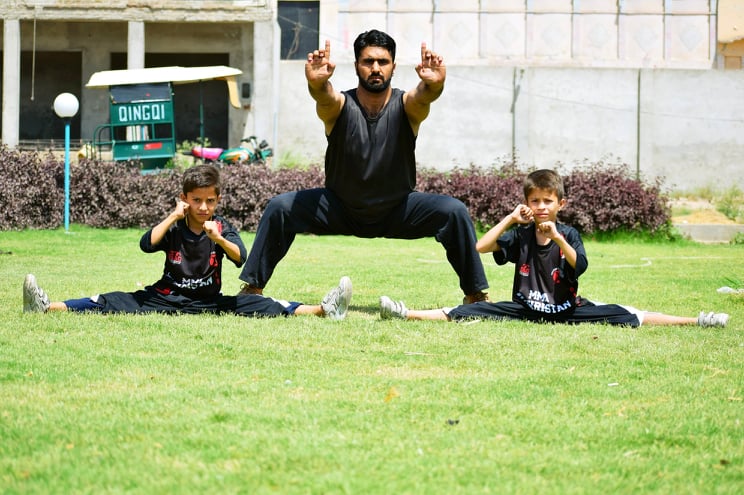
Irfan Mehsud trains his students in Dera Ismail Khan on May 12, 2019. (Photo courtesy: Lion’s Den Fight Club)
In his mid-30’s, Mehsud, a master’s degree holder in business administration is now completing a degree in sports sciences in Dera Ismail Khan, a border district near South Waziristan where he fled with his family 10 years ago following Pakistan’s army offensive against militants in his scenic, violence-haunted hometown.
After decades of conflict, the tribal areas’ indigenous social life, which once included traditional dance festivals, poetry contests and vibrant sports competitions on its many level playing fields, has completely crumbled.
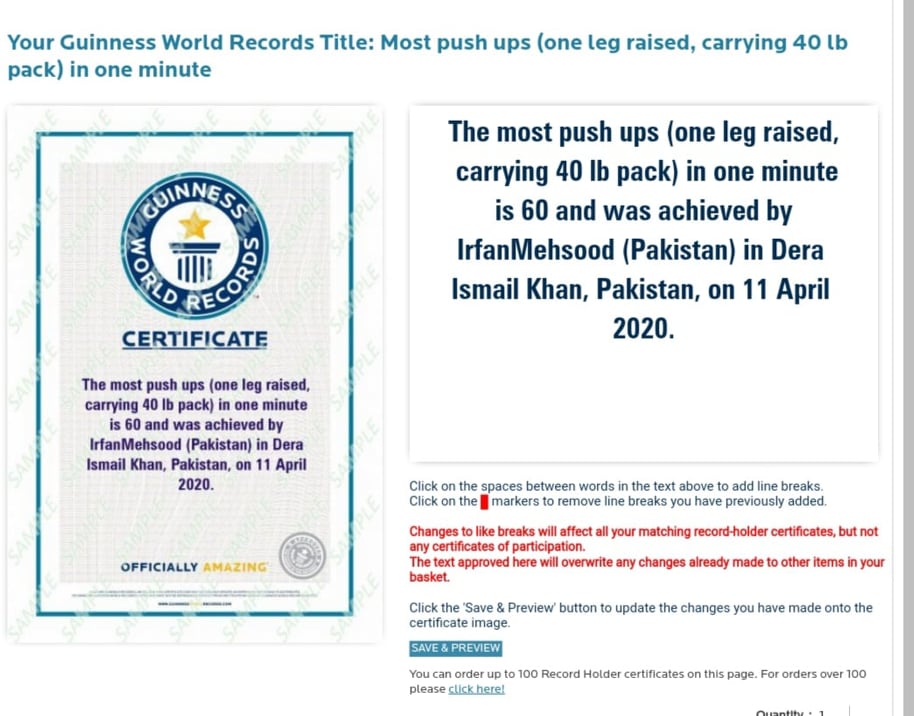
Pakistani martial arts athlete Irfan Mehsud is issued a certificate by the Guinness World Records. (Photo courtesy: Lion’s Den Fight Club)
Over the years, militants often targeted cricket grounds and sports stadiums and hundreds of government schools were bombed-- which had huge repercussions for organized sport in these districts.
Asfandyar Khattak, director general of the Khyber Pakhtunkhwa Sports Board, told Arab News the provincial government had allocated Rs7.5 billion for the promotion of sports in the newly merged tribal districts with an accelerated implementation program to give leading players a chance to showcase their talents.
“I will personally look into Mehsud’s case because he has bolstered the image of the country,” Khattak said.
“Mehsud is a source of pride for us all and we will encourage him to stand tall in the world.”
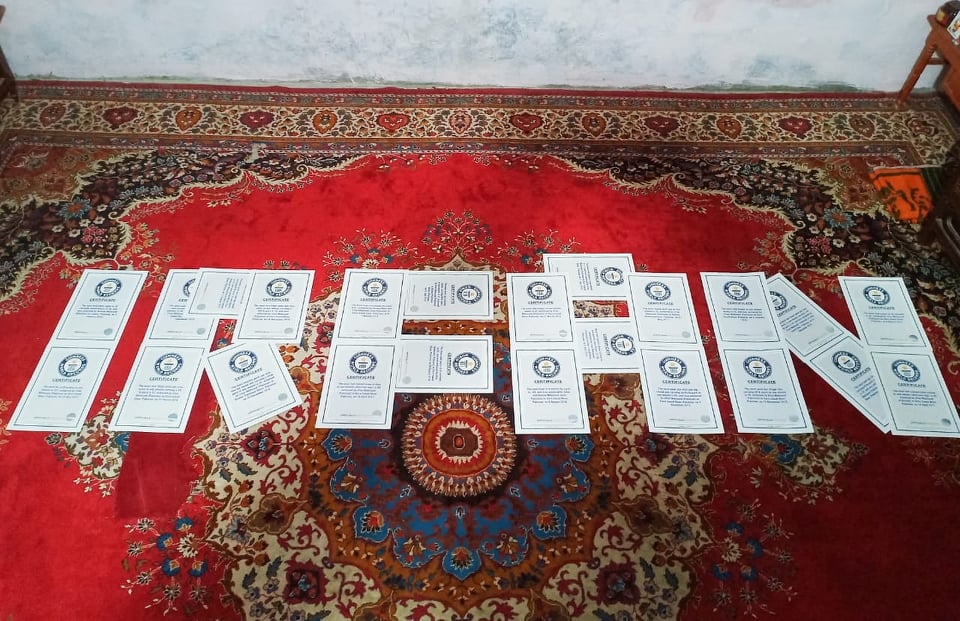
In this undated photo, copies of Irfan Mehsud’s certificates from Guinness World Records spell out his name. (Photo courtesy: Lion’s Den Fight Club)
The serial fitness record breaker said qualifying for a Guinness World Record was a long drawn out process of paperwork and meticulous video recordings before the international team could approve his record as legitimate-- but he doesn’t plan on stopping.
Najam Ullah Khan, Secretary General for KP’s Wushu Association-- an autonomous body working under the Pakistan Olympic Association, praised Mehsud as a hardworking and talented player who had broken records while leading his life in virtual displacement.
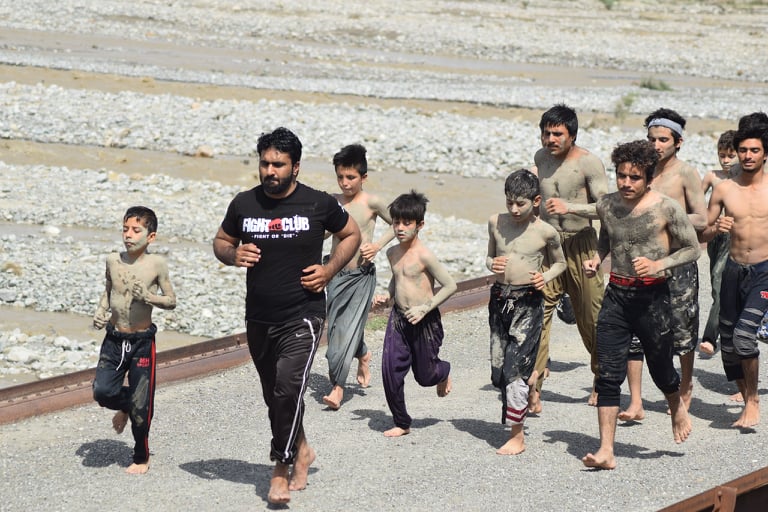
Irfan Mehsud runs barefoot during training with his students in South Waziristan on April 26, 2019. (Photo courtesy: Lion’s Den Fight Club)
“It is really surprising that a person from an underdeveloped tribal region is continuously breaking one record after another,” he said.
“I am stunned to see how Mehsud has emerged on the global arena today,” he said.
Since the merger of the tribal districts with Khyber Pakhtunkhwa province, for the first time a contingent from these areas attended the National Games held in the northwestern province in November last year.
Muhammad Zeeshan, a student of Mehsud’s and a four time national gold medalist in Wushu Kung Fu, said Mehsud had been training him with no proper building, academy or even a basic sports kit.
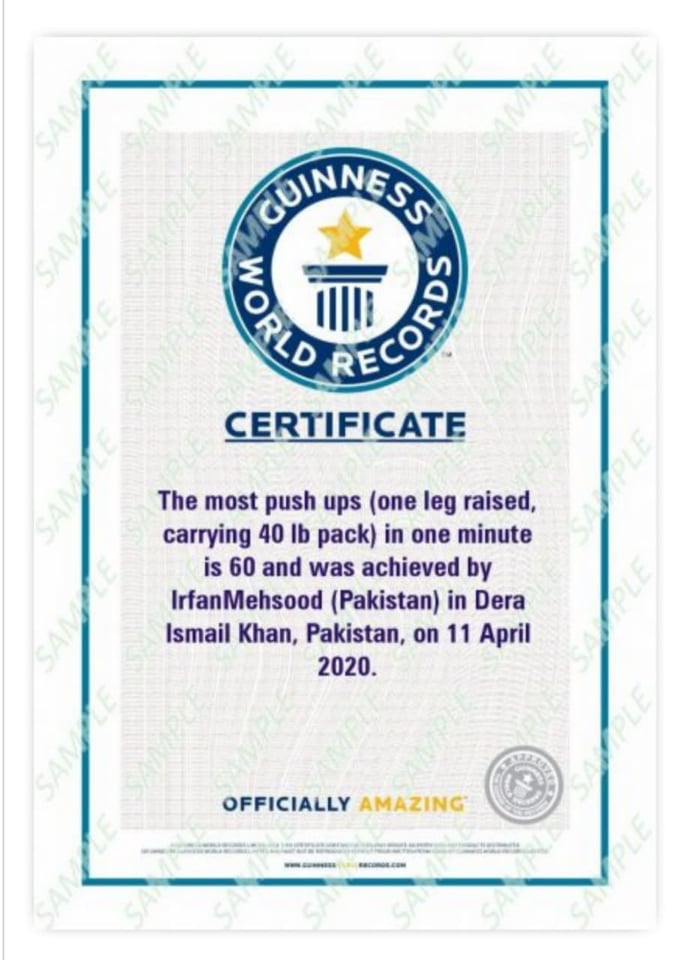
In this April 11, 2020 image, a certificate by the Guinness World Records declares Pakistani martial arts athlete Irfan Mehsud as a world record holder. (Photo courtesy Lion’s Den Fight Club)
“We exercise in an open field,” he said.
For now, Mehsud said he was training himself and his students to project Pakistan’s image to the world-- which is to him, the biggest part of breaking records.
One day, he continued, he hoped a real martial arts academy would stand in South Waziristan and that competitive sport would once more return to the school grounds of its war-ravaged towns.