

OPEC+ pushes for compliance, undecided on oil cut extension

1 / 2
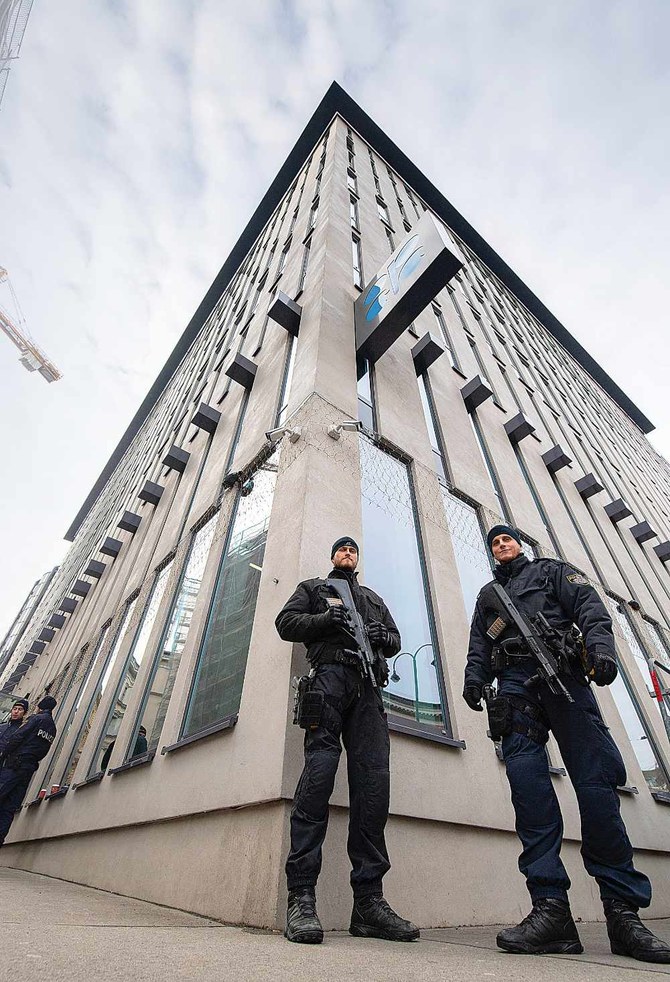
The Austria-based Organization of the Petroleum Exporting Countries (OPEC) is attempting to re-balance global crude markets. (AFP)
2 / 2
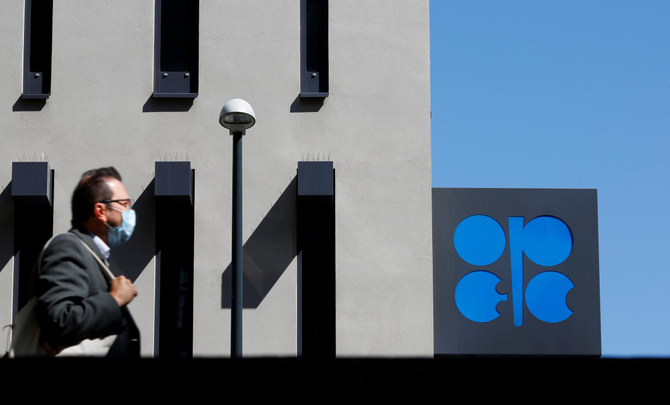
A person passes the logo of the Organization of the Petroleoum Exporting Countries (OPEC) in front of OPEC’s headquarters in Vienna, Austria, April 9, 2020. (Reuters)
Short Url
Updated 19 June 2020
Follow

OPEC+ pushes for compliance, undecided on oil cut extension

  • OPEC+ presses countries such as Iraq and Kazakhstan to comply better with oil cuts
  • Oil has recovered to above $41 a barrel from a 21-year low below $16 a barrel in April, helped by OPEC+ cuts and a recovery in demand

DUBAI:  OPEC+ — the oil alliance led by Saudi Arabia and Russia — is aiming for full compliance with agreed output cuts in an attempt to re-balance global crude markets.

The 23-strong organization’s Joint Ministerial Monitoring Committee (JMMC) met by webinar under co-chairmanship of Prince Abdulaziz Bin Salman, the Kingdom’s energy minister, and agreed that “the attainment of 100 percent conformity from all participating countries is not only fair and equitable, but vital for the ongoing and timely rebalancing efforts, and helping deliver sustainability oil market sustainability.”

The meeting disclosed that compliance levels had averaged 87 percent in May — a very high level by previous standards — and that those countries that had failed to meet their commitments would make up for the shortfall between July and September.

Failure to meet agreed compliance levels has thrown out OPEC+ calculations in the past. Saudi Arabia holds the view that a rigorous adherence to agreed output reduction commitments is the key to future oil market stability.

The issue has become all the more important in face of the downturn in global demand as a result of the economic effects of the pandemic lockdowns. If oil producers “cheat” on their output levels it will add to the surpluses on global markets.

OPEC+ has taken approximately 9.6 million barrels per day out of the market since April, and Saudi Arabia and the Gulf allies have made voluntary cuts of a further 1.2 million barrels, due to expire at the end of the month.

Those countries that failed to meet the May target have agreed to make up for those shortfalls between July and September, in addition to their existing cut commitments. Iraq and Kazakhstan have submitted formal schedules to compensate for their shortfalls. 

Some members of OPEC+ want to extend the current level of cuts beyond the end of this month, when they are scheduled to be replaced by lower targets.

Russia, which was represented at the webinar by its energy minister, Alexander Novak, is believed to be less convinced of the need to prolong the current historic cuts levels.

Separately, Saudi Aramco said yesterday that it would meet its dividend obligation of $18.75 billion this quarter from a mixture of cash and debt.

“We would like to use our free cash definitely most of the time, but other debt instruments from banks, or bonds, are also available for us as we have a strong balance sheet,” Amin Nasser, Aramco’s chief executive officer,
told journalists.


Saudi Arabia opens 3rd round of Exploration Empowerment Program

Updated 01 February 2026
Follow

Saudi Arabia opens 3rd round of Exploration Empowerment Program

RIYADH: Saudi Arabia’s Ministry of Industry and Mineral Resources, in collaboration with the Ministry of Investment, has opened applications for the third round of the Exploration Empowerment Program, part of ongoing efforts to accelerate mineral exploration in the Kingdom, reduce early-stage investment risks, and attract high-quality investment from local and international mining companies.

The third round of the Exploration Empowerment Program offers a comprehensive support package targeting exploration companies and mineral prospecting license holders.

The initiative aims to lower investment risks for projects and support a faster transition from prospecting to development.

"The program provides coverage of up to 70 percent of the total salaries of Saudi technical staff, such as geologists, during the first two years, increasing to 100 percent thereafter, in line with program requirements.

This support aims to develop talent, build national capabilities in mineral exploration, promote job localization, and facilitate the transfer of geological knowledge.

The application for the third round opened on Jan. 14, allowing participants to benefit from the Kingdom’s attractive investment environment, its stable legal framework, and streamlined regulatory structures, as well as integrated infrastructure that supports the transition from mineral resources to operational mines.

The ministry has set the timeline for the third round, with the application period running from Jan. 14 to March 31.

This will be followed by the evaluation, approval, and signing of agreements from April 1 to May 31, with the eligible projects set to be announced between June 1 and July 31 of the same year.

The program stages include submitting exploration data during the reimbursement and payment phase from Sept. 1 to Nov. 30, followed by technical and financial verification of work programs and approval of the disbursement of support funds in January 2027.

The exploration data will then be published on the National Geological Database in April 2027.

The ministry emphasized that the EEP focuses on supporting the exploration of strategically important minerals with national priority. It also contributes to enhancing geological knowledge by providing up-to-date data that meets international standards, helping investors make informed decisions and supporting the growth of national companies and local supply chains.

The ministry urged companies to apply early to benefit from the program’s third round, which coincided with the fifth edition of the International Mining Conference, which was held from Jan. 13 to 15.