Pakistan expects negative GDP growth for first time in 68 years

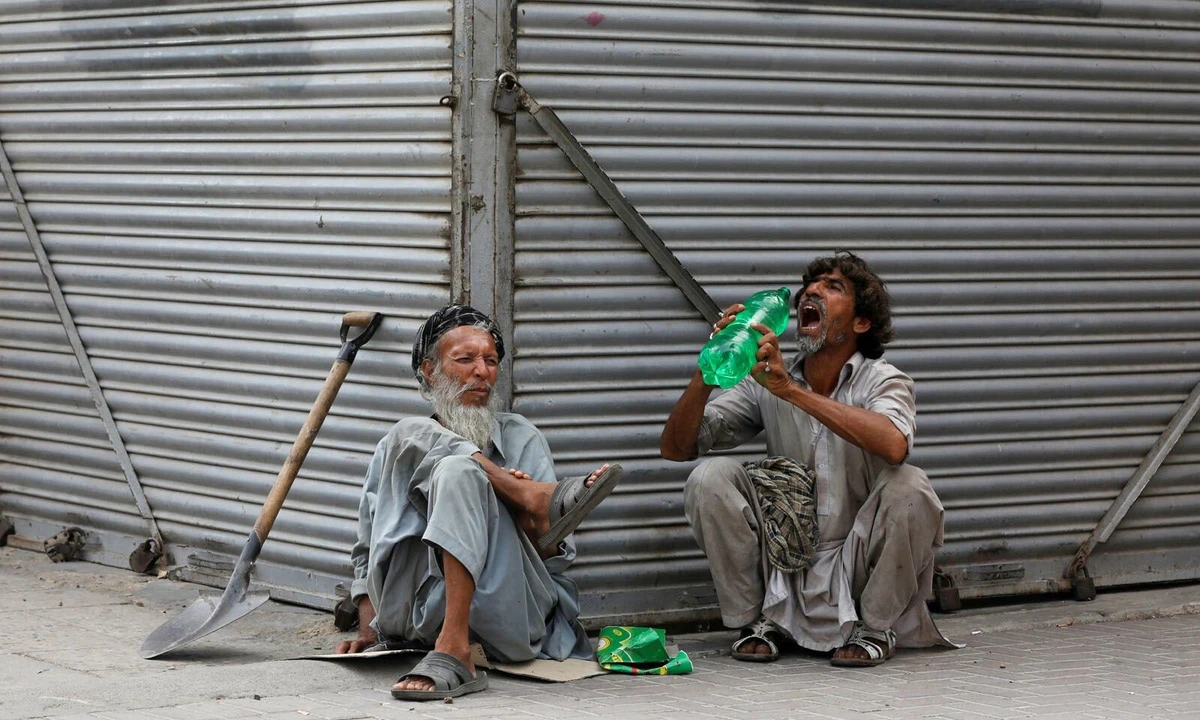
In this file photo, daily wage laborers wait for work as they sit outside closed shops, during lockdown amid the outbreak of coronavirus disease (COVID-19), at a market in Karachi on April 14, 2020. (REUTERS)
Short Url
Updated 20 May 2020
Follow

Pakistan expects negative GDP growth for first time in 68 years

  • GDP estimated at $264 billion in the current fiscal year, compared with $279 billion in 2019-20
  • Negative growth may pose a threat to the national security on the back of increasing debt burden

KARACHI: Pakistan’s economy is going to record a negative 0.38 percent growth rate in the current fiscal year, as its usual drivers — the industrial and services sectors — have been stalled by the coronavirus outbreak.

On Monday, the Ministry of Planning and Development said that the country’s gross domestic product (GDP) had been estimated at $264 billion in the current fiscal year 2020-21, compared with $279 billion in 2019-20.

“The minus growth after decades, in fact, after 68 years, will mean among many other things more debts to fund all the expenses. Many of which are inevitable. For example, debt servicing, defense, civil administration and social services,” Dr Ikram Ul Haq, a Lahore-based senior economist, told Arab News.

He added that it may pose a threat to the national security on the back of increasing debt burden.

"Our tax system at federal and provincial levels is not yielding even to meet current expenses ... unless the fundamental structural reforms are not made, the country will be pushed toward a level where debt non-sustainability will pose a threat to national security," he said.

Another expert believes that the slower growth could harm social funding.

"The immediate impact would be that no more funds would be available to spend on social sectors ... It seems that there would be no major revenue collection and that would impact sectoral allocation next year," Dr Vaqar Ahmed of the Sustainable Development Policy Institute (SDPI) told Arab News.

He added that the authorities are planning to boost tax collection and target tax evaders.

"Extensive data mining by the FBR (Federal Board of Revenue) is going on for the identification of those who have submitted low tax against liabilities or remain out of the tax net, including those who availed amnesty. An audit of large taxpayers is also an option," Ahmed said.

The agricultural, industrial and services sectors posted 2.67 percent, -2.64 percent, and -0.59 percent growth, respectively, while the manufacturing sector recorded a -5.56 percent growth rate, mainly due to COVID-19 related lockdowns of industrial units.

The wholesale and retail trade sector posted negative 3.42 percent growth, while transport, storage and communications shrunk to negative 7.13, according to the National Accounts Committee.

Though the per capita income for 2019-20 has increased in rupees to Rs 214,539 for 2019-20 showing a growth of 8.3 percent over Rs198,028 in 2018-19, in dollar terms it has shrunk to $1,271 from $1,363 due to currency devaluation.

Economists say the developments could result in dire consequences for the country, which is already reeling from the impact of COVID-19-related unemployment.

“Massive unemployment, shrinking income and rising poverty are some outcomes which are expected. For the common man, it means miseries and disillusionment. Lower growth is going to force the government to seriously consider that reforms are the only option," Dr Haq said.

Sindh assembly passes resolution rejecting move to separate Karachi

Updated 21 February 2026
Follow

Sindh assembly passes resolution rejecting move to separate Karachi

  • Chief Minister Shah cites constitutional safeguards against altering provincial boundaries
  • Calls to separate Karachi intensified amid governance concerns after a mall fire last month

ISLAMABAD: The provincial assembly of Pakistan’s southern Sindh province on Saturday passed a resolution rejecting any move to separate Karachi, declaring its territorial integrity “non-negotiable” amid political calls to carve the city out as a separate administrative unit.

The resolution comes after fresh demands by the Muttahida Qaumi Movement (MQM) and other voices to grant Karachi provincial or federal status following governance challenges highlighted by the deadly Gul Plaza fire earlier this year that killed 80 people.

Karachi, Pakistan’s largest and most densely populated city, is the country’s main commercial hub and contributes a significant share to the national economy.

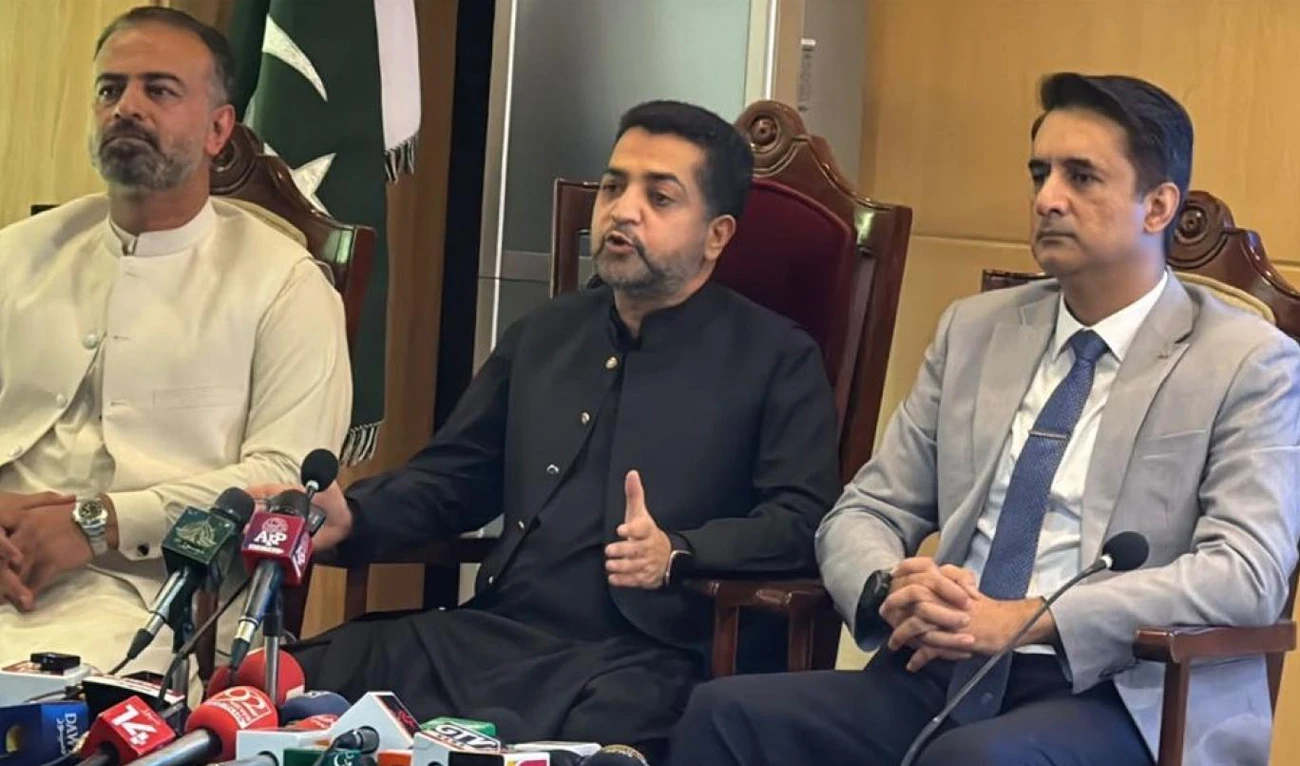
Chief Minister Syed Murad Ali Shah tabled the resolution in the assembly, condemning what he described as “divisive statements” about breaking up Sindh or detaching Karachi.

“The province that played a foundational role in the creation of Pakistan cannot allow the fragmentation of its own historic homeland,” Shah told lawmakers, adding that any attempt to divide Sindh or separate Karachi was contrary to the constitution and democratic norms.

Citing Article 239 of Pakistan’s 1973 Constitution, which requires the consent of not less than two-thirds of a provincial assembly to alter provincial boundaries, Shah said any such move could not proceed without the assembly’s approval.

“If any such move is attempted, it is this Assembly — by a two-thirds majority — that will decide,” he said.

The resolution reaffirmed that Karachi would “forever remain” an integral part of Sindh and directed the provincial government to forward the motion to the president, prime minister and parliamentary leadership for record.

Shah said the resolution was not aimed at anyone but referred to the shifting stance of MQM in the debate while warning that opposing the resolution would amount to supporting the division of Sindh.

The party has been a major political force in Karachi with a significant vote bank in the city and has frequently criticized Shah’s provincial administration over its governance of Pakistan’s largest metropolis.

Taha Ahmed Khan, a senior MQM leader, acknowledged that his party had “presented its demand openly on television channels with clear and logical arguments” to separate Karachi from Sindh.

“It is a purely constitutional debate,” he told Arab News by phone. “We are aware that the Pakistan Peoples Party, which rules the province, holds a two-thirds majority and that a new province cannot be created at this stage. But that does not mean new provinces can never be formed.”

Calls to alter Karachi’s status have periodically surfaced amid longstanding complaints over governance, infrastructure and administrative control in the megacity, though no formal proposal to redraw provincial boundaries has been introduced at the federal level.