

Police register kidnapping case of Pakistani businessman, owner of local cola company

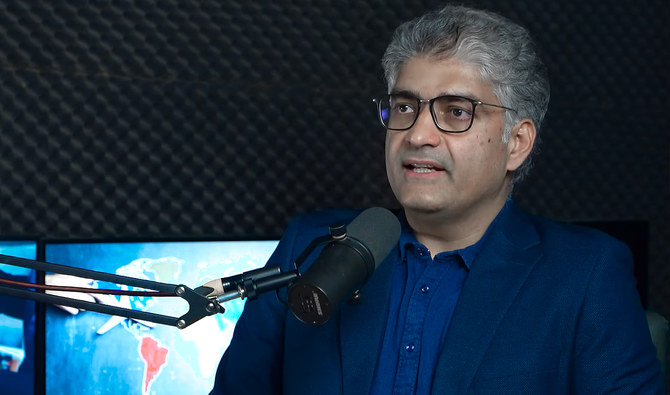
In this screengrab, taken from a video posted by ‘Off The School’ YouTube channel on April, 28, 2023, prominent Pakistani businessman Zulfiqar Ahmed speaks about successful business policies during a podcast. Ahmed, managing director of Paracha Textile Mills and Mezan Group, was kidnapped from Karachi on July 23, 2024, according to the police report. (Photo courtesy: Screengrab/YouTube/@Off-The-School)
Short Url
Updated 27 July 2024
Follow

Police register kidnapping case of Pakistani businessman, owner of local cola company

  • Sindh Police refused to lodge case in disappearance of Zulfiqar Ahmed, case filed after court intervention
  • Ahmed owns Next Cola which gained traction amid push to boycott beverages purportedly fueling Israel’s war

KARACHI: Police in Pakistan’s southeastern province of Sindh have registered a kidnapping case following judicial intervention after a prominent businessman was taken by armed men from Karachi four days ago, his lawyer said on Saturday.

Zulfiqar Ahmed, the owner of Next Cola, which has positioned itself as a substitute for Coca-Cola since October amid a push to boycott products allegedly fueling Israel’s war on Gaza, was kidnapped on July 23 after he left his office in the city.

Ahmed, who is also the managing director of Paracha Textile Mills and Mezan Group, went missing after his white Toyota Surf vehicle was intercepted by eight armed men who abducted him and one of his friends before allowing the latter to go.

Ahmed’s friend shared the details of the incident, prompting the businessman’s family and company management submit an application at the Kalri police station on the same day. However, the police refused to register a complaint, making them go to the Sindh High Court, which ordered the police to lodge the case on Friday.

“The news [of Ahmed’s abduction] somehow gained traction on social media,” Mian Ali Ashfaq, the counsel representing Ahmed’s family, told Arab News. “After the social media spotlight on the court order and my protest, my team of office associates went to the police station, where, after four hours, the FIR [First Information Report] was finally registered and a copy was provided to us by Friday afternoon.”

People widely shared news of Ahmed’s abduction across social media platforms, asking the authorities to take steps for his release.

Asad Raza, deputy inspector-general (DIG) of police in Karachi’s southern district where the incident occurred, dismissed the allegations of police inaction in the case.

“It is immaterial whether the FIR was registered instantly or after one day’s delay,” he told Arab News. “We started working on the case when the abduction took place.”

Ashfaq, the counsel representing Ahmed’s family, said the high court had issued notices to respondents and fixed the matter for a hearing on Tuesday.

“We hope that Zulfiqar Ahmed will be recovered and reunited with the family before the next hearing,” he added.

Karachi Police Chief Javed Alam Odho said on Friday two “high-powered” teams were investigating the case.

“A high-powered team, under the supervision of the DIG of the CIA [Crime Investigation Agency] and another under the DIG of the area, are working on it,” he told Arab News. “I am confident this case will be resolved soon.”

According to the lawyer representing Ahmed’s family, however, the case was further complicated after Friday’s court ruling since two senior staff members associated with Next Cola were also picked up from Lahore and Kasur a day earlier.

He added that a petition would be filed in the Lahore High Court for their recovery.

“Hassan Nawaz, Deputy General Manager of Finance at Meezan Beverage, was picked up from Lahore, and Danial Afzal Khan, General Manager at Meezan Beverage, was abducted from Kasur by armed men in white double-cabin vehicles,” he said.

Launched in 2016, Next Cola struggled to gain traction until Israel’s war that started last October and killed over 39,000 people, mostly women and children. Since then, it acquired greater visibility in supermarkets and wedding halls in different parts of Pakistan.


Pakistan terms climate change, demographic pressures as ‘pressing existential risks’

Updated 06 December 2025
Follow

Pakistan terms climate change, demographic pressures as ‘pressing existential risks’

  • Pakistan has suffered frequent climate change-induced disasters, including floods this year that killed over 1,000
  • Pakistan finmin highlights stabilization measures at Doha Forum, discusses economic cooperation with Qatar 

ISLAMABAD: Pakistan’s Finance Minister Muhammad Aurangzeb on Saturday described climate change and demographic pressures as “pressing existential risks” facing the country, calling for urgent climate financing. 

The finance minister was speaking as a member of a high-level panel at the 23rd edition of the Doha Forum, which is being held from Dec. 6–7 in the Qatari capital. Aurangzeb was invited as a speaker on the discussion titled: ‘Global Trade Tensions: Economic Impact and Policy Responses in MENA.’

“He reaffirmed that while Pakistan remained vigilant in the face of geopolitical uncertainty, the more pressing existential risks were climate change and demographic pressures,” the Finance Division said. 

Pakistan has suffered repeated climate disasters in recent years, most notably the 2022 super-floods that submerged one-third of the country, displaced millions and caused an estimated $30 billion in losses. 

This year’s floods killed over 1,000 people and caused at least $2.9 billion in damages to agriculture and infrastructure. Scientists say Pakistan remains among the world’s most climate-vulnerable nations despite contributing less than 1 percent of global greenhouse-gas emissions.

Aurangzeb has previously said climate change and Pakistan’s fast-rising population are the only two factors that can hinder the South Asian country’s efforts to become a $3 trillion economy in the future. 

The finance minister noted that this year’s floods in Pakistan had shaved at least 0.5 percent off GDP growth, calling for urgent climate financing and investment in resilient infrastructure. 

When asked about Pakistan’s fiscal resilience and capability to absorb external shocks, Aurangzeb said Islamabad had rebuilt fiscal buffers. He pointed out that both the primary fiscal balance and current account had returned to surplus, supported significantly by strong remittance inflows of $18–20 billion annually from the Middle East and North Africa (MENA) and Gulf Cooperation Council (GCC) regions. 

Separately, Aurangzeb met his Qatari counterpart Ali Bin Ahmed Al Kuwari to discuss bilateral cooperation. 

“Both sides reaffirmed their commitment to strengthening economic ties, particularly by maximizing opportunities created through the newly concluded GCC–Pakistan Free Trade Agreement, expanding trade flows, and deepening energy cooperation, including long-term LNG collaboration,” the finance ministry said. 

The two also discussed collaboration on digital infrastructure, skills development and regulatory reform. They agreed to establish structured mechanisms to continue joint work in trade diversification, technology, climate resilience, and investment facilitation, the finance ministry said.