

SABIC to build one of the world’s biggest mega-battery factories

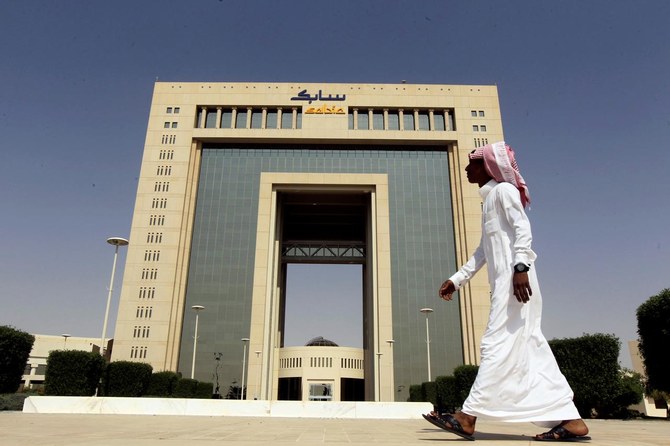
A man walks past the headquarters of Saudi Basic Industries Corp (SABIC) in Riyadh, Saudi Arabia. (Reuters)
Short Url
Updated 06 May 2020
Follow

SABIC to build one of the world’s biggest mega-battery factories

  • SABIC unit Nusaned Investment has teamed up with SCHMID Group to develop the vanadium redox flow batteries
  • Battery storage is attracting a wave of international investment as demand increases to store the energy being produced by new renewable projects worldwide

LONDON: Saudi petrochemical giant SABIC has established a joint venture company to build one of the world’s biggest utility-scale battery factories.

SABIC unit Nusaned Investment has teamed up with SCHMID Group to develop the vanadium redox flow batteries. 

The Riwaq Industrial Development Company will also join the JV, SABIC said in a statement.

The new factory is expected to be in production in 2021. 

Battery storage is attracting a wave of international investment as demand increases to store the energy being produced by new renewable projects worldwide. Investing in such renewables projects is also a cornerstone of Saudi Arabia’s energy reform plans as it weans itself off reliance on oil revenues.

“The closing marks a milestone for Saudi Arabia in its quest to localize manufacturing for technologies in emerging industries,” said Fuad Mosa, CEO of Nusaned Investment 

The new company will produce energy storage systems for use alongside utility-scale renewables projects, telecom towers, mining sites, remote cities and off-grid locations, SABIC said. 

Saudi Arabia is aiming to install 57.5 GW of renewable capacity by 2030, spurring demand for new battery storage capacity in the Kingdom.

The project will be developed in Dammam 3rd Industrial City and will have an annual production capacity of 3 GWh — making it among the biggest Flow Battery production facilities worldwide.

Nusaned Investment is an investment company based in Riyadh with a mandate to increase local content in the Kingdom. 


Gold rises on Iran war safe-haven bid; firm dollar limits upside

Updated 6 sec ago
Follow

Gold rises on Iran war safe-haven bid; firm dollar limits upside

BENGALURU: Gold prices rose on March 5, lifted by safe-haven demand amid an escalating war in the Middle East, while a stronger dollar and concerns around the US Federal Reserve’s monetary policy capped gains.

Spot gold was up 0.6 percent at $5,168.43 per ounce, as of 11:55 am Saudi time. US gold futures for April delivery were up 0.9 percent at $5,179.20.

Israel launched a large wave of strikes on Tehran on March 5, targeting what it said was infrastructure belonging to the Iranian authorities, after Iranian missiles sent millions of Israelis rushing into bomb shelters.

“On the one hand, there may be greater safe-haven demand for gold given the ongoing conflict in the Middle East. On the other hand, the risk of a prolonged period of higher energy prices that takes rate cuts off the table, and adds to the chance of rate hikes, could be capping further gains,” said Hamad Hussain, a climate and commodities economist at Capital Economics.

The US dollar rose about 0.3 percent after briefly retreating from three-month highs, as the fallout from the war roiled global markets and kept sentiment fragile.

Concerns about energy supply continued to drive up oil prices and stoke inflation fears.

Gold is considered a hedge against inflation in the long run, but also tends to thrive when interest rates are lower, as it is a non-yielding asset.

President Donald Trump, on March 4, officially nominated former Federal Reserve Governor Kevin Warsh to be the US central bank’s next chair.

US economic activity grew slightly, prices continued to increase and employment levels were stable in recent weeks, the Federal Reserve said on Wednesday in its latest “Beige Book” report.

Markets expect the Fed to keep rates steady at its next policy meeting on March 18, according to CME Group’s FedWatch tool.

Investors are looking out for the weekly US jobless claims data, due later today, and the US employment report for February on March 6 for further clues on monetary policy this year.

Spot silver rose 0.5 percent to $83.80 per ounce. Platinum gained 1.1 percent to $2,172.20, while palladium lost 0.7 percent to $1,662.07.
