



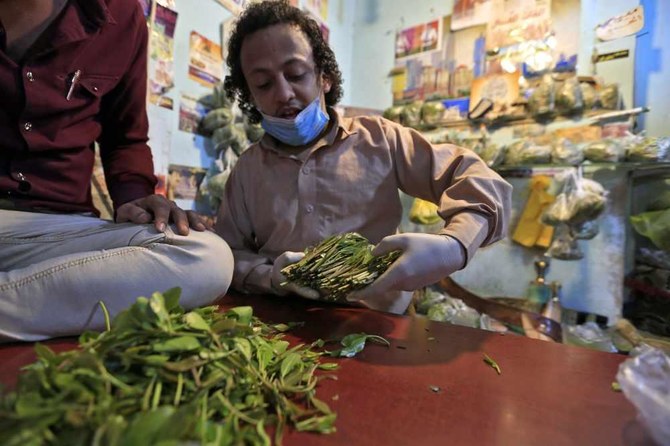

SANAA: While many of the world’s markets have closed to curb the spread of coronavirus, in Yemen’s capital Sanaa, downtown districts selling qat — the ubiquitous mild narcotic — still bustle with people.
Flouting social distancing rules, Yemenis jostle to select bunches of the chewable leaf from vendors packed into the narrow lanes crowded with stalls.
“If the qat markets were closed, believe me when I say that 98 percent of Yemeni people would object,” Sanaa resident and avid consumer Ali Al-Zubeiry told AFP.
“We appeal to the authorities not to close the qat markets because Yemenis live off it,” he said — while adding it would probably be a good idea to move them to a more open space.
Yemen, mired in civil war since 2014 and long the Arabian Peninsula’s poorest nation, is a major producer and consumer of qat, which is banned in some countries but has been part of Yemen’s social fabric for thousands of years.
The country was once best known for its coffee industry, but the easy profits from qat meant it eclipsed that trade and spread into other agricultural lands — around the Red Sea and in African countries such as Ethiopia and Somalia where it also flourishes.
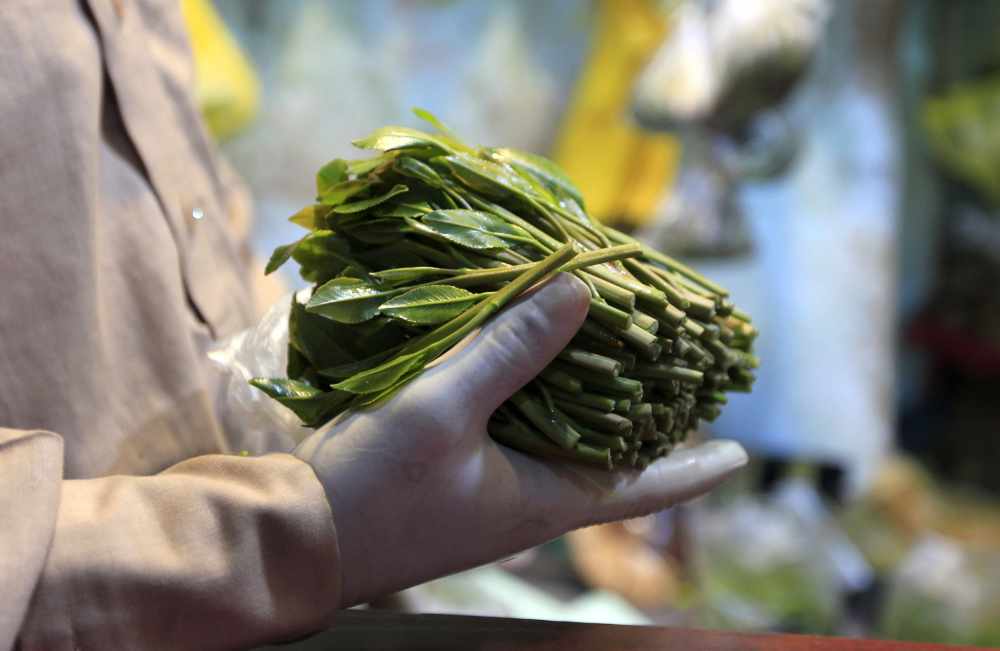
A Yemeni vendor carries a bundle of qat, the ubiquitous mild narcotic, at a market in the capital Sanaa on May 1, 2020. (AFP / Mohammed Huwais)
A wad of the leaves is packed into the cheek and slowly chewed. The World Health Organization estimates that 90 percent of adult males in Yemen partake for several hours a day, with some women and children also adopting the habit.
Policemen can be seen on the streets chewing the green plant, stashed in plastic bags next to them while they carry out their duties.
“The chewing of qat leaves releases chemicals structurally related to amphetamines, which give the chewer a mild high that some say is comparable to drinking strong coffee,” according to the WHO.
Qat sellers in Sanaa, the northern capital that is controlled by the Iran-backed Houthi rebels, continue to display bags of their product to customers in the markets, transacting without precautionary measures like masks or gloves.
Yemen has been largely spared the effects of the coronavirus pandemic, with a total of six cases recorded so far, but the country announced its first two deaths from the respiratory disease on Wednesday.
The United Nations has warned that six years of war — pitting the Houthis against the government and their allies led by Saudi Arabia — has left the health system in tatters, and a major outbreak would lead to a humanitarian catastrophe.
The insurgents, who control much of the north including Sanaa, have suspended schools and flights to ward off the pandemic but so far have been unable to shut down the qat markets.
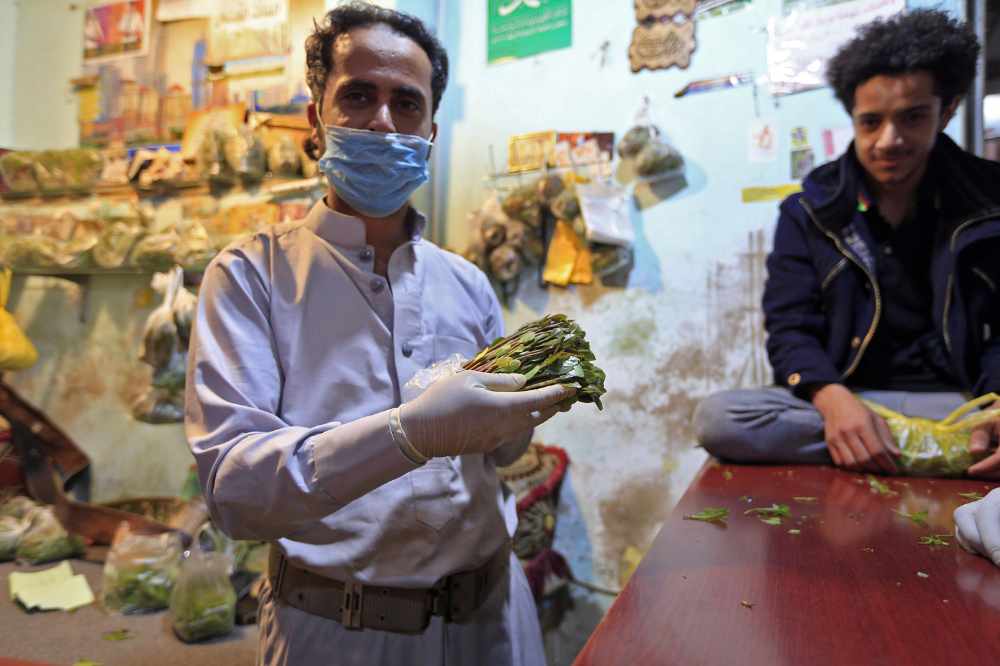
A Yemeni vendor carries a bundle of qat, the ubiquitous mild narcotic, at a market in the capital Sanaa on May 1, 2020. (AFP / Mohammed Huwais)
Many Yemenis resorted to selling qat after the war broke out and their salaries dried up.
Ahmed Saleh, a public school teacher who has not been paid in four years, said that selling qat is his “main source of income.”
“Closing the markets because of the coronavirus will lead to starvation,” he told AFP. “Many people depend on the buying and selling of qat.”
Muthir Al-Marouni, director general of the insurgent-run health department in Sanaa, said he expects the markets will close soon because they “could become a major source for the spread of the virus.”
“People’s lives are more important than the markets,” he told AFP.
However, he admitted that such a decision would be hard to enforce considering how many people depend on the trade.
“The decision must be carefully studied and a solution found... to ensure people can continue to live,” Marouni said.
While many people continue to shop at crowded qat markets, others in Sanaa have opted for home delivery to fuel hours-long sessions with family and friends.
“After the spread of the coronavirus, many are scared to go to the market and have asked that their qat be delivered to their homes,” seller Ghaleb Al-Huseimy told AFP.
“They have one condition — that I be the only one that touches the product.”
Omar Al-Abi is one customer who has opted for the delivery service because of fears of catching the virus.
“Qat could become a primary reason for the fast spread of the virus because the markets are extremely crowded,” he told AFP. “More than 50 people could have touched one bag.”
Committed users like Walid Al-Dhahawi say it will take more than a pandemic to stop Yemenis from chewing qat — a cultural tradition passed from generation to generation.
“There is no event without qat,” he said during a long session with friends.
“It is the glue in society... during times of happiness and mourning.”


