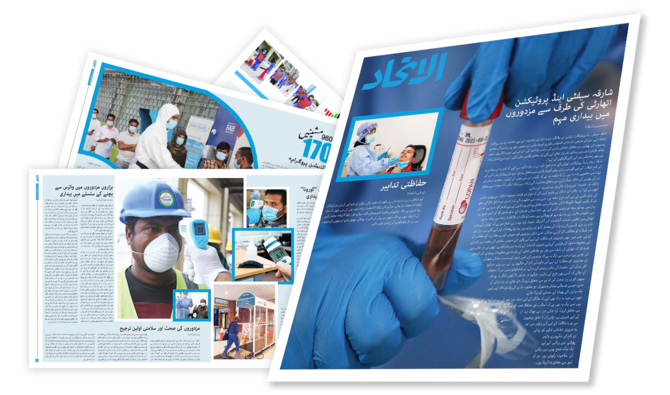
DUBAI: Abu Dhabi-based Arabic newspaper Al-Ittihad has started publishing its weekly Urdu edition to raise awareness about COVID-19 among people of the Subcontinent who understand the language and are currently residing in the United Arab Emirates.
The edition was first brought out on April 26 to serve the Urdu speaking readers among the blue collar workers in the Gulf state.
“Urdu was selected since we wanted to target an important UAE audience,” Editor-in-Chief of Al-Ittihad newspaper, Hamad Al Kaabi, told Arab News on Friday. “Our message is for the residents who speak Urdu, and we want to enhance awareness about the disease among them.”
Al-Ittihad brought out about 100,000 copies of its weekly edition and distributed them among workers class free of cost. The paper published information on COVID-19 and guided readers how to protect themselves from the disease. It also carried articles on different measures taken by the UAE government to contain the spread of the virus.
“We will continue to print the weekly even after the pandemic is over since the publication seeks to serve an important social segment that must get authentic information on burning issues,” Al Kaabi said.
He added that the eight-pager was also promoted digitally for greater outreach.
Al-Ittihad is one of the oldest newspapers in the UAE and was first published 50 years ago. It also prints The National, an English-language daily, which was launched in 2016.
Hassan Sajwani, a prominent Emirati who tweets on politics and counterterrorism, applauded the launch of the Urdu weekly, saying in one of his Twitter posts that it was “imperative to address and engage this large and important segment of UAE population. Well done.”
The UAE is home to over 200 nationalities. Emirates constitute roughly 20 percent of the total population, making UAE home to one of the world’s highest percentage of immigrants.
Indians and Pakistanis form the largest expatriate groups in the country, constituting 28 percent and 12 percent of the total population, respectively.


![]()

UAE newspaper launches Urdu edition to raise COVID-19 awareness
Short Url
https://arab.news/pjkvc
UAE newspaper launches Urdu edition to raise COVID-19 awareness
- Al-Ittihad is one of the oldest newspapers in town and it also publishes an English daily
- The new publication seeks to target blue collar workers from Pakistan and India who read and understand Urdu
Latest updates





© 2026 SAUDI RESEARCH & PUBLISHING COMPANY, All Rights Reserved And subject to Terms of Use Agreement.